


Find Your Dedicated Corner
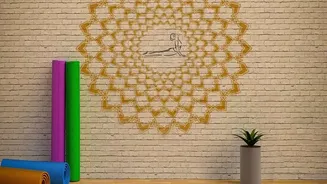
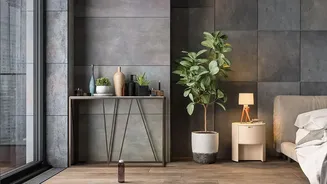
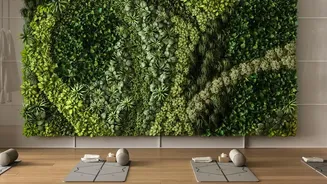
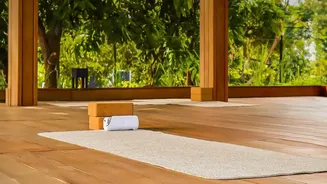
First, identify a space that can be your consistent spot for yoga. It doesn't need to be an entire room. A quiet corner in your bedroom, a small area in the living room, or even a clear space at the end of a hallway can work perfectly. The key is choosing
a low-traffic spot where you feel comfortable and can practice without too many distractions. Try to find a space with good natural light if possible, as it can significantly lift your mood. Before you begin, take a few minutes to declutter the area. A tidy space helps create a clear and focused mind, signalling to your body that it's time to unwind.
The Mat: Your Foundation
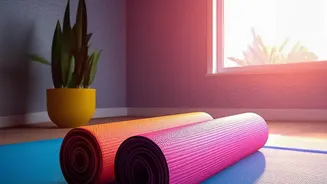
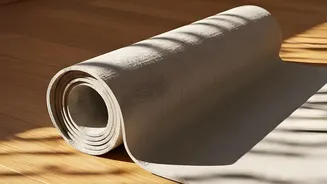
While a yoga mat provides grip and cushioning, you don't need to rush out and buy one. A large, non-slip area rug can be a great substitute. If you're practising on a hard surface like wood or tile, a thick towel or blanket can offer the necessary padding to protect your joints. However, be mindful that towels can slip on smooth floors, so test your hand and foot placement to ensure stability before you begin your flow. For some, practising directly on a clean, carpeted floor is also a viable option.
Props from the Bookshelf and Closet
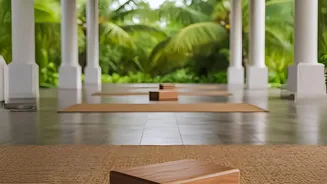
Yoga props help support your body and find proper alignment, but you likely already own several effective alternatives. A sturdy belt from your closet, a long scarf, or even a necktie can serve as a yoga strap to help deepen stretches. For yoga blocks, which 'raise the floor' to meet you, a stack of thick, hardcover books is the most common substitute. Make sure the books are of a similar size and stacked neatly for a stable surface. You can even use rubber bands to hold them together securely. One or two firm cushions from your sofa or a couple of pillows from your bed can replace an expensive bolster, providing support in restorative poses.
Embrace Comfort with Blankets and Towels
The humble household blanket is one of the most versatile yoga props you can find. Any blanket can be folded to provide extra cushioning under your knees or hips during seated poses. For restorative yoga or Savasana (corpse pose), a cosy blanket provides warmth and a comforting weight that encourages your body to relax more deeply. Rolled-up towels can also be used for extra padding or placed under your neck for support. A thick blanket or a few towels rolled together tightly can even function as a DIY bolster for gentle backbends or to place under your knees.
Set a Soothing Atmosphere
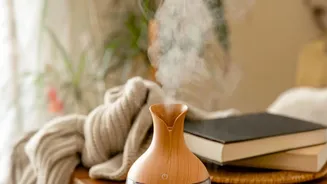
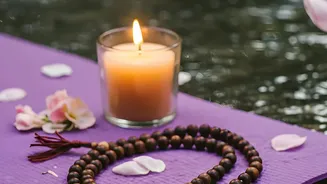
Creating a calming environment is crucial, and it costs very little. Dim the overhead lights and use a small lamp for softer, warmer lighting. Scent can also play a powerful role; consider lighting a candle or using an essential oil diffuser with calming scents like lavender or sandalwood. You don't need a high-end sound system for music. Simply use your phone to play a curated playlist of gentle, ambient music or nature sounds. The goal is to engage your senses in a way that promotes peace and focus, separating your practice time from the hustle of your day.