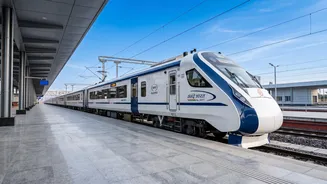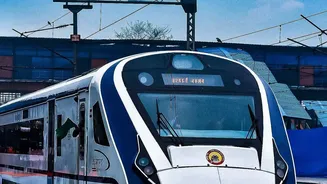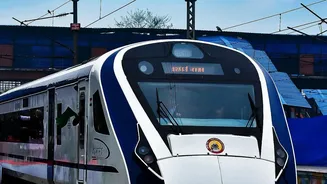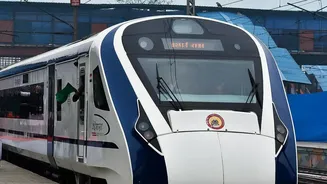








Launch Confirmed, Regular Service to Follow
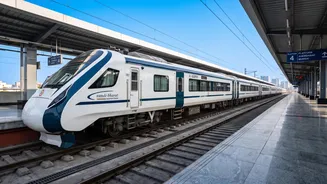
The headline's claim requires some nuance in light of the latest developments. India's first Vande Bharat Sleeper service began operations between Howrah and Kamakhya in January 2026. More recently, officials have announced the launch of the country's
second sleeper service, connecting Bengaluru and Mumbai, on November 1, 2026, to coincide with Karnataka Rajyotsava. While this marks a significant milestone, the announcement refers to the inaugural run. The commencement of regular, daily passenger service is expected to follow shortly after the formal launch, pending a final official notification from the Railway Board. This means that while the train is becoming operational, it is still in the process of being fully integrated into the public timetable.
A New Chapter in Overnight Travel
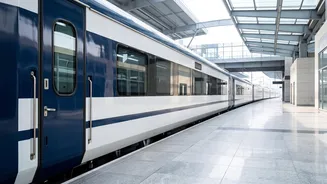
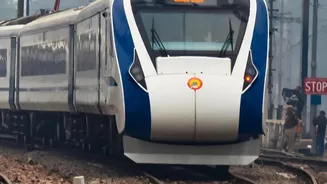
The Vande Bharat Sleeper is engineered to redefine long-distance train journeys in India, which have traditionally been a trade-off between cost and comfort. Designed for routes spanning 800 to 1,200 kilometres, these trains offer a premium alternative to existing services like the Rajdhani Express. The new Bengaluru-Mumbai service is a prime example, set to cover the 1,118-kilometre distance in approximately 16 hours—a significant reduction of nearly eight hours compared to the current Udyan Express. This leap in efficiency is achieved through the train's self-propelled system and aerodynamic design, allowing for faster acceleration and a maximum operational speed of 160 km/h, track conditions permitting.
Inside the State-of-the-Art Coaches
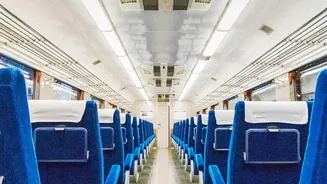
Passenger experience is at the heart of the Vande Bharat Sleeper's design. Each 16-coach trainset is fully air-conditioned and accommodates 823 passengers across three classes: AC First, AC Two-Tier, and AC Three-Tier. The interiors are a major upgrade, featuring wider, ergonomically designed berths for better sleep, ambient lighting, and sensor-based automatic doors that reduce noise and maintain cabin temperature. Every berth is equipped with individual charging points, reading lights, and dedicated AC vents. For enhanced hygiene, the train features modern bio-vacuum toilets with touchless fittings, and First AC passengers will even have access to hot shower facilities.
Safety and Connectivity on the Move
Safety has been a primary focus in the development of these new trains. Each is equipped with the indigenous 'Kavach' Automatic Train Protection system, designed to prevent collisions by automatically applying brakes if a signal is missed. The coaches are also fitted with CCTV surveillance, an emergency talk-back system to contact the crew, and aerosol-based fire detection and suppression systems. For passenger convenience, the train provides onboard Wi-Fi and a GPS-based information system that displays the train’s speed and upcoming stations. The design also includes wider gangways for easier movement between coaches and dedicated zones for luggage to keep aisles clear.