





The Race Against Resistance
For decades, the world has faced a slow-burning crisis: antimicrobial resistance (AMR). Bacteria are evolving faster than we can find new drugs to treat them, leading to infections that were once simple to cure becoming life-threatening. The 'golden age'
of antibiotic discovery, which peaked between the 1940s and 1960s, has been followed by a long innovation drought. Traditional drug discovery is notoriously slow, expensive, and inefficient, often involving the screening of millions of physical compounds over many years, with a high rate of failure. This broken model has created a desperate need for a new approach to restock our medical arsenal.
AI Enters the Laboratory
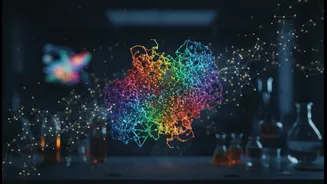
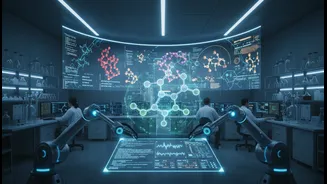
This is where artificial intelligence steps in. Instead of years of manual lab work, AI models can now do the initial heavy lifting in a matter of days or weeks. Researchers can train these algorithms on massive datasets of molecules with known antibacterial properties. The AI learns to identify the specific structural features that make a compound effective against bacteria. It can then screen virtual libraries containing billions of potential molecules to find promising candidates, a scale far beyond human capability. Some advanced generative AI models can even design entirely new molecules from scratch, exploring a vast chemical space that was previously inaccessible to scientists.
A Breakthrough in Action
This isn't just theory; it's already producing results. Research teams at institutions like MIT have used AI to identify several promising antibiotic candidates. For instance, AI helped discover compounds with strong activity against notoriously difficult pathogens like multidrug-resistant Staphylococcus aureus (MRSA) and Neisseria gonorrhoeae. In one case, an AI model screened millions of compounds to identify a handful of promising candidates, one of which proved effective in clearing a MRSA infection in a mouse model. These AI-discovered molecules are often structurally different from existing antibiotics, suggesting they may work in novel ways that bacteria have not yet developed resistance to.
The Long Road of Validation
However, identifying a candidate molecule is only the first, albeit accelerated, step. This is where the "long validation timelines" come into play. An AI-generated compound is just a digital prediction until it is synthesized in a lab and rigorously tested. This next phase is a slow, methodical process that AI cannot yet bypass. The candidate must be tested in vitro (in a petri dish), then in animal models to assess its effectiveness and safety. If it passes these stages, it then faces the multi-year, multi-phase gauntlet of human clinical trials, which are expensive and have a low success rate. Regulatory bodies require this exhaustive process to ensure any new drug is safe and effective for human use, a standard that AI's speed cannot circumvent.
A Blueprint for Innovation
The experience with antibiotic discovery serves as a powerful case study for the role of AI in complex scientific fields. It highlights a critical distinction: AI is brilliant at accelerating pattern recognition, prediction, and design in the digital realm. It can find the 'needle in the haystack' with superhuman speed. But innovation in fields like medicine ultimately happens in the physical world of biology, chemistry, and patient care. The challenges of limited data quality, model transparency (the 'black box' problem), and the need for real-world validation remain significant hurdles. Success depends on a partnership where AI augments human intelligence, handling the vast computational work so scientists can focus on the crucial experimental and clinical phases.