





As the intense heat gives way to refreshingly cooler air, taking your cardio workouts outdoors becomes tempting again. But to make the most of this pleasant shift, it's crucial to adjust your routine to the changing conditions.
Why Cooler Air Changes Your Workout
Exercising in cooler weather
isn't just more comfortable; it changes how your body responds. The crisp, dry air can sometimes dehydrate the lining of your lungs, causing minor irritation for some. Your muscles and joints also tend to be stiffer in the cold, as the body reduces blood flow to extremities to keep your core warm. This means a proper warm-up is non-negotiable to prevent strains or injury. On the plus side, your cardiovascular system often works more efficiently. Without the need to pump as much blood to the skin for cooling, your heart rate may be lower for the same level of effort, which is why many runners find they can perform better in the fall. Your body may also burn slightly more calories as it works to maintain its temperature.
Extend Your Warm-Up
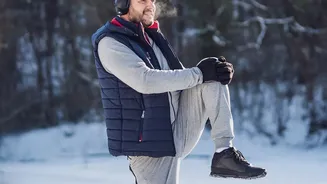
Because your muscles, tendons, and ligaments are less flexible in the cold, jumping straight into a high-intensity workout is a recipe for injury. It's essential to dedicate more time to your warm-up than you would in summer. Aim for at least 10 to 15 minutes. Start with light aerobic movement like a brisk walk or a slow jog to gradually increase your heart rate and body temperature. Follow this with dynamic stretches—active movements that take your body through a range of motion. Think walking lunges with a twist, high knees, leg swings, and arm circles. These movements activate specific muscle groups, improve blood flow, and stimulate your nervous system, preparing your body for the main workout ahead.
Dress in Smart Layers
Layering is the key to comfort and safety during cool-weather cardio. The goal is to stay warm without overheating and trapping sweat, which can make you cold once you slow down. Avoid cotton, as it holds moisture and will leave you feeling chilled. Instead, follow the three-layer principle. Your base layer, closest to your skin, should be a moisture-wicking fabric like merino wool or a synthetic blend to pull sweat away. Your middle layer provides insulation; a fleece or thermal hoodie works well. The outer layer should be a light, wind-resistant, and preferably water-repellent jacket that you can easily remove as you heat up. As you get warmer, you can shed layers to regulate your temperature.
Adjust Your Pace and Intensity
The feeling of 'effortless' running in cool air can be deceptive. While it’s a great opportunity to push your performance, it's important to do so gradually. Don't dramatically increase your speed and distance on the same day just because it feels easier. Instead, listen to your body. Pay attention to your rate of perceived exertion (RPE) or use a heart rate monitor to ensure you’re training in the right zone. You might find that your usual 'easy' pace is now faster, which is great, but ensure your recovery runs remain genuinely easy. On the other hand, your body uses more energy just to stay warm, which can lead to faster fatigue on very cold days. Be prepared to adjust your intensity down if you feel your energy flagging.
Don't Forget to Hydrate
One of the biggest mistakes people make when exercising in the cold is neglecting hydration. You might not feel as thirsty, as studies have shown our thirst sensation can be reduced by up to 40% in colder temperatures. However, you are still losing fluids through sweat and respiration. The dry air increases moisture loss from your lungs, and even if you don't see sweat dripping, it's evaporating from your skin, especially under layers. Be sure to drink water before, during, and after your workout, even if you don't feel thirsty. For longer or more intense sessions, consider an electrolyte drink to help your body retain fluid more effectively.