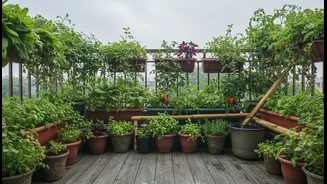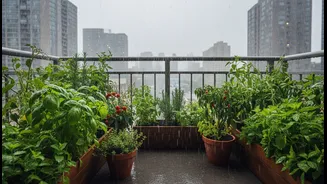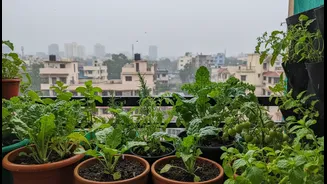





The Pre-Planting Balcony Checklist
Before you buy a single seed, a quick assessment is crucial. First, check your building's rules regarding balcony gardens. Next, and most importantly, consider the weight. Wet soil is heavy, and multiple large pots can exceed a balcony's load limit, which
can be as low as 40-50 pounds per square foot. Opt for lightweight fibreglass or plastic containers over heavy ceramic ones. Also, check for drainage. Ensure your balcony has a proper outlet for excess water to prevent seepage issues for your downstairs neighbours. Finally, observe the sunlight. Note which parts of your balcony get at least four to six hours of sun, as this will determine which plants will thrive.
Choosing Your Pots and Soil
The right container and soil are foundational to success. Ensure every pot has drainage holes at the bottom to prevent waterlogging, which is a major risk during the monsoon and leads to root rot. Terracotta pots are a good option as they are porous, but they are also heavy. Lightweight grow bags are an excellent, space-saving alternative. When it comes to soil, don't just use garden dirt. Buy a dedicated potting mix. For monsoons, an ideal mix would be light and well-draining, combining potting soil, cocopeat, and compost. This ensures roots get air and don't sit in stagnant water.
Top Edible Plants for the Monsoon
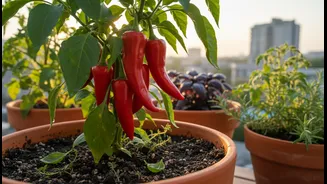
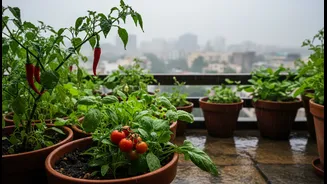
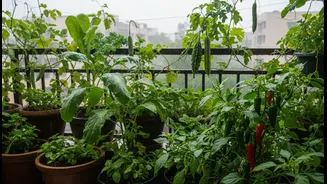
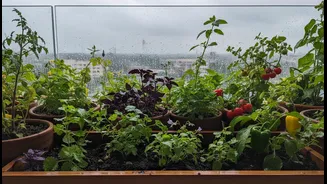
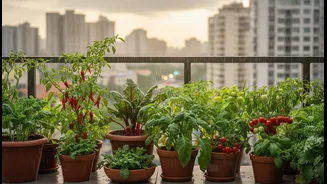
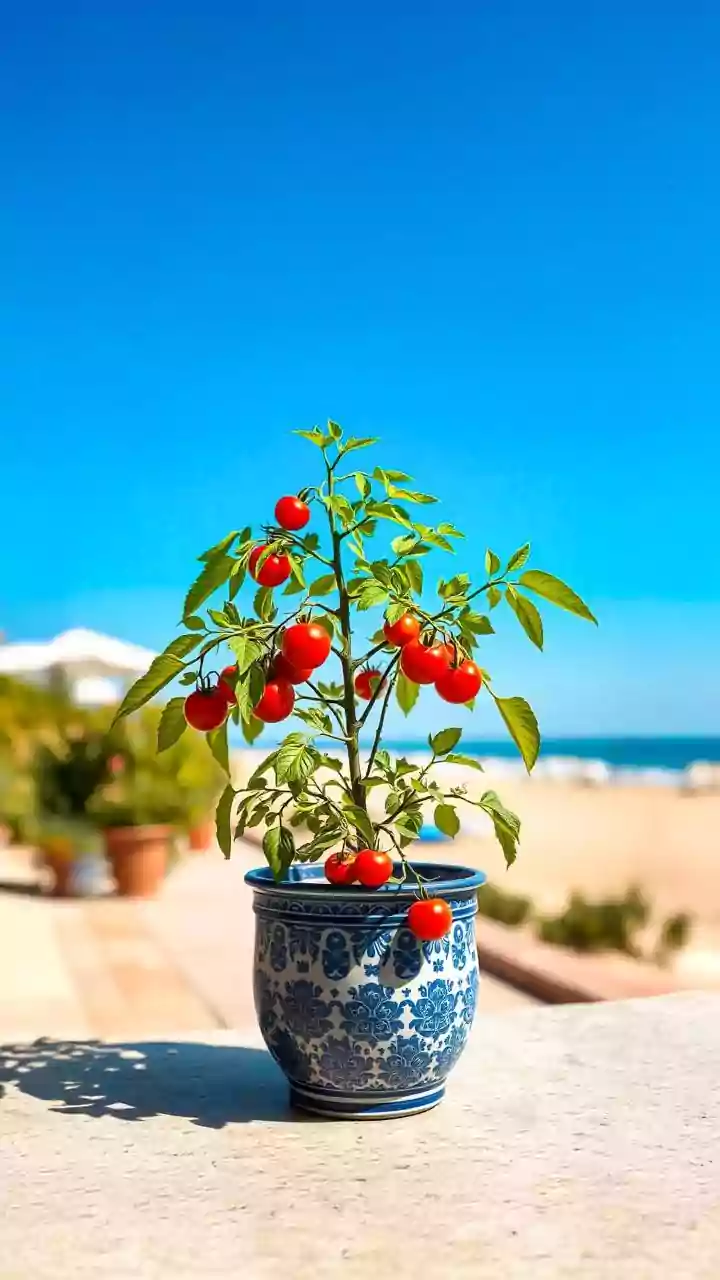
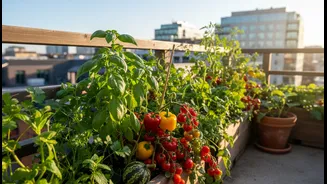
The high humidity and regular watering of the monsoon are perfect for many Indian vegetables and herbs. Leafy greens like spinach (palak), amaranth (chaulai), and coriander grow incredibly fast in these conditions. Fruiting vegetables like chillies, brinjal (compact varieties), and tomatoes also do very well. If you have space for a trellis, climbing plants like bottle gourd (lauki), bitter gourd (karela), and various beans are prolific producers during this season. For beginners, herbs like mint and tulsi are incredibly resilient and easy to grow from cuttings. Radishes are another great option for a quick harvest, often ready in just a month.
Planting and Basic Care
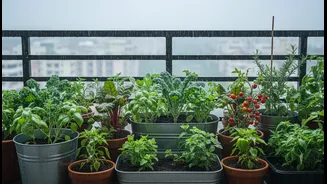
Once you have your supplies, it's time to plant. If using seeds, sow them at the depth recommended on the packet. For saplings, gently place them in the new pot and fill around them with your potting mix. Water them gently. The biggest challenge during the monsoon is not under-watering, but overwatering. Always check if the top inch of the soil is dry before watering your plants. The constant rain might be enough. Also, ensure good air circulation between plants by not overcrowding them; this helps prevent fungal diseases that thrive in humidity. A little pruning of yellow or dead leaves will also keep your plants healthy.
Managing Monsoon Pests and Diseases
High humidity makes gardens susceptible to pests like aphids, mealybugs, and snails, as well as fungal diseases like powdery mildew and leaf spot. The best defence is prevention. Regularly inspect the undersides of leaves for any signs of trouble. A simple, organic solution is a spray made from neem oil, which acts as a natural repellent for many common pests and has antifungal properties. Encouraging beneficial insects like ladybirds by planting marigolds can also help manage pest populations naturally. Should you see any diseased leaves, prune them off immediately to stop the spread.