
A Universe Hostile to Atmospheres
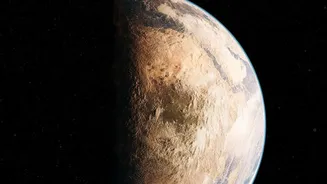
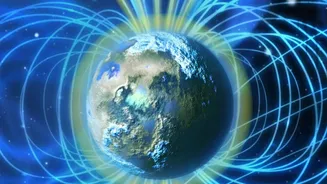
The dream of finding a rocky exoplanet with oceans and continents, a true 'Earth 2.0', relies on one crucial ingredient: a stable atmosphere. This protective blanket is essential for regulating temperature and shielding the surface from deadly radiation.
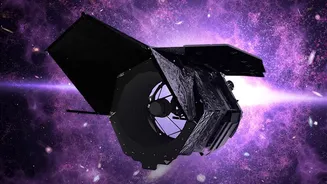
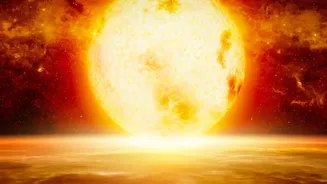
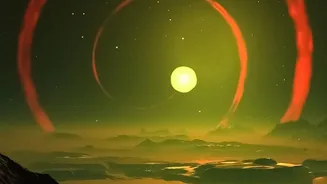
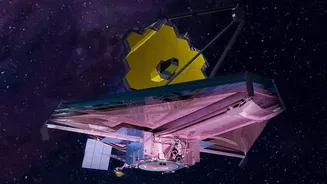
However, recent observations from the JWST suggest that many rocky worlds are losing this vital component. The issue is particularly pressing for planets orbiting red dwarf stars, the most common type of star in our galaxy. While these stars are cooler than our Sun, planets must huddle much closer to them to stay warm enough for liquid water. This proximity comes at a great cost. Young, volatile red dwarfs are known to unleash powerful flares of high-energy X-ray and ultraviolet radiation that can effectively sandblast the atmosphere right off a nearby planet.
The Prime Suspect: Stellar Stripping
Imagine holding a delicate bubble next to a powerful hairdryer. This is essentially what happens to many rocky exoplanets. Their parent stars, especially in their turbulent youth, blast out a constant stream of charged particles known as stellar wind. This, combined with intense radiation, provides more than enough energy to heat a planet's atmospheric gases to escape velocity, causing them to boil off into space over millions of years. This process is known as atmospheric escape or stripping. The JWST's powerful instruments can detect the chemical signatures of these escaping gases, giving scientists a front-row seat to this dramatic process of planetary erosion. The data has shown that even if a planet forms with a thick atmosphere, it may not be able to hold onto it if it's too close to its star.
Case Study: The TRAPPIST-1 System
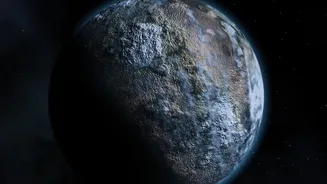
A prime example is the famous TRAPPIST-1 system, located 40 light-years away, which hosts seven Earth-sized rocky planets. Initial excitement about this system was high, as several of its planets orbit within the star's 'habitable zone'—the region where temperatures could allow for liquid water. However, JWST observations have been discouraging. Studies of the inner planets, like TRAPPIST-1 c, suggest it is likely a bare rock with an extremely thin atmosphere, if any at all. A closer look at TRAPPIST-1 d, which lies on the edge of the habitable zone, also failed to detect an Earth-like atmosphere. While hope is not entirely lost for the outer planets of the system, these findings demonstrate how the star's volatile nature creates harsh conditions for its closest worlds.
Redefining the 'Habitable Zone'
These discoveries are forcing astronomers to rethink the concept of the habitable zone, often called the 'Goldilocks zone'. It's no longer enough for a planet to be at the right temperature for liquid water. A new, more stringent requirement is emerging: a planet must also be in a location where it can retain its atmosphere over geological timescales. This means the true habitable zone might be much narrower than previously thought, especially around smaller, more active stars. The data suggests that planets orbiting calmer, more Sun-like stars at a greater distance may have a better chance of keeping their atmospheric blankets. This is a crucial lesson that is changing how and where scientists are searching for life.
Not All Hope Is Lost
While some planets are losing their atmospheres, others are creating them. JWST also observed 55 Cancri e, a scorching hot 'super-Earth' so close to its star that its surface is likely a bubbling magma ocean. Surprisingly, evidence suggests it has a substantial atmosphere, likely rich in carbon monoxide or carbon dioxide. Scientists believe this is a 'secondary' atmosphere, constantly being replenished by gases bubbling out of the molten rock below. This shows that some rocky worlds can generate and maintain atmospheres even under extreme conditions, although such a world would be far from habitable. These contrasting findings — from the bare rocks of TRAPPIST-1 to the gassy lava world of 55 Cancri e — showcase the incredible diversity of planets in our galaxy.