






Decoding 'Semicryogenic'
First, let's get the jargon out of the way. Rocket engines need fuel and an oxidizer to create thrust. A 'cryogenic' engine, which ISRO already uses, uses super-cooled liquid hydrogen and liquid oxygen. A 'semicryogenic' engine is a hybrid. It uses the same
liquid oxygen oxidizer but pairs it with a room-temperature fuel—in this case, a highly refined form of kerosene, similar to jet fuel. The 'semi' part means only one of the propellants needs to be kept at extremely cold temperatures. This simple change brings massive advantages in cost, storage, and handling.
More Power, Heavier Lifts
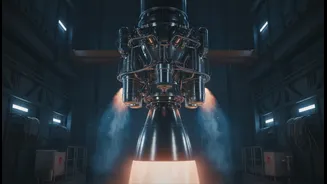
The main benefit of the new SE2000 semicryogenic engine is raw power. This engine is designed to produce a massive 2,000 kilonewtons (or about 200 tonnes) of thrust. This immense power will allow India’s rockets to carry much heavier payloads into space. Specifically, it will upgrade the payload capacity of our workhorse LVM3 rocket, allowing it to lift 10 tonnes to Low Earth Orbit (up from 8) and 5 tonnes to the higher Geostationary Transfer Orbit (up from 4). Think of it as giving our space program a significant engine upgrade, enabling us to launch heavier communication satellites, more satellites at once, or larger components for future space stations.
A 'Made in India' Engine for the Future
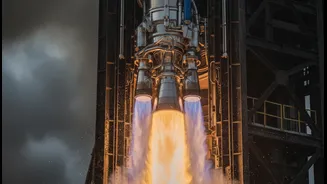
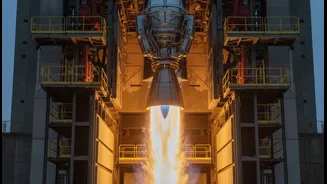
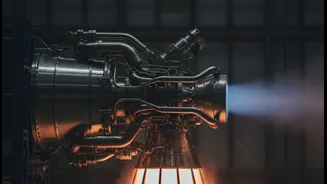
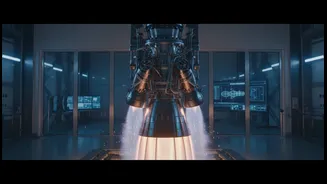
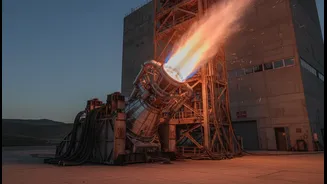
This isn't just about a new piece of hardware; it's about self-reliance. Developing high-thrust semicryogenic engines is incredibly challenging, and the technology is held by only a few nations. By developing the SE2000 engine indigenously, ISRO is strengthening India's strategic autonomy in space. The recent tests, conducted at the ISRO Propulsion Complex in Mahendragiri, have successfully validated the engine's power head—its core components—at up to 88% of its target thrust, giving scientists confidence to proceed towards full-scale testing. This engine is the heart of India's future launch vehicle ambitions.
Powering the Next Generation of Rockets
The SE2000 engine is not just an upgrade; it's the foundation for what comes next. It is slated to power the core stage of the LVM3, replacing the current L110 stage. More importantly, this technology is critical for India’s planned Next Generation Launch Vehicle (NGLV). The NGLV is envisioned as a reusable, modular rocket designed to replace the PSLV and GSLV, making space access cheaper and more frequent. By mastering semicryogenic propulsion, ISRO aims to increase its share of the global satellite launch market from about 2% to 10% by 2030, making India a more competitive player on the world stage.