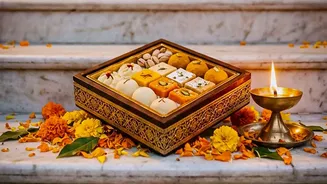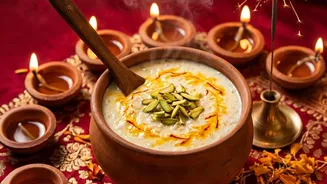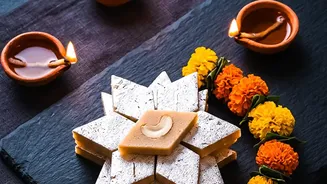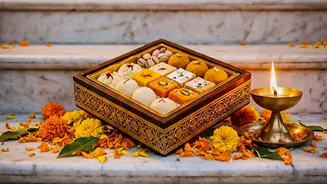


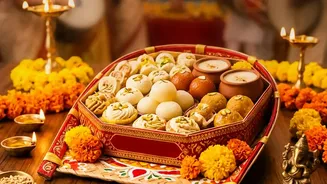
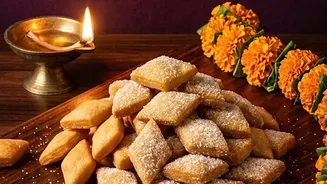
Diwali is a time of joy, light, and sharing delicious mithai. But the festive spread can bring a familiar tension between indulgence and health. Here’s a guide to enjoying every bite without guilt or making food a moral test.
Rethink the Mithai Box: Smart Ingredient Swaps
The secret to healthier sweets
often lies in the ingredients. Many traditional recipes can be made more nourishing with a few simple changes that don't sacrifice flavour. Instead of refined white sugar, consider natural sweeteners like jaggery, date paste, or honey. Jaggery lends an earthy, caramel-like sweetness to classics like besan ladoo and halwa. Dates not only provide sweetness but also act as a binding agent, perfect for no-sugar-added dry fruit ladoos. You can also swap refined flour (maida) for whole wheat flour, millet flours like ragi, or even almond and coconut flour for a gluten-free, nutrient-dense alternative. Using quinoa or millets instead of white rice in kheer adds protein and fibre, making the dessert more satisfying.
From Frying to Baking: Lighter Cooking Methods
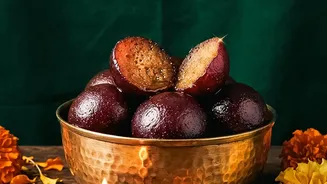
How you cook is as important as what you cook. Many festive snacks and sweets that are traditionally deep-fried can be baked or air-fried for a lighter result. For instance, gujiyas and even samosas can be baked with a light brushing of ghee until golden and crisp, significantly cutting down on fat. This method retains the satisfying crunch while making the treat easier on your digestive system. Similarly, some sweets that require extensive frying can be adapted. Focusing on steamed sweets like sandesh or puddings like phirni also offers a lighter alternative to ghee-soaked halwas and syrup-drenched mithai.
Practice Mindful Indulgence
The goal isn't to avoid sweets, but to savour them. Mindful eating can transform your relationship with festive foods. Instead of eating distractedly while socialising, take a moment to sit down and appreciate the sweet you've chosen. Eat slowly, paying attention to the aroma, texture, and flavour. Nutritionists suggest that practicing portion control is more effective than complete avoidance. Using smaller plates and choosing only one or two of your absolute favourite mithai can prevent overindulgence. It also helps to eat sweets after a balanced meal rather than on an empty stomach, as this can help slow the rise in blood sugar. Don't skip meals to 'save calories' for a party, as this often leads to overeating later.
Sharing Joy, Not Judgment
Diwali is about connection, and food is a primary way we show love. This can sometimes lead to social pressure to eat more than you're comfortable with. It is possible to navigate this gracefully. If a relative insists you have another serving, a polite 'No, thank you, it was delicious' is a complete sentence. You don't owe anyone a detailed explanation of your dietary choices. If you're hosting, you can lead by example. Offer a variety of options, including fresh fruit, unsalted nuts, and a lighter, homemade sweet alongside the richer ones. When you receive a box of mithai, the gesture is about the sharing of goodwill. Accept it with gratitude, and remember you can always share the contents with others or freeze them to enjoy slowly over time.
Gifting Health and Happiness
Rethink the traditional mithai box when it comes to gifting. A thoughtful gift hamper can be just as festive without being loaded with sugar. Consider putting together a beautiful basket of seasonal fruits, a selection of high-quality unsalted nuts and seeds, or jars of homemade date-and-nut ladoos. Flowers and decorative items are also wonderful alternatives that express care. By shifting the focus from purely sugar-based gifts to ones that promote well being, you are sharing the spirit of Diwali in a truly nurturing way. This respects the health journeys of your loved ones while still participating in the cherished tradition of festive giving.