




What Exactly Has Changed?
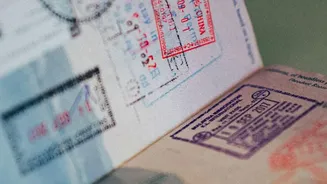
The Government of India has undertaken a significant rationalisation of its visa regime. The Ministry of Home Affairs (MHA) announced that the primary visa categories have been reduced from 13 to just nine. This is the second such simplification in just over a year,
continuing a trend to make the system more user-friendly. Alongside this, the number of visa sub-categories has also been cut from 49 to 23. Perhaps most welcomed by applicants will be the simplification of the application forms themselves, with the number of required information fields reduced by a substantial 65-70% across all the new categories. The stated goal is to make the visa framework more compact, coherent, and responsive to the needs of foreign nationals.
Introducing the Nine New Visa Categories
Under the new framework, anyone applying for an Indian visa will choose from one of these nine main options: Business, Diplomatic, Work, Journalist, Medical, Official, Student, Visitor, and Miscellaneous. This structure is designed to be more intuitive. Rather than having highly specific and sometimes overlapping categories, the new system groups similar travel purposes together. For instance, many niche reasons for travel that previously had their own visa type may now fall under the broader 'Business' or 'Miscellaneous' categories, simplifying the initial choice for applicants.
Goodbye Tourist Visa, Hello Visitor Visa
One of the most significant changes is the renaming of the 'Tourist Visa' to the 'Visitor Visa'. This is more than just a name change; it reflects a broader scope of permissible activities. The new Visitor Visa is split into two sub-categories. The V-1 visa is for short-term stays of 30 days with multiple entries and covers activities like tourism, brief business meetings, medical consultations, and short wellness or arts courses. The V-2 visa is for longer visits, with validity for one, five, or ten years, covering the same activities as the V-1 plus others like mountaineering. This added flexibility allows travellers to combine purposes, like a holiday with a short business meeting, under a single, appropriate visa.
Streamlined Paths for Students and Patients
The new framework also simplifies options for those coming to India for education or medical treatment, aligning with the government's 'Study in India' and 'Heal in India' initiatives. Student Visas are now consolidated into two main types: S-1 for school and university education, and S-2 for research, internships, and exchange programs. The Medical Visa category (M-1) is now more clearly defined, with a separate category for traditional wellness treatments like Ayurveda and Yoga (M-3). These visas will typically be granted for one year with multiple entries, making it easier for patients who require long-term treatment or follow-up visits. Corresponding attendant visas (M-2 and M-4) are also clearly laid out.
Why the Change and When Does It Take Effect?
The primary driver for this reform is to boost foreign arrivals for tourism, business, and education by making the entry process less confusing. The government said it studied the visa systems of developed nations to align with global standards. By reducing complexity and paperwork, officials hope to improve administrative efficiency, allowing for more focused and faster processing. The Ministry of Home Affairs is currently updating its IT systems to reflect these changes. While the new framework has been announced, the rollout is expected to be completed by the end of 2026. Until the new system is fully live, applicants should continue to use the existing visa application portal and categories.