

Unlocking an Undisturbed Geological Record
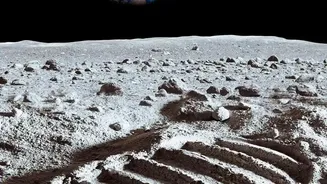
The Moon is essentially a 4.5-billion-year-old museum of our solar system's history. Unlike Earth, where plate tectonics, wind, and water constantly recycle and erode the surface, the Moon has no atmosphere and very little geological activity. This means
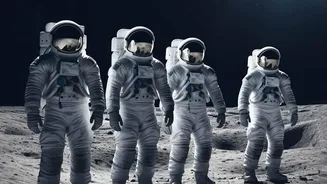
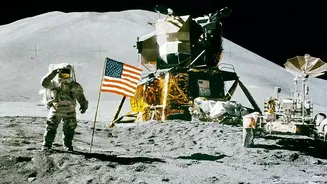
its surface preserves a pristine record of ancient impacts. A permanent base would allow geologists to go far beyond the limited landing sites of the Apollo era. Astronauts could deploy a network of seismometers to study 'moonquakes' and probe the lunar interior, finally answering questions about its core and mantle. They could also drill deep into the regolith—the layer of loose dust and rock—to analyse layers of soil that hold clues about the sun's history and even retrieve ancient particles from Earth's early atmosphere that were deposited on the Moon over billions of years.
A Perfect Platform for Stargazing
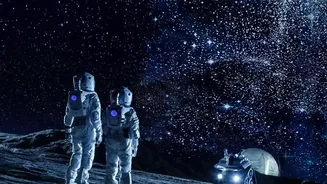
For astronomers, a lunar base presents a dream opportunity. The Moon's lack of atmosphere means telescopes on the surface would have an unfiltered view of the universe across the entire electromagnetic spectrum. But the most unique advantage is the lunar farside, which is permanently shielded from Earth's cacophony of radio noise. This makes it the only truly 'radio quiet' place in the inner solar system. Scientists could build vast, low-frequency radio telescopes to study the cosmic 'Dark Ages'—the period just after the Big Bang before the first stars ignited. Furthermore, the Moon's stable surface is ideal for building large interferometers, arrays of telescopes that work together to achieve incredibly high resolution, allowing us to see distant objects in unprecedented detail.
A New Vantage Point for Earth and Solar Science
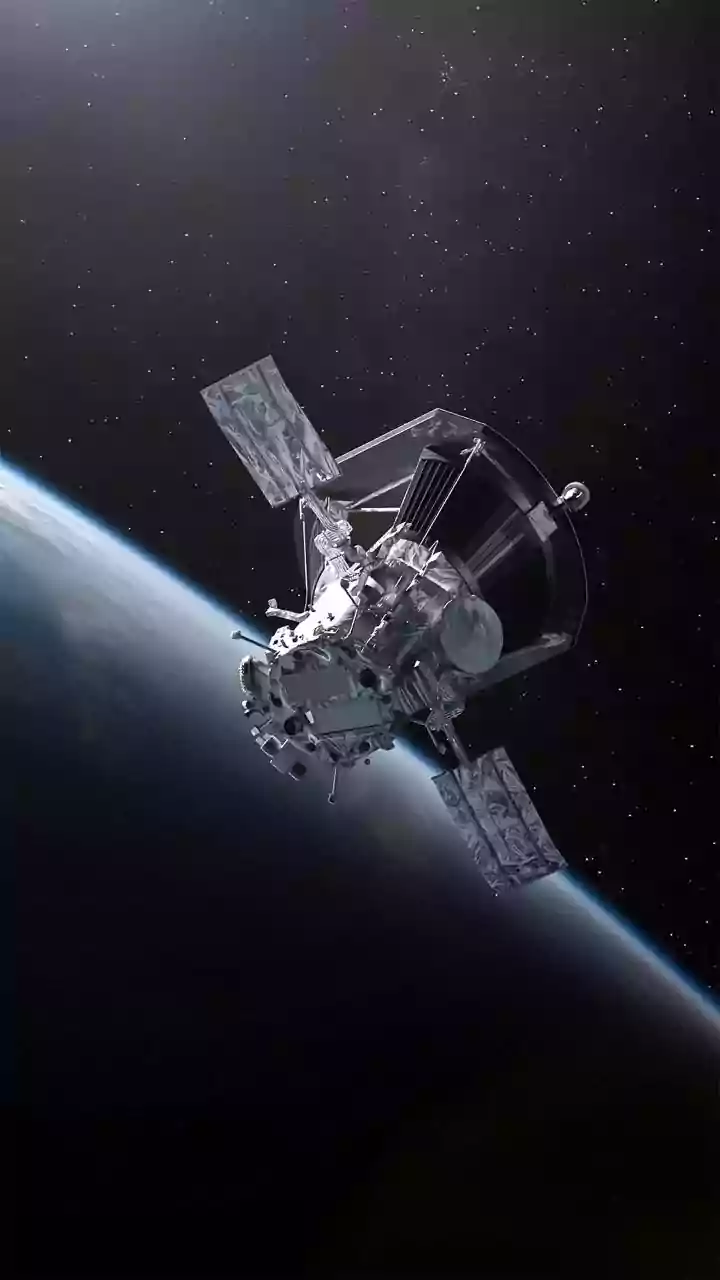
A lunar base would offer a unique perspective for looking back at our own planet. From the Moon, scientists could get a continuous, global view of Earth's complex systems. This would provide invaluable data for climate science and help us understand the dynamic interactions between the solar wind and Earth's magnetosphere. Since the Moon lacks a magnetic field and thick atmosphere, instruments on its surface are directly exposed to the solar wind, the stream of charged particles flowing from the Sun. A permanent observatory could study this material in its raw state, helping us better understand the Sun's behaviour and improve our ability to predict space weather that can affect satellites and power grids on Earth.
The Science of Living Off the Land
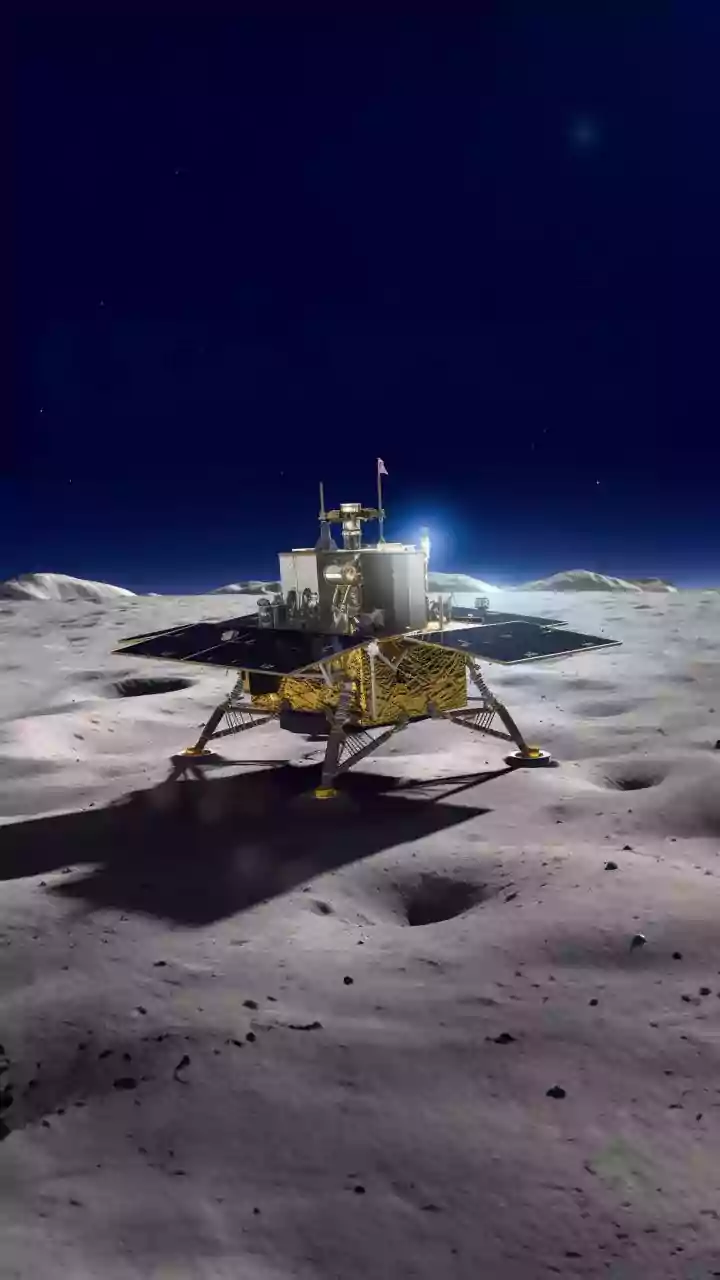
Perhaps one of the most transformative scientific pursuits enabled by a moon base is the study and practice of In-Situ Resource Utilization (ISRU). This is the science of using local resources to live and work in space. A key target is the water ice believed to be trapped in permanently shadowed craters at the lunar poles. Astronauts could conduct experiments to learn how to efficiently extract this ice and process it into breathable oxygen, drinkable water, and even rocket propellant. They could also test methods for extracting metals from lunar regolith and using 3D printing to create tools, spare parts, and construction materials. Mastering ISRU on the Moon is not just about making a lunar base self-sufficient; it's a critical dress rehearsal for future missions to Mars and beyond.