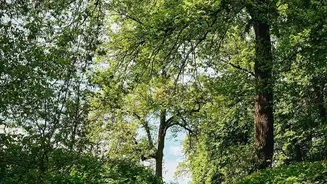







An Urban Forest with Ancient Roots
Sanjay Van is more than just a park; it's a significant portion of Delhi's South-Central Ridge, a continuation of the ancient Aravalli mountain range. Spread across approximately 783 acres, this thickly wooded area serves as one of the city's vital green
lungs, helping to purify the air and recharge groundwater. Managed by the Delhi Development Authority (DDA), it's a notified reserve forest where the focus is on preserving its semi-wild character rather than creating a manicured garden. As you wander its paths, you'll find yourself amidst historic ruins, including the crumbling ramparts of Lal Kot, often called the first city of Delhi, dating back to the 11th century. This blend of nature and history makes it a unique destination within the bustling capital.
Exploring the Trails
The heart of the Sanjay Van experience lies in its network of unpaved trails. These paths are perfect for walkers, joggers, and cyclists looking for a more natural terrain than city pavements. The trails vary, with some being flat and easy while others offer a gentle, rolling challenge with rocky patches and slight inclines. Because signage can be minimal, first-time visitors are advised to stick to the main, more frequented paths to avoid getting lost. The trails wind through dense groves of native trees like Keekar and Neem, and open into clearings perfect for a quiet moment. For a panoramic view of the forest canopy with the Qutub Minar in the distance, you can climb the watchtower known as Tejendra Point.
A Paradise for Birdwatchers
Sanjay Van is a celebrated haven for biodiversity, attracting birdwatchers from across the city. Over 200 species of birds have been recorded here, making it a vibrant spot for ornithology enthusiasts. Keep your binoculars ready to spot resident birds like the Indian Peafowl, Asian Koel, White-breasted Kingfisher, and Purple Sunbird. The forest also shelters mammals like Nilgai, jackals, and porcupines, though they are shy and most often seen around dawn or dusk. The restored Neela Hauz lake, adjacent to the forest, is a particular hotspot for water-associated birds and further enhances the area's ecological importance.
The Haunted Legends
No guide to Sanjay Van is complete without mentioning its reputation as one of Delhi's 'most haunted' places. Urban legends speak of mysterious sightings, including a woman in a white saree and the spirit of a 14th-century Sufi saint whose mausoleum lies within the forest. While these stories add a layer of spooky intrigue, they are widely considered local folklore amplified by the forest's darkness and isolation after sunset. Authorities strictly prohibit entry after dark, and there is no evidence to support any of the paranormal claims. The real-world advice is to visit during daylight hours for safety and enjoyment.
Practical Guide for Your Visit
To make the most of your trip, here's what you need to know. Sanjay Van is generally open from dawn to dusk, roughly 6:00 AM to 8:00 PM, and entry is completely free. The best times to visit are early in the morning for birdwatching or late in the afternoon when the weather is cooler. There are several entry gates; popular ones are near the Qutub Institutional Area (behind Rockland Hospital) and on Aruna Asaf Ali Marg near Neela Hauz. The nearest metro stations are Qutub Minar on the Yellow Line and R.K. Puram on the Magenta Line, from where you can take an auto-rickshaw. Remember to wear sturdy walking shoes, carry your own water, and take any trash back with you, as amenities inside are limited. While generally safe during the day, it's advisable to visit in groups, especially on your first few trips.