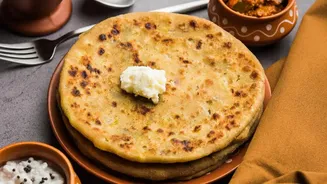




The Reshmi Paratha, celebrated for its silky, melt-in-your-mouth texture, is a beloved Indian flatbread. But what if this delicate classic could be transformed into a complete, hearty meal? The addition of paneer and vegetables does just that.
The Classic 'Silky' Paratha
The name
'Reshmi' itself means silky, a nod to the incredibly soft and tender texture of this flatbread. Traditionally, Reshmi Parathas are known for their delicate, flaky layers, often achieved by using refined flour (maida), milk, or even boiled potatoes in the dough. This results in a paratha that is light and delicious, but not always very filling on its own. It's a comforting classic, perfect with a cup of tea or a simple side, but it leaves room for an upgrade into something more robust.
The Substantial Upgrade: Protein and Fibre
This is where paneer and vegetables come in, turning the paratha from a light bread into a well-rounded meal. Adding crumbled or grated paneer boosts the protein content significantly, making the paratha much more satisfying and able to keep you feeling full for longer. It also adds a wonderful creamy texture that complements the softness of the dough. Meanwhile, a mix of finely chopped vegetables like carrots, bell peppers, onions, or spinach not only introduces a variety of flavours and a pleasant crunch but also enriches the paratha with essential vitamins, minerals, and dietary fibre.
Crafting the Perfect Dough
While traditional Reshmi Parathas often rely on maida, you can make a healthier, yet still soft, version. A popular approach is to use a mix of whole wheat flour (atta) and all-purpose flour (maida). The whole wheat adds fibre and a nutty flavour, while the maida helps retain that signature softness. To ensure the dough is pliable and the final paratha is soft, consider kneading it with milk or curd instead of just water. This not only adds nutrients like calcium and protein but also results in a wonderfully tender dough that is easy to work with. Let the dough rest for at least 20-30 minutes before rolling.
Mastering the Filling and Stuffing
The key to a good stuffed paratha is a well prepared filling. Grate the paneer and finely chop or grate the vegetables to ensure they cook evenly and don't tear the dough. You can lightly sauté the vegetables with spices like cumin, coriander powder, and a pinch of garam masala to deepen their flavour before mixing with the raw, grated paneer. Once the filling is ready, take a ball of dough, flatten it into a small circle, place a generous spoonful of the paneer vegetable mixture in the centre, and bring the edges together to seal it tightly. Gently flatten the stuffed ball and roll it out slowly, using a light hand to prevent the filling from spilling.
Cooking to Golden Perfection
Cook the paratha on a hot tawa or skillet over medium heat. Let the first side cook for about a minute until you see small bubbles or light brown spots, then flip it. Apply ghee or oil to the cooked side before flipping it again. Gently press the paratha with a spatula to help it cook evenly and puff up. The goal is a beautiful golden brown crust on both sides, with a soft steamy interior. Since these parathas are so rich in flavour and texture, they don't need much accompaniment. A bowl of cool raita, a simple pickle, or a dollop of butter is all you need to complete this satisfying meal.