







The Sobering Numbers
A landmark new study from Harvard University, published in the journal Nature Sustainability, has pulled back the curtain on the true environmental cost of the digital age. Researchers analyzed 403 of the largest 'hyperscale' data centres in the United
States and found their combined annual carbon dioxide emissions are around 25.7 million metric tons. To put that in perspective, it's roughly equivalent to the entire yearly carbon pollution of a country like Denmark. The findings, based on data from May 2024 to April 2025, show that this digital infrastructure accounts for nearly 2% of total US electricity consumption, an amount similar to the power used by entire states. Even more concerning, the lead scientists note that this is likely a conservative estimate, as the data was collected before the most recent explosion in AI development, calling the 2025 data 'ancient history' in AI time.
More Than Just Electricity
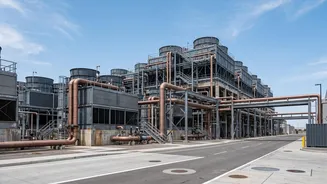
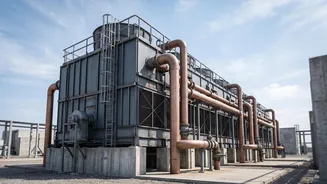
The carbon cost of a data centre isn't just about the electricity needed to run the tens of thousands of servers inside. The term 'carbon cost' encompasses a wider lifecycle of emissions. The new research found that over half of the electricity powering these massive facilities came from burning fossil fuels, primarily natural gas and coal. But the impact also includes 'embodied carbon'—the emissions generated from manufacturing the steel, concrete, and complex electronics needed to build these football-field-sized structures, plus the constant cycle of producing and replacing server hardware. Another significant, often overlooked, cost is water. Data centres use enormous amounts of water for cooling systems to prevent the constantly running servers from overheating, placing a strain on local resources, especially in drought-prone areas. This combination of direct energy use, hardware manufacturing, and water consumption creates a complex environmental footprint.
The AI Acceleration
The primary driver behind this ballooning energy demand is the global boom in Artificial Intelligence. Training large language models and running AI applications requires immense computational power, which in turn requires more servers running at higher intensities. The International Energy Agency has identified AI as the most significant driver of future data centre growth. The Harvard study is one of the first to quantify the impact since the AI boom went into overdrive, finding that emissions estimates are already two to three times higher than previous studies from just a few years ago. As companies race to build more AI-ready facilities, the demand for power and resources is set to grow exponentially, creating a paradox where the technology of the future is powered by the energy sources of the past.
Why This Matters for India
While the new research focuses on the US, its findings are a critical warning for India. India's data centre market is currently in a state of hyper-growth, poised to become one of the largest in the world. Driven by data localization laws, the rise of AI, and massive 5G adoption, India's data centre capacity is projected to triple by 2029, with investments exceeding $32 billion. As of mid-2026, India already had nearly 1.8 gigawatts (GW) of operational capacity, with a pipeline for nearly 3.9 GW more under development. This expansion, concentrated in hubs like Mumbai, Chennai, and Hyderabad, is vital for the 'Digital India' mission but brings immense challenges. Data centres already account for over 1% of India's total electricity demand, a figure projected to rise sharply. Balancing this digital ambition with sustainable infrastructure and reliable power will be one of the nation's most pressing challenges.
The Push for a Greener Cloud
The situation is not without hope. The research highlights that geography and energy sources matter immensely. A data centre powered by a coal-heavy grid can produce seven times more carbon than one in a region with abundant hydropower. This points toward a solution: a transition to renewable energy. Tech giants are among the largest corporate buyers of clean energy, but the sheer pace of their growth often outstrips the availability of green power, forcing them to rely on the fossil-fuel grid. Innovations in cooling technology, such as capturing and reusing waste heat for nearby communities, also offer a path to greater efficiency. At the recent COP31 climate talks, a new voluntary pledge was launched encouraging companies to power data centres with clean energy and be more transparent about their consumption, signaling growing global awareness of the issue.