




The Sun’s Turbulent Weather
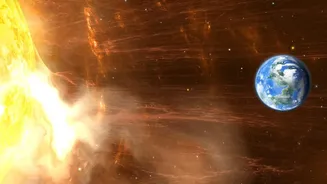
Just like Earth, the sun has its own weather, but instead of wind and rain, it involves torrents of charged particles and energy. This 'space weather' is driven by the sun's roughly 11-year cycle of activity. At the peak of this cycle, known as the 'solar
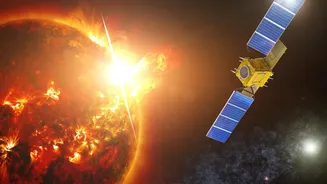
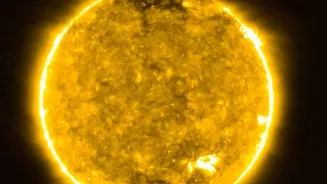
maximum', the sun becomes much more active. It produces more sunspots, which are magnetically intense regions that can unleash powerful solar flares and massive eruptions of solar plasma called Coronal Mass Ejections (CMEs). The current cycle, Solar Cycle 25, which began in 2019, has been more active than initially predicted and reached its peak in late 2024. When these solar storms are aimed at Earth, they can have significant consequences for our technology.
A Two-Pronged Attack on Satellites
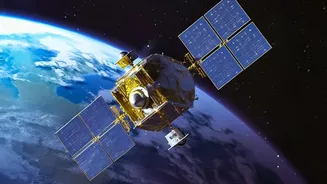
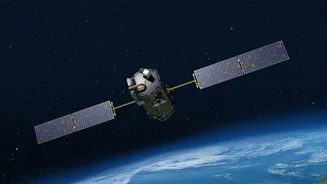
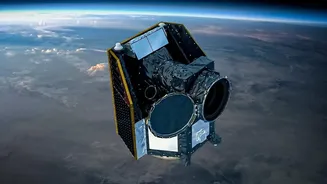
Space weather threatens commercial broadband satellites, especially the thousands in low-Earth orbit (LEO), in two main ways. The first is atmospheric drag. When a solar storm hits Earth, it dumps energy into our upper atmosphere, causing it to heat up and expand. This pushes denser air to higher altitudes, increasing the friction, or drag, on satellites. This increased drag slows satellites down, causing their orbits to decay faster than expected. Operators must then use precious fuel to boost them back into position more frequently. In a dramatic example from February 2022, a moderate geomagnetic storm caused the loss of up to 40 newly launched Starlink satellites because they couldn't overcome the sudden increase in atmospheric drag.
Electronics Under Fire
The second major threat is to the satellites' delicate electronics. High-energy particles released during solar events can penetrate satellites, causing a range of problems from phantom commands and system glitches to permanent damage to sensitive components. This can disrupt satellite-to-ground communications and interfere with the radio signals used for navigation systems like GPS, reducing their accuracy. For a network that relies on thousands of interconnected units working flawlessly, the risk of even temporary outages or data corruption is significant. These disruptions can affect everything from signal availability to the network's ability to accurately route traffic.
The Stakes for a Connected India
As India expands its reliance on satellite-based systems for everything from defence and disaster management to banking and rural connectivity, the stakes have never been higher. Commercial broadband networks are critical for bridging the digital divide, supporting remote work, and enabling economic growth in underserved areas. A significant disruption caused by space weather could sever these vital links. Beyond internet access, India's own space assets, including the NavIC navigation system, are also vulnerable. The successful SpaDeX docking mission by ISRO highlighted how favourable space weather is crucial for complex orbital manoeuvres, underscoring the need for precise forecasting.
Our First Line of Defence: Forecasting
This is where space weather tracking becomes essential. Much like meteorologists forecast hurricanes, scientists at agencies like NOAA in the US and ISRO in India monitor the sun constantly. Using a combination of ground-based observatories and dedicated spacecraft like India's Aditya-L1 mission, they watch for solar flares and CMEs. These observations allow them to issue watches, warnings, and alerts, often giving satellite operators hours or even days of lead time before a storm hits Earth. This warning allows operators to take protective measures, such as temporarily shutting down non-essential components, reorienting satellites to protect sensitive parts, or planning orbital manoeuvres to counteract increased drag.