


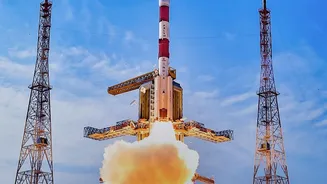
From Spectacle to Study Material
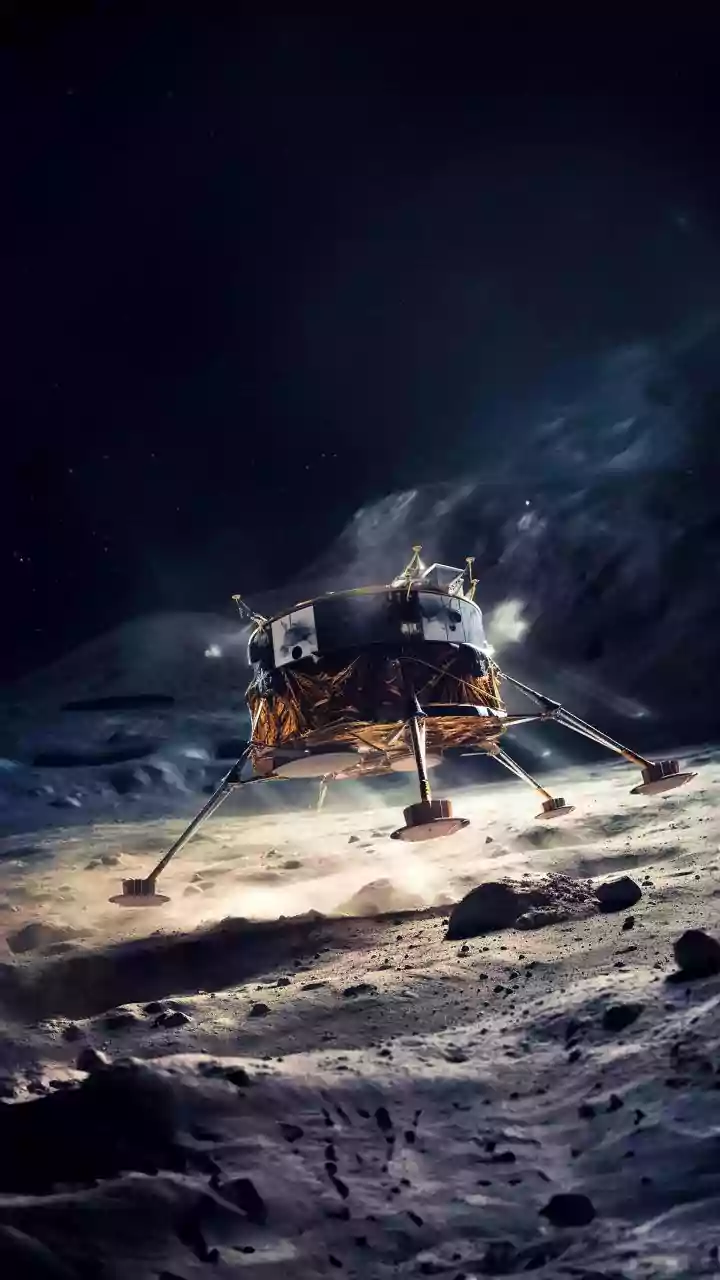
The successful landing of Chandrayaan-3 and the ambitious scope of missions like Gaganyaan are more than just technological milestones; they are a national educational asset waiting to be fully unlocked. While the immediate effect is a surge in curiosity
about science and technology, the real potential lies in systematically integrating these real-world events into our curriculum. The story of a space mission is a ready-made lesson in physics, chemistry, mathematics, and engineering. It's a chance to move learning from abstract theories in textbooks to applied science happening in real-time, led by our own scientists and engineers. This approach helps answer the crucial question every student asks: "Why do I need to learn this?"
A Live Laboratory in the Sky
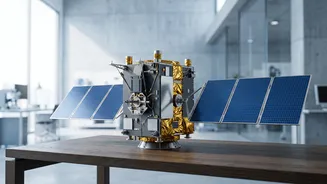
Imagine teaching the laws of gravity not with a hypothetical apple but with the orbital path of an Indian satellite. The challenges of a soft lunar landing can illustrate concepts of velocity, thrust, and atmospheric friction in a way no diagram can. The development of new materials for spacecraft is a lesson in advanced chemistry, while the calculations required for an interplanetary journey are a masterclass in applied mathematics. ISRO already provides numerous outreach programs, including online courses and a STEM portal, that can be leveraged by educators. By designing lesson plans around mission parameters—from fuel composition to data telemetry—teachers can turn every new update from ISRO into an exciting and tangible learning event.
Fostering 21st-Century Skills
A space mission is the ultimate group project. It demands not just scientific knowledge but also critical thinking, problem-solving, collaboration, and perseverance. The story of Chandrayaan-3, built on the learnings from Chandrayaan-2's landing attempt, is a powerful lesson in resilience and iterative design. These are the very skills the National Education Policy (NEP) 2020 aims to foster. By studying the complexities of a mission, students learn about project management, risk assessment, and the interdisciplinary teamwork required to achieve a monumental goal. This approach prepares them for the challenges of the modern workforce, regardless of whether they pursue a career in space.
Making STEM Inclusive and Inspiring
The excitement of space exploration is universal and can act as a powerful magnet to draw more students into Science, Technology, Engineering, and Mathematics (STEM). This is particularly crucial for bridging gender and geographical gaps in education. Programs like ISRO's 'YUva VIgyani KAryakram' (YUVIKA) are specifically designed to "catch them young," with a preference for students from rural areas, encouraging them to pursue STEM careers. When students see people who look and sound like them achieving the impossible, it makes these ambitious fields feel more accessible. The success of India's cost-effective missions sends a powerful message: ingenuity is not limited by resources, and big dreams can be achieved from anywhere.
The Path to Integrated Learning
Turning this vision into reality requires a concerted effort. It involves collaboration between ISRO, educational bodies like NCERT, and teachers on the ground. The recent MoU between NCERT and the Space Education Foundation to weave astronomy into the school curriculum is a significant step in this direction. Initiatives like Atal Tinkering Labs (ATLs), some of which have been adopted by ISRO, provide the perfect infrastructure for hands-on learning, allowing students to work on projects from model rocketry to satellite technology. Developing standardized, accessible teaching modules, training educators, and using technology to create immersive experiences like virtual field trips can embed the spirit of space exploration into the very DNA of Indian education.