




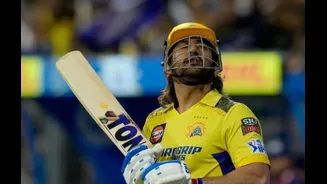
The Golden Goose of 2008
The year was 2008. Fresh off a historic victory at the inaugural 2007 T20 World Cup, Mahendra Singh Dhoni was the hottest name in cricket. His calm leadership and explosive batting made him the player every franchise coveted for the brand-new Indian Premier
League. As the auction approached, teams were strategizing, but one man was about to become the subject of the tournament's first major bidding war. It wasn't just about his skills; it was about acquiring a leader who had just shown the world how to conquer the newest format of the game.
The 'Icon Player' Conundrum
To ensure local flavour, the IPL introduced an 'Icon Player' rule. Superstars like Sachin Tendulkar for Mumbai, Sourav Ganguly for Kolkata, and Yuvraj Singh for Punjab were assigned to their home city franchises, automatically keeping them out of the auction. These icon players were guaranteed a salary 15% higher than the most expensive player bought by their team at the auction. However, Dhoni, hailing from Ranchi, had no natural 'home' team among the initial eight franchises. This quirk of geography meant the most sought-after captain in India was, ironically, a free agent available to the highest bidder.
CSK's Calculated Risk
Most teams were focused on securing their icons. But the Chennai Super Kings management, led by N. Srinivasan, played a different game. They opted not to have an icon player. This was a deliberate and calculated risk. While other teams had a significant portion of their strategy and budget tied to their icon, CSK had its entire purse of $5 million available for the auction floor. Srinivasan was clear on his objective: he wanted MS Dhoni at any price. He trusted his team on the ground, led by V.B. Chandrasekhar, to execute the plan.
An Auction Room Showdown
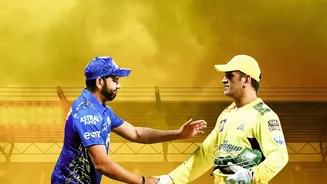
When Dhoni's name came up, the bidding was fierce. The main battle quickly became a two-horse race between the Mumbai Indians and the Chennai Super Kings. The bids soared past the million-dollar mark, a staggering sum at the time. Mumbai, despite having Sachin as their icon, desperately wanted Dhoni to lead. However, their ambition collided with auction arithmetic. As the bid approached $1.5 million, the Mumbai management realized the financial trap. Signing Dhoni at that price would mean paying their icon, Sachin Tendulkar, 15% more, effectively consuming a massive chunk of their entire salary cap on just two players. They hesitated, and that's all CSK needed. Mumbai folded their paddle.
A Legacy Secured for $1.5 Million
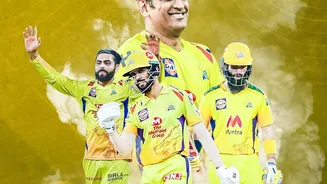
With a final bid of $1.5 million, MS Dhoni became the most expensive player in the inaugural IPL auction and, more importantly, a Chennai Super King. It wasn't just a purchase; it was the foundational stone of a dynasty. As Srinivasan later explained, CSK got Dhoni because other teams were driven by anxiety over their favourite players, while CSK was driven by pure arithmetic. That single, calculated decision forged a bond between a city and a player that would define the league for years. Dhoni wasn't just a player for Chennai; he became 'Thala' (leader), their icon, and the architect of their unparalleled success.