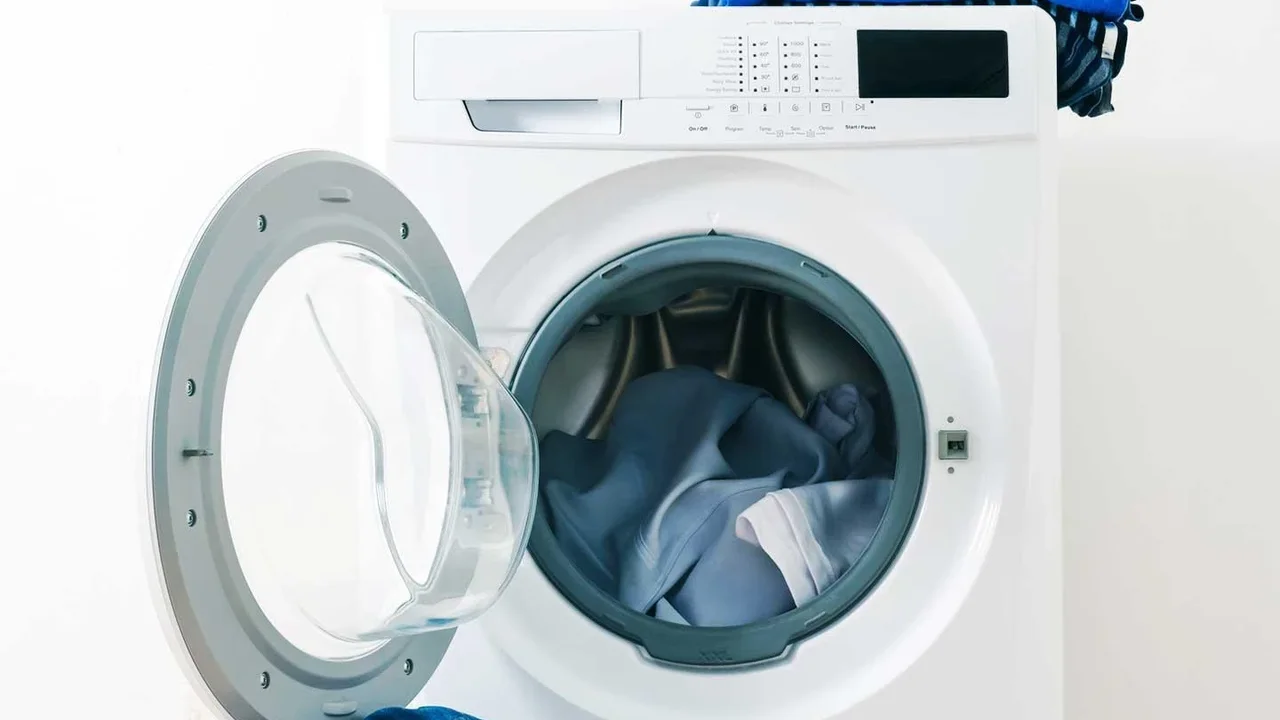







How Laundry Creates Humidity
Every load of laundry introduces a significant amount of water into your home's atmosphere. The process starts with the washing machine itself, where heat and water can create steam. But the main culprit is drying. A single standard wash load dried on
an indoor rack can release approximately two litres of water into the air. If your dryer isn't properly vented to the outside, all that hot, moist air is expelled directly into your laundry room, quickly raising the humidity level. Even leaving wet clothes sitting in the washer can contribute to a damp, musty environment.
Signs of a Humidity Problem
How can you tell if your home is too humid? Your senses are often the first clue. A persistent musty odour, similar to what you might find in a basement, is a red flag. Visually, you might notice condensation forming on the inside of windows, especially in the morning. This happens when warm, moist air makes contact with a cooler surface. Other signs include peeling paint or wallpaper, dark spots of mould appearing on ceilings or in corners, and a general feeling that the air is stuffy or sticky. If you see mould growing on or around air conditioning vents, it's a strong indicator that the problem has been present for a while.
The Health Risks of High Humidity
Beyond a stuffy feeling, high indoor humidity creates an environment where allergens thrive, posing real health risks. The World Health Organization recommends keeping indoor humidity between 40% and 60%. When levels climb above this, it creates a perfect breeding ground for mould, mildew, and dust mites. Exposure to these can trigger allergic reactions, asthma attacks, and other respiratory problems like nasal congestion and coughing. In very humid conditions, the air feels heavier, and your body's ability to cool itself by evaporating sweat is reduced. This can lead to fatigue, dizziness, and other symptoms of heat-related illness.
Smarter Washing Habits
Controlling humidity starts at the source. First, avoid overloading your washing machine, as this can make clothes retain more water and lead to longer drying times. When possible, use a higher spin speed or an extra spin cycle to wring out as much water as possible before drying. This simple step can significantly shorten the time needed in the dryer, reducing the amount of moisture released. Also, transfer your wet clothes to the dryer promptly; letting damp laundry sit in the washer can promote mildew and increase ambient humidity.
Ventilation Is Your Best Defence
The most effective way to combat laundry-related humidity is through proper ventilation. If you have a dryer, ensure its vent leads directly outside and is regularly cleaned to maintain airflow. If you're drying clothes indoors on a rack, try to contain them to one room, close the door, and open a window to allow the moisture to escape. Using an exhaust fan in your laundry room or bathroom during and after doing laundry can dramatically help pull moist air out of the house. Also, make sure to leave a few inches of space between your appliances and the wall to prevent trapping damp air.
Tools and Alternative Drying Methods
For homes prone to dampness, a dehumidifier can be a valuable tool. Placing one in the room where you dry clothes can actively pull moisture from the air, speeding up drying time and preventing mould growth. Try to avoid draping wet clothes over radiators. While tempting, this practice can block heat circulation and actually increase humidity levels. Instead, space items out on a drying rack to allow for better air circulation. Running smaller, more frequent loads can also be better than doing several large loads all at once, which releases a massive amount of moisture in a short period.