


Why Water Is Lunar Gold
Water is the single most important resource for establishing a permanent base on the Moon. It’s far more than just a thirst quencher for astronauts. Through a process called electrolysis, water (H2O) can be split into its component parts: hydrogen and
oxygen. The oxygen can be used to create breathable air in habitats, a fundamental requirement for human survival. The hydrogen and oxygen are also the primary components of rocket propellant. The ability to create fuel on the Moon would effectively establish a cosmic refueling station, dramatically reducing the cost and complexity of missions deeper into the solar system, including Mars. Instead of launching everything from Earth, a heavy and expensive process, future missions could launch with lighter loads and refuel at a lunar base. This practice, known as in-situ resource utilization (ISRU), is the cornerstone of sustainable space exploration.
The Hunt for Hidden Ice
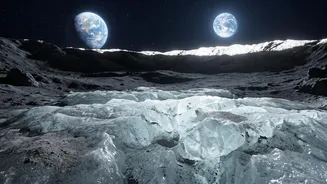
The Moon’s water isn't in flowing rivers or open lakes. It’s primarily found as ice, locked away in some of the most extreme environments in the solar system: Permanently Shadowed Regions (PSRs) near the lunar poles. These are craters and depressions that have not seen sunlight in billions of years, making them incredibly cold. While this deep freeze has preserved the ice, it also makes finding and extracting it a monumental challenge. Before NASA can send heavy mining equipment, it needs a detailed map. This is where robotic scouts come in, tasked with identifying where the ice is, how much is there, and in what form it exists—as large crystals or mixed in with the lunar soil, known as regolith. These prospecting missions are essential first steps before a full-scale extraction operation can begin.
Meet the Robotic Prospectors
NASA's primary prospecting tool is the Volatiles Investigating Polar Exploration Rover, or VIPER. This golf-cart-sized rover is specifically designed to hunt for water ice in the challenging polar regions. Equipped with headlights to navigate the perpetual darkness of PSRs, VIPER will use a suite of instruments to search for signs of water. Its neutron spectrometer will scan for hydrogen beneath the surface, and once a promising location is found, it will deploy a one-meter drill called The Regolith and Ice Drill for Exploring New Terrain (TRIDENT). Samples brought to the surface will be analyzed by other instruments, like the Mass Spectrometer Observing Lunar Operations (MSOLO), to measure the concentration and composition of the ice. Technology demonstrations like the Polar Resources Ice Mining Experiment-1 (PRIME-1) have already tested this drill-and-analyze approach on the Moon, paving the way for VIPER's more extensive mission.
The Extraction Plan: Drill and Heat
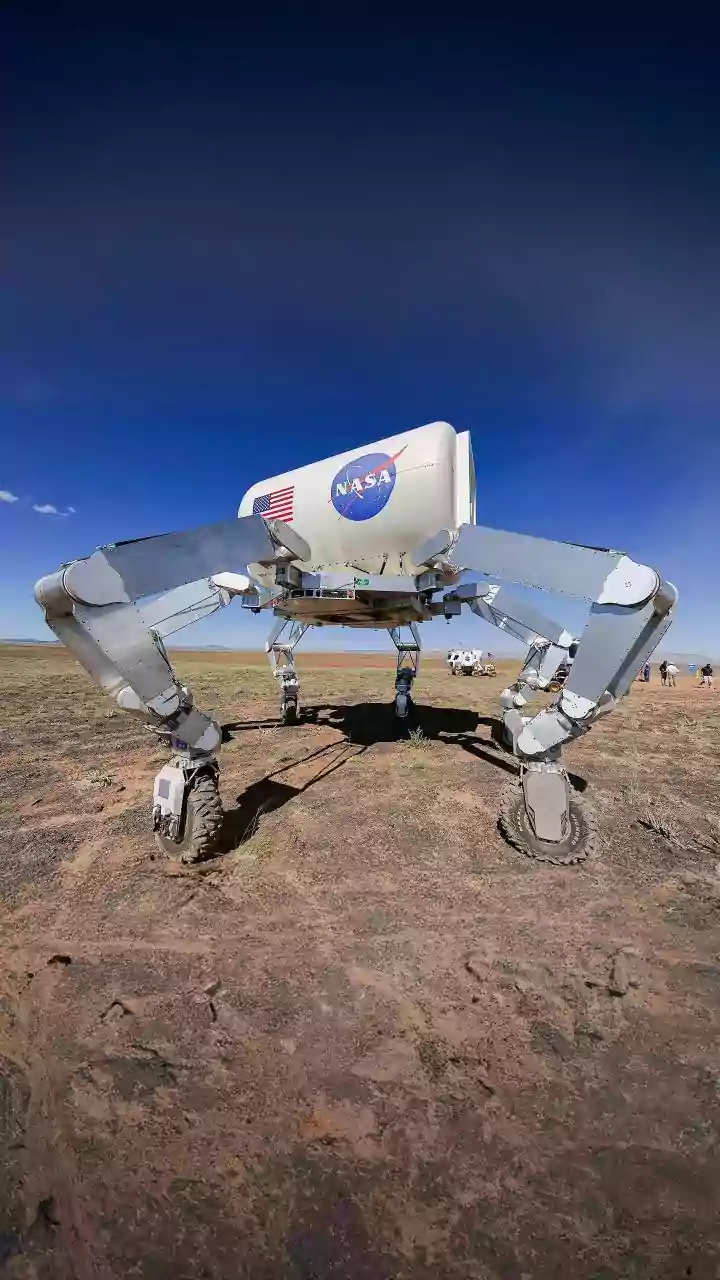
Once VIPER identifies the most resource-rich areas, the actual mining can begin. The leading concept for extraction involves a process called thermal mining. A larger, more robust mining rover would drill into the ice-rich regolith. This excavated material would then be heated inside a sealed chamber. The heat causes the frozen water ice to turn directly into vapor, a process known as sublimation, leaving the dry soil behind. This water vapor is then captured and funneled into a cryogenic cold trap, where it refreezes into a much purer block of ice or is condensed into liquid water. This method is considered more efficient than physically excavating and transporting massive amounts of soil. The goal is to develop a system that can reliably produce industrial quantities of water, forming the foundation of the lunar economy and enabling long-term missions.
From Water to a Lunar Outpost
The extracted water is the key that unlocks a sustainable lunar outpost. Once collected, the water is processed through an electrolysis unit, which uses electricity—generated by nearby solar arrays—to split the H2O into hydrogen and oxygen. The oxygen is stored to provide breathable air for habitats and to fill the oxidizer tanks of rockets. The hydrogen can be used as fuel. This on-site production of life support and propellant is a game-changer. It closes the loop, allowing a lunar base to become increasingly self-sufficient. By learning to live off the land on the Moon, NASA and its partners are not just building a temporary camp; they are laying the groundwork for humanity's future as a multi-planetary species, with the Moon serving as a critical stepping stone to Mars and beyond.