






Choose Your Materials Wisely
The foundation of an easy-to-clean home is selecting the right materials. Smooth, non-porous surfaces are your best friends. Glazed ceramics, polished metal, and glass are simple to wipe down and less likely to hold onto dust. A quick pass with a microfiber
cloth is often all that's needed to restore their shine. Conversely, materials with complex textures, like rough-hewn wood, unglazed pottery, or intricate metalwork, can be dust magnets. Matte finishes, while trendy, can also be more susceptible to showing smudges and require more careful cleaning than their glossy counterparts. When selecting wooden decor, opt for pieces with a smooth, sealed finish, which are more resistant to moisture and easier to dust than raw or oiled wood.
Simplicity in Shape and Form
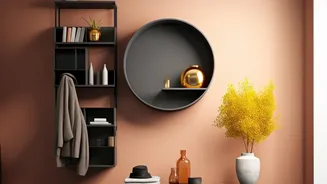
Beyond material, the shape of a decorative object plays a huge role in its maintenance. A sleek, minimalist vase with simple lines will always be easier to clean than an ornate candelabra with countless nooks and crannies. Before purchasing a new piece, consider the effort required to dust it. Can it be cleaned with a single wipe, or will you need a small brush and compressed air to get into its crevices? Opting for simpler silhouettes doesn't mean your decor has to be boring. A collection of smooth, sculptural objects can make just as powerful a statement as more detailed pieces, but will save you significant time and effort in the long run. The goal is to find items that offer maximum visual impact for minimal cleaning effort.
Understanding Weight and Placement
Once you've chosen your piece, the focus shifts to safety. The first rule is to be realistic about an item's weight. Before placing a heavy sculpture on a glass shelf or hanging a large mirror, understand its heft. Use a bathroom scale if you're unsure. This simple step informs every subsequent decision. Heavy items should always be placed on lower, more stable shelves to maintain a low center of gravity and reduce the risk of tipping. Avoid the temptation to place heavy decor on top of tall, unanchored furniture like bookcases, as this makes them dangerously top-heavy. A thoughtful approach to weight distribution is the first line of defense against accidents.
The Art of Secure Support
Whether it's a floating shelf or a large bookcase, the structure supporting your display pieces must be failsafe. For heavy items, it is crucial to anchor shelves and furniture to wall studs. Use an electronic stud finder to locate these strong anchor points behind the drywall; never rely on drywall alone to support a significant load. If you must mount something between studs, use heavy-duty hollow-wall anchors like toggle bolts, which are rated for substantial weight. Always choose hardware rated to support at least double the weight of your item for a safe margin. Freestanding bookcases, especially tall or narrow ones, should always be secured to the wall with anti-tip kits. These are inexpensive and easy-to-install devices that prevent furniture from falling forward if pulled or climbed on.
Hanging Wall Art Safely
Large, heavy wall art requires special consideration. A common mistake is using hardware that is too light for the piece, which can lead to it falling. Always use heavy-duty hangers, screws, and anchors rated for the art's weight. Locating a wall stud is the most secure method for hanging heavy frames. When hanging art above furniture like a sofa, ensure it is anchored securely and positioned correctly—not so high that it feels disconnected from the furniture below. A general rule is to hang art with its center at eye level, around 57-60 inches from the floor, to create a balanced, professional look. Using a level is non-negotiable for ensuring your art hangs straight and enhances the room's overall harmony.