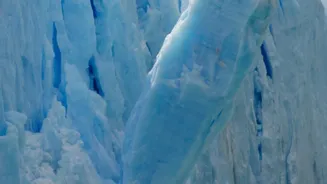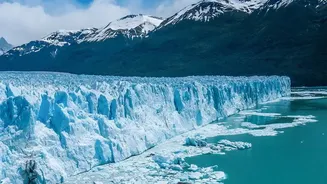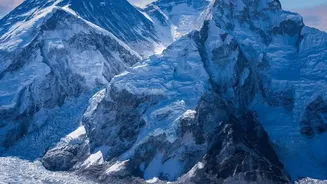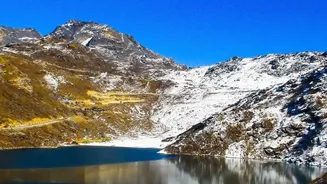






High in the Himalayas, thousands of glacial lakes are swelling, creating 'ticking time bombs'. New UN reports confirm this danger is escalating, posing a catastrophic flood risk to millions living downstream in India and beyond.
A Wall of Water in the Mountains
A Glacial Lake Outburst
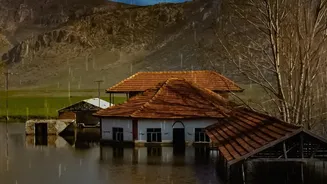
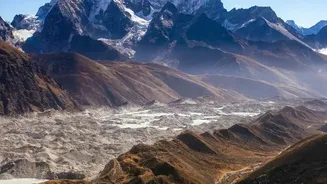
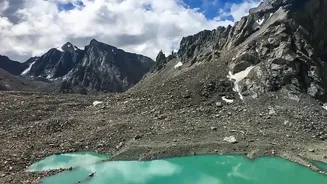
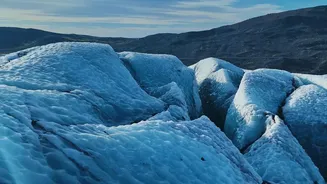
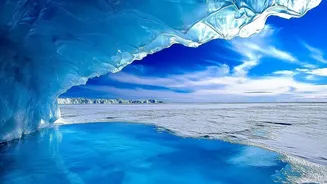
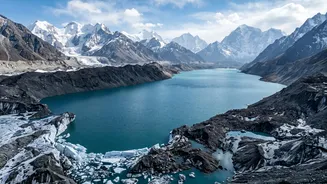
Flood, or GLOF, is one of nature's most destructive events. It happens when a lake formed by melting glaciers, often dammed by unstable walls of rock and ice called moraines, suddenly bursts. The result is a terrifying, fast-moving wall of water, mud, and debris that can thunder down mountain valleys for kilometres, destroying everything in its path. These are not normal floods; they can carry the force of a landslide, with some reports describing walls of water travelling at over 150 kilometres per hour. The Hindu Kush Himalaya region, often called the 'Third Pole' for its vast ice reserves, is home to thousands of these lakes, and many are growing larger and more dangerous every year.
The UN's Alarming Findings
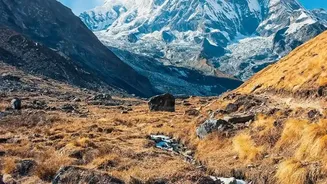
Recent reports from United Nations-backed bodies paint a stark picture. Studies have highlighted that GLOF events have become roughly five times more frequent since 1950. Researchers have identified hundreds of potentially dangerous glacial lakes across the vast Himalayan region, which spans countries like India, Nepal, Bhutan, Pakistan, and China. A UN-led study found that while China and Pakistan have recorded more GLOF events, India has suffered the highest death toll, with over 6,000 fatalities reported between 1835 and 2025. The warnings are clear: the threat is not abstract or distant. It is a present and escalating danger to millions of people who live along major river systems like the Ganga, Indus, and Brahmaputra, all of which are fed by Himalayan glaciers.
Why the Danger Is Intensifying
The primary driver behind this escalating risk is climate change. The Himalayan region is warming at a rate significantly faster than the global average. This accelerated warming causes glaciers to melt at an unprecedented pace. The meltwater leads to the formation of new glacial lakes and the rapid expansion of existing ones, increasing the volume of water and pressure on their fragile natural dams. These moraine dams, composed of loose rock and sediment, can be weakened by the very water they hold, or breached by triggers like avalanches, earthquakes, or even heavy rainfall. As glaciers retreat, they also leave behind unstable slopes, increasing the risk of landslides that can crash into lakes and cause them to burst.
The Human Cost for India
For India, this is a direct threat to national security, infrastructure, and human life, particularly in Himalayan states like Uttarakhand, Himachal Pradesh, Sikkim, and Arunachal Pradesh. Recent history provides tragic reminders of this vulnerability. The 2021 disaster in Chamoli, Uttarakhand, where a glacier break caused flash floods that killed around 200 people, and the 2023 GLOF in Sikkim that claimed over 50 lives, are stark examples of the destructive power of these events. These floods not only cause immense loss of life but also destroy critical infrastructure such as roads, bridges, and vital hydropower projects, which are central to the region's economy. Communities living in downstream valleys face the constant threat of being washed away with little to no warning.
A Race Against Time for Solutions
Addressing the GLOF threat requires a two-pronged approach: mitigation and adaptation. On one hand, there is a desperate need for better monitoring and early warning systems that can provide downstream communities with crucial minutes to evacuate. On the other hand, structural solutions are being explored such as the controlled draining of the most dangerous lakes to reduce pressure on their dams. However these are complex and expensive undertakings in remote high altitude terrain. Experts emphasize the need for greater investment in climate resilient infrastructure and crucially enhanced cross border cooperation. Since many of these dangerous lakes and river systems cross international boundaries sharing data and coordinating disaster response between India Nepal China and Bhutan is essential to saving lives.