


The Cosmic Data Bottleneck
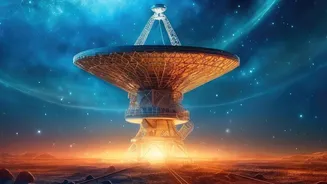
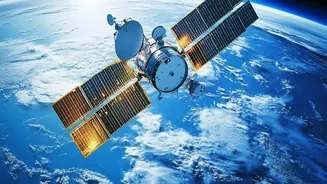
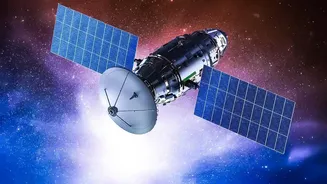
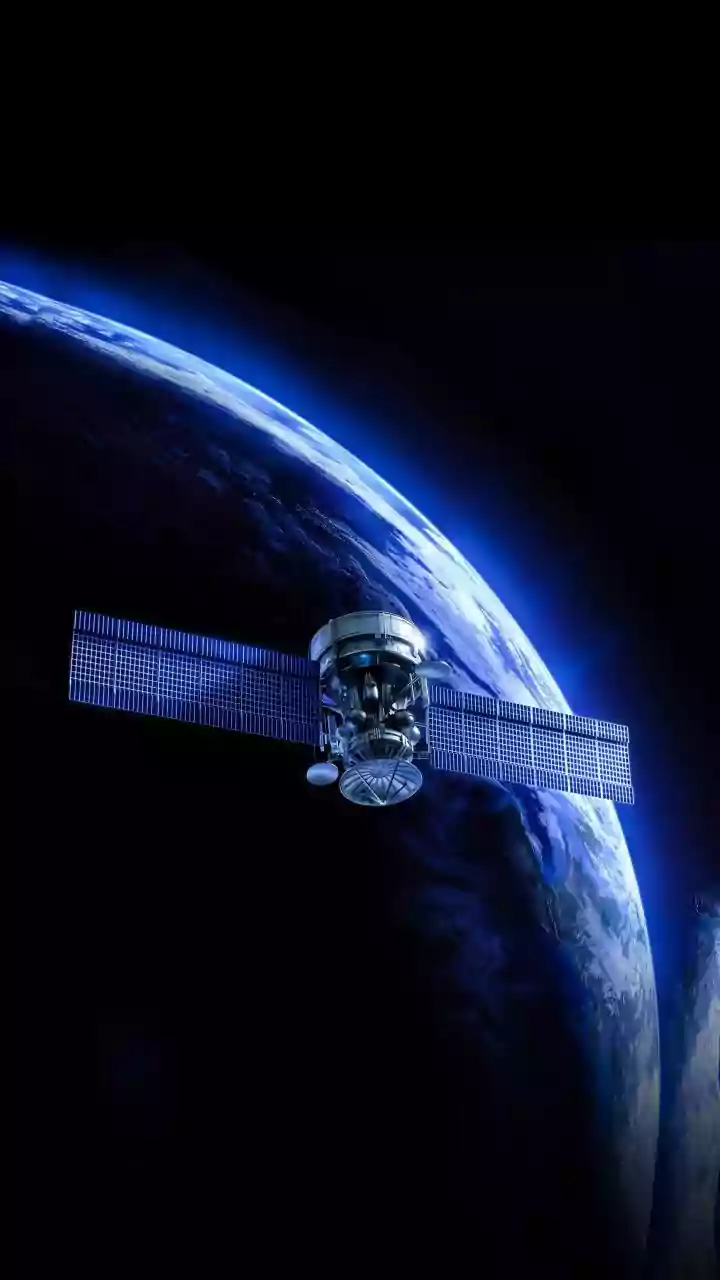
For as long as humanity has explored space, we have relied on radio waves to communicate with our robotic and human emissaries. From the first satellite beep to images from the farthest probes, radio frequency (RF) systems have been the backbone of space communication.
But as our scientific instruments become more powerful, capturing vast amounts of high-resolution data, RF technology is hitting a fundamental limit. Transmitting a complete, high-resolution map of Mars using current radio systems could take as long as nine weeks. This data bottleneck means scientists must be selective about the information they bring home, and high-bandwidth applications like live 4K video from other worlds have remained firmly in the realm of science fiction.
A Solution Written in Light
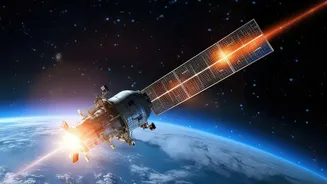
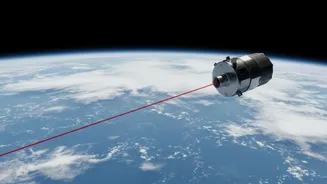
The answer to this cosmic traffic jam is laser communication, also known as optical communication. Instead of using wide radio waves, this technology uses invisible infrared light to encode and transmit data. Think of the difference between a floodlight and a laser pointer. Radio waves spread out over vast distances, diluting the signal's strength. In contrast, laser communication packs data into a much tighter, more focused beam of light. This fundamental difference allows ground stations to receive significantly more data at once, breaking the bandwidth barrier that has constrained space exploration for so long.
How Lasers Achieve Higher Speeds
It's important to clarify that the data itself doesn't travel faster—both radio waves and lasers move at the speed of light. The advantage of lasers is their ability to carry much more information in a single transmission. This is because light waves have a much higher frequency than radio waves. The higher the frequency, the more data you can pack into the signal. This allows for data rates that are 10 to 100 times greater than the most advanced RF systems today. Recent demonstrations, like NASA's Deep Space Optical Communications (DSOC) experiment on the Psyche spacecraft, have proven the technology's power, achieving broadband-like speeds of 267 megabits per second (Mbps) from millions of miles away. To put that in perspective, NASA sent a high-definition video of a cat named Taters from 19 million miles away, and the download was a success.
More Than Just Raw Speed
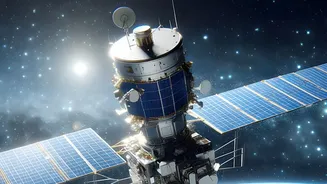
While the massive increase in data rate is the headline feature, laser communication systems offer other critical advantages for mission design. The hardware is significantly smaller, lighter, and requires less power than comparable RF systems. On a spacecraft where every gram and every watt is meticulously accounted for, these savings are enormous. They can free up valuable mass and power for more scientific instruments, extending a mission's capabilities. Furthermore, laser communications are inherently more secure. The narrowness of the beam makes it extremely difficult to intercept, a key advantage for sensitive military and commercial operations in space.
Unlocking the Future of Exploration
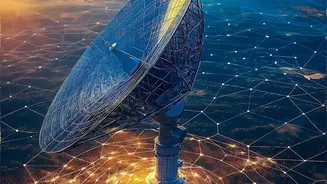
This technology isn't just an incremental upgrade; it's a foundational shift that will enable the next era of scientific discovery and human exploration. With laser communication, future missions could transmit vast datasets from advanced instruments, giving scientists an unprecedented view of other planets and distant stars. It paves the way for an interplanetary internet, with relay satellites creating a continuous, high-speed data connection across the solar system. For human missions to Mars, it means reliable, high-definition video feeds and real-time communication that are essential for astronaut safety and mission success. What once took weeks to transmit could soon arrive in a matter of hours or days, making the vastness of space feel just a little bit closer.