


Earth's Toughest Travelers
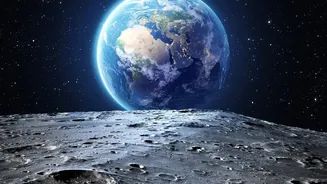
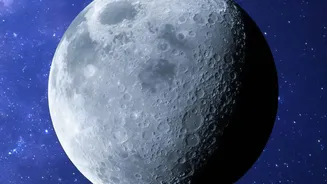
The study, led by scientists at NASA's Goddard Space Flight Center, did not find existing life on the Moon. Instead, through sophisticated computer simulations, it explored whether microscopic hitchhikers from Earth could endure lunar conditions. Researchers
modeled the environment of the Moon's south pole, a key target for future Artemis missions, and tested the resilience of several microorganisms commonly found in spacecraft environments. The results showed that in certain protected areas, these microbes could survive, entering a dormant state. The simulations focused on survival, not growth or reproduction, which would require far more hospitable conditions, including liquid water. Among the microbes tested, a fungus called Aspergillus niger, also known as common black mold, proved to be the most durable. This organism, along with bacteria like Deinococcus radiodurans, demonstrated the potential to withstand the harsh lunar environment for days or even weeks in some cases.
Sanctuary in the Shadows
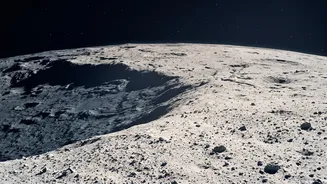
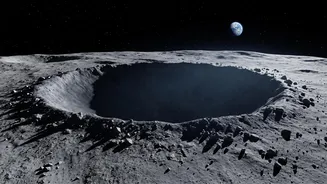
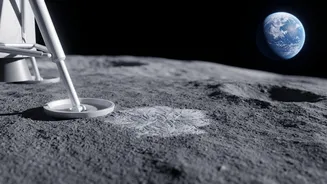
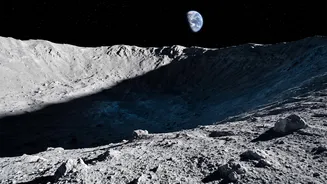
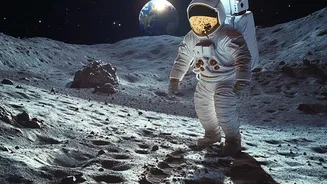
The key to survival lies in the unique geography of the Moon's polar regions. Due to the Moon's slight axial tilt, the sun never rises high in the polar sky. This low angle means that the rims of craters can cast permanent shadows over their floors, creating what scientists call Permanently Shaded Regions, or PSRs. These areas are some of the coldest places in our solar system, but they offer crucial protection from the two biggest threats on the lunar surface: extreme temperature swings and intense, unfiltered ultraviolet (UV) radiation from the sun. While a sunlit portion of the Moon can reach a scorching 127 degrees Celsius, these shadowed craters remain in a deep freeze. The study found that even small shadows, like those cast by a boulder or inside an astronaut's bootprint, could create a survivable niche for a microbe.
A Question of Contamination
These findings have significant implications for the future of lunar exploration. As humans prepare to return to the Moon with the Artemis program, they will inevitably bring trillions of microbes with them on their bodies, equipment, and habitats. The study underscores a major challenge for planetary protection: ensuring that we don't contaminate the very places we seek to study. If Earth microbes can survive, they could interfere with sensitive scientific experiments designed to search for the building blocks of life or understand the Moon's pristine ancient chemistry. Scientists need to know if any organic molecules they discover are genuinely lunar or just tiny stowaways from home. This research suggests that protocols for robotic missions, which often involve baking spacecraft at high temperatures to sterilize them, are not feasible for crewed missions, demanding new strategies.
The Search for Life Continues
While the idea of Earth life surviving on the Moon is fascinating, it also reframes our search for extraterrestrial life. The tenacity of these organisms shows that life might be able to persist in incredibly harsh environments across the solar system. The study highlights the importance of establishing a baseline understanding of the lunar environment before a more permanent human presence is established. This isn't just about protecting the Moon; it's a dress rehearsal for Mars. Understanding how to conduct science without contamination is a critical skill humanity must master before we venture further out to search for signs of life on other worlds. The Moon, in this context, becomes a unique natural laboratory for testing the limits of life and our ability to explore responsibly.