




Why You Should Mix Walking and Strength
Combining cardiovascular exercise like walking with strength training offers a holistic approach to fitness. Walking is excellent for heart health, endurance, and circulation, while strength exercises build and maintain muscle mass, strengthen bones,
and improve stability. This pairing leads to a higher calorie burn, as muscle tissue boosts your resting metabolism. It also improves functional strength, making everyday activities like carrying groceries or climbing stairs feel easier. Plus, it's a time-saver, allowing you to get a full-body workout without needing a gym or separate training sessions.
Getting Started: Tips for Success
Before you start, remember to warm up with a few minutes of easy-paced walking to get your muscles ready. As you incorporate strength moves, focus on your form over speed or the number of repetitions. It is better to do fewer reps correctly than many with poor technique. You can pause your walk at a park bench or a clear spot on the path to perform these exercises. Listen to your body and rest when you need to. A good starting point is to perform each exercise for 8-12 repetitions before continuing your walk.
Park Bench Push-Ups
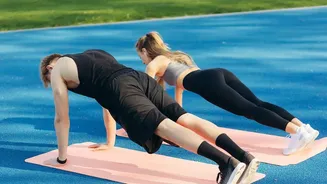
This move strengthens your chest, shoulders, and arms without the strain of floor push-ups. Find a sturdy park bench or wall. Stand an arm's length away and place your hands on the bench, slightly wider than your shoulders. Keeping your body in a straight line from your head to your heels, bend your elbows to lower your chest toward the bench. Push back to the starting position. To make it easier, choose a higher surface like a wall; to make it harder, find a lower bench.
Bodyweight Squats
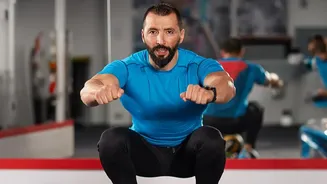
Squats are a fundamental exercise for strengthening your legs and glutes, which improves lower body strength and stability. Stand with your feet shoulder-width apart, with your toes pointing slightly outwards. Lower your hips back and down as if you are sitting in a chair. Keep your chest up and your back straight. Go as low as is comfortable, aiming to get your thighs parallel to the ground. Push through your heels to return to a standing position. If you need support, you can hold onto a bench or railing.
Walking Lunges
Walking lunges target your quadriceps, hamstrings, and glutes while also challenging your balance and coordination. Take a large step forward with your right foot. Bend both knees to lower your body until your right thigh is parallel to the floor and your back knee is close to the ground. Your front knee should be directly above your ankle. Push off your back foot and step forward with your left leg, moving directly into the next lunge. If this is too challenging, perform stationary lunges instead, completing all reps on one side before switching.
Calf Raises
This simple move strengthens your calf muscles, which helps with endurance and power during your walk. Stand with your feet hip-width apart, holding onto a bench or wall for balance if needed. Slowly lift your heels off the ground, rising onto the balls of your feet. Hold the position for a moment, feeling the contraction in your calves, then slowly lower your heels back down. For an extra challenge, you can perform these on a curb or step, allowing your heels to drop lower for a greater range of motion.