





Embrace a Quiet Colour Story
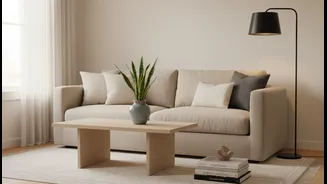
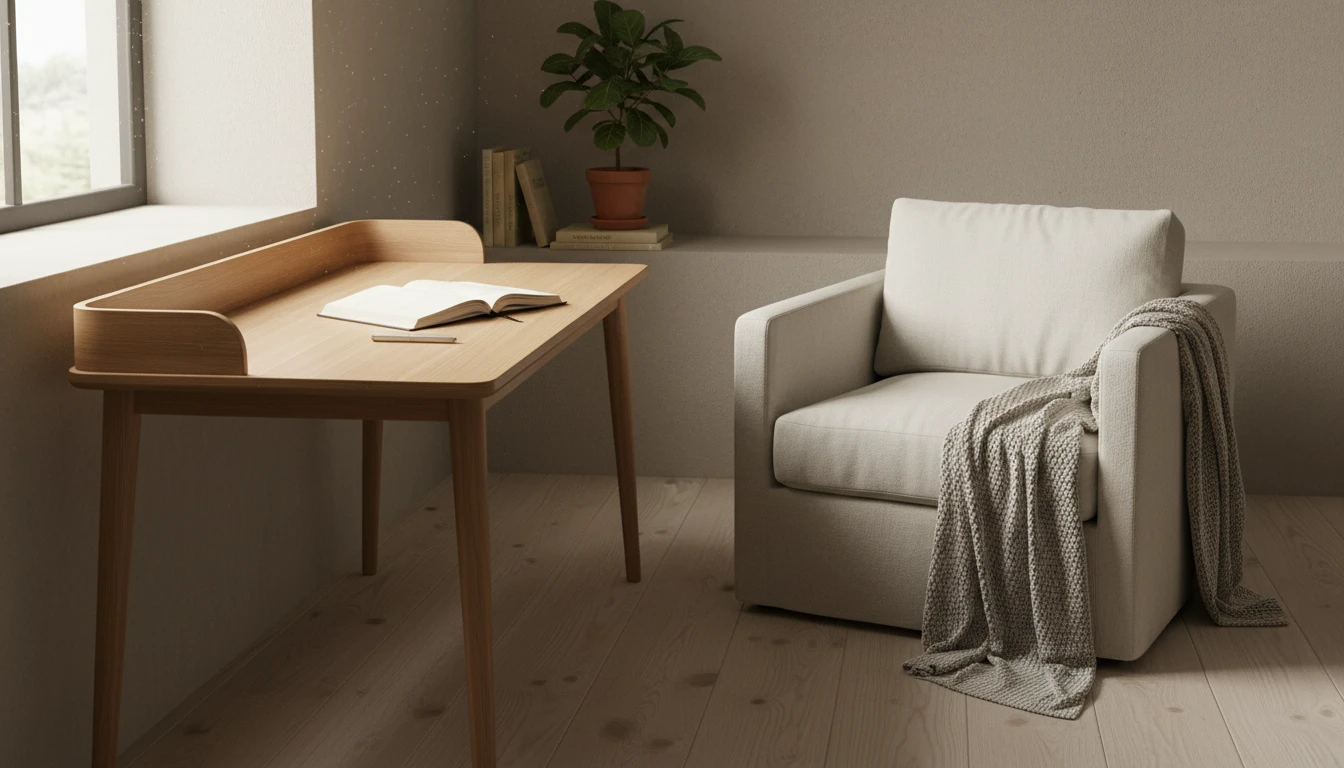
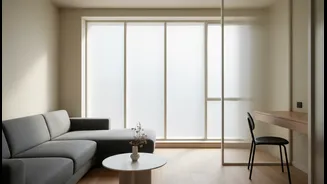
The feeling of calm in a room often starts with its colour palette. Instead of sharp, contrasting colours that demand attention, opt for a cohesive and muted colour story. This doesn't mean your home has to be entirely beige. Think soft, earthy greens,
pale blues, warm greys, and creamy whites. Using variations of the same hue throughout a space—a technique known as tonal layering—creates depth without visual friction. This continuity helps to blur the boundaries of a small room, making it feel more expansive and serene. The brain perceives this harmony as peaceful, allowing your mind to rest instead of constantly processing jarring visual information.
Layer Your Lighting
One of the most common mistakes in any space, but especially small ones, is relying on a single, harsh overhead light. This creates glare and unflattering shadows, which can feel stressful. A truly restful atmosphere comes from layered lighting. Start by maximising natural light with sheer curtains that soften sunlight without blocking it. Then, add multiple sources of artificial light at different heights. A floor lamp in a corner, a table lamp by a sofa, and perhaps a plug-in scone by a mirror create warm, inviting pools of light. Using warm-toned bulbs (around 2700K) that mimic the gentle glow of sunset signals to your brain that it's time to unwind. Dimmers are also a powerful tool, allowing you to adjust the intensity for a softer ambiance in the evening.
Prioritise Hidden Storage
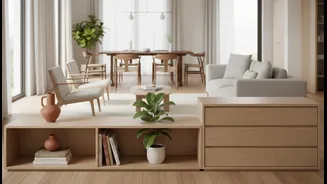
Visual clutter is one of the biggest sources of stress in a home. Your brain registers every out-of-place item as an unfinished task, preventing it from truly relaxing. The most effective design choice for a restful home is therefore one you cannot see: excellent, concealed storage. This goes beyond just having shelves; it’s about integrating storage seamlessly. Think of ottomans that open up, coffee tables with drawers, and beds with built-in storage underneath. The goal is to give every item a designated home, so that clearing surfaces becomes a simple, quick habit. A visually clean space gives your mind 'room to breathe', making the entire home feel calmer and more spacious.
Let the Architecture Flow
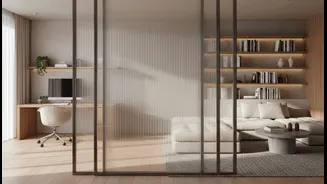
In a small home, every transition matters. Jarring changes in flooring or wall colour can make a space feel choppy and even smaller. Creating unbroken visual lines helps a space feel more cohesive and expansive. Where possible, use the same flooring throughout adjoining rooms to create a seamless flow. This tricks the eye into seeing one large, unified area rather than several small, boxed-in ones. Another subtle trick is to paint the walls, skirting boards, and even interior doors in the same or very similar shades. This continuity stops the eye from getting caught on jarring lines, contributing to an overall sense of effortless calm.
Soften the Edges
Our brains are subconsciously wired to perceive sharp angles and hard lines as potential threats, which can create a subtle feeling of alertness or tension. Conversely, rounded and curved forms read as safe, soft, and inviting. You don't need to replace all your furniture, but introducing a few softer shapes can shift the entire mood of a room from alert to at-ease. Consider a round coffee table, a mirror with an arched top, a curved sofa, or even cylindrical lamps. These gentle curves break up the rigid geometry of a small room, making it feel more organic and welcoming. The effect is subliminal but powerful in creating a space where you can instinctively relax.
Curate Your Textures
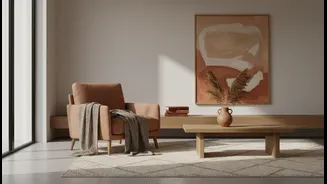
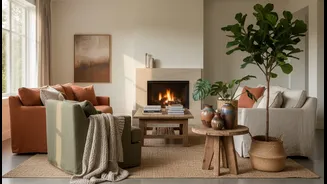
A restful space isn't devoid of interest; it's simply a space where the interest is quiet. Instead of loud patterns that can feel like visual clutter, build depth with a variety of textures in a similar colour family. Think of the tactile contrast between a soft woollen throw, a slubby linen cushion, a smooth wooden side table, and a plush rug. These layers add warmth and sensory richness, making the room feel thoughtfully designed and comfortable. This approach stimulates the sense of touch in a soothing way, creating a cosy, inviting environment that you want to settle into at the end of the day.