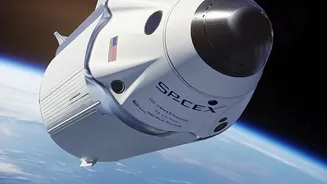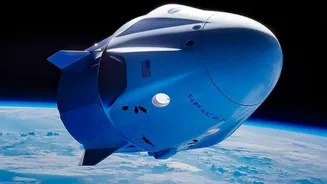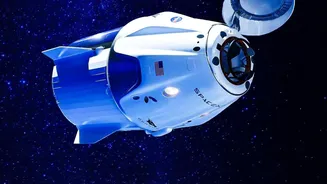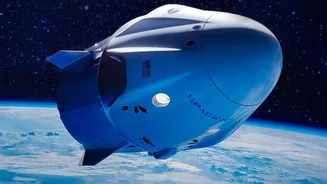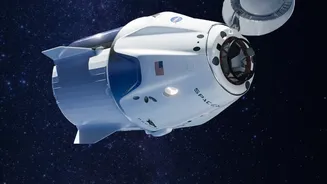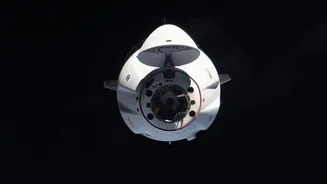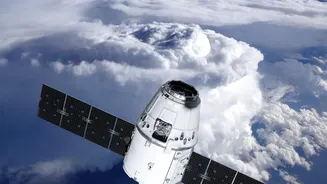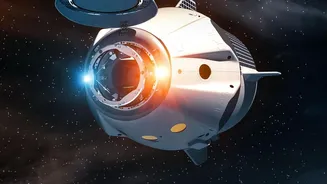



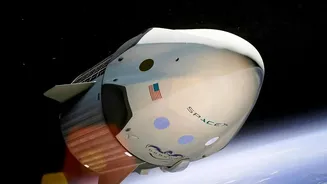
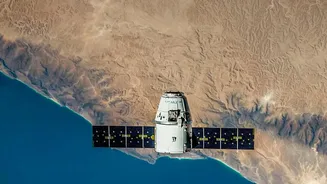
A scientific treasure chest has just returned to Earth. On November 21, a SpaceX Dragon capsule splashed down in the Pacific Ocean, completing a vital resupply mission and bringing home a priceless cargo of frozen biological experiments.
A Crucial Supply Run Ends
The mission, designated
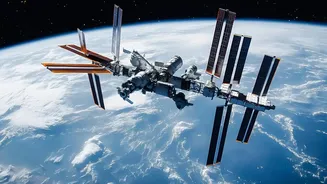
CRS-35, was the 35th Commercial Resupply Services flight operated by SpaceX for NASA. The uncrewed Dragon capsule launched on October 13 from Florida, delivering over 6,300 pounds of supplies, station hardware, and new science to the International Space Station (ISS). But unlike many cargo vehicles that burn up on reentry, the Dragon is designed for a round trip. Its ability to return cargo intact is essential for modern space science, making it the go-to vehicle for bringing sensitive experiments back to Earth for in-depth analysis. After undocking from the ISS on November 20, the capsule began its approximately 29-hour journey home, culminating in a successful parachute-assisted splashdown.
Science on Ice
The most precious cargo on board was a collection of scientific samples, many of them carefully frozen. This 'cold stowage' is critical for preserving biological materials, stopping their molecular clocks so scientists can study them as they were in space. The returning experiments include a wide range of investigations aimed at improving life on Earth and protecting astronauts on future long-duration missions. Among the haul are 3D-bioprinted blood vessel models used to study cardiovascular disease and the aging process. Also returning are frozen tumor organoids—tiny, lab-grown cancer models—that were treated with experimental drugs in orbit to see how microgravity affects their growth and response to therapy.
The Importance of Freezing
Keeping these samples frozen is a complex logistical challenge. On the ISS, specialised freezers, like the European-built MELFI, can maintain temperatures as low as -98°C. This cryo-preservation prevents degradation of delicate tissues, cells, and microbes. For experiments studying how bacteria develop antibiotic resistance in space, freezing ensures the microbes don't change or evolve further during their trip home. By analyzing these pristine samples, researchers hope to gain a clearer understanding of how the near-weightless environment of space alters fundamental biological processes. This knowledge could lead to breakthroughs in personalized cancer treatments and new strategies to combat drug-resistant superbugs on Earth.
From Ocean to Laboratory
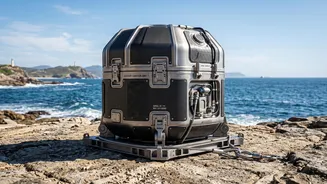
Following the splashdown off the coast of California, recovery teams raced to retrieve the Dragon capsule. For the time-sensitive biological samples, the journey is far from over. The 'cold chain' must be maintained from the moment the capsule is lifted from the ocean until the samples are delivered to research labs across the country. Teams work quickly to unload the scientific freezers and transfer the cargo to planes for rapid distribution. Only then can scientists begin the painstaking work of analyzing the data, comparing the space-flown samples to their Earth-based counterparts. Also among the returned cargo was a specialized lighting system that spent over three years on the station, used in an experiment to see how lighting can improve astronaut sleep and well-being.