



The Science of Green
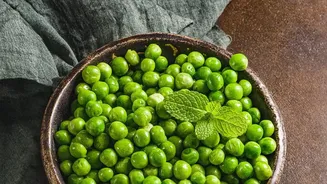
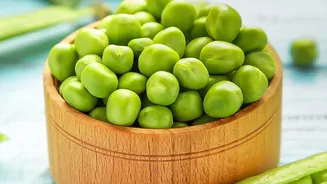
The brilliant green in peas comes from chlorophyll. When vegetables are heated, their cells begin to break down, releasing natural acids. In an acidic environment, the magnesium atom at the centre of the chlorophyll molecule gets replaced by hydrogen,
which changes its colour from bright green to a dull, olive hue. The longer the peas are cooked, the more this change occurs. Initially, cooking actually brightens the colour as gases trapped between the plant's cells escape, giving you a clearer view of the chlorophyll. But this is a brief window before the dulling process begins. The key is to minimise heat exposure and control the acidic environment.
Master the Blanch and Shock
The most reliable method used by chefs is called 'blanch and shock'. This two-step process locks in colour and texture perfectly. First, bring a large pot of generously salted water to a rolling boil. Plunge the peas into the water for a very short time—typically 1 to 3 minutes is enough. Have a large bowl of ice water ready. As soon as the peas are cooked but still have a slight bite, use a slotted spoon to immediately transfer them into the ice bath. This 'shock' instantly stops the cooking process, preventing the chlorophyll from degrading further and setting that beautiful, bright green colour.
Cook Quickly and Uncovered
Time is the enemy of green. Overcooking is the single biggest reason peas turn mushy and drab. Fresh or frozen peas require very little cooking time. Often, just a few minutes in boiling water or a quick steam is sufficient. When boiling, avoid covering the pot with a lid. Covering the pot traps steam, which contains the very acids released from the vegetables. This acidic condensation then drips back onto the peas, accelerating the colour change. Cooking uncovered allows these volatile acids to escape with the steam, helping to preserve the green.
Use Plenty of Salted Water
Using a large volume of water when boiling does more than just cook the peas; it helps protect their colour. A larger amount of water effectively dilutes the natural acids that the peas release during cooking, creating a less hostile environment for the chlorophyll. Salting the water generously not only seasons the peas but also plays a small role in protecting the chlorophyll molecule. Some sources suggest the sodium ions can help make the cell walls of the peas more permeable, speeding up cooking time, which further limits the destructive effects of prolonged heat.
The Baking Soda Debate
You may have heard a tip to add a pinch of baking soda to the cooking water. This makes the water alkaline, which does protect chlorophyll and results in an intensely green pea. However, this method comes with a significant drawback. The alkalinity that preserves the green colour also breaks down pectin, the substance that gives vegetables their structure. This can result in peas that are beautifully green but unpleasantly soft and mushy. Many chefs and nutritionists advise against it, as it can also destroy nutrients like Vitamin B and C and impart a slightly soapy flavour if too much is used. It's a trick best used with caution, if at all.
Timing Your Acids
If your recipe includes acidic ingredients like lemon juice, vinegar, or tomatoes, timing is crucial. Adding these components too early will guarantee dull peas. The acid will attack the chlorophyll and turn your vibrant dish into a murky green. To avoid this, cook your peas separately using one of the methods above. Let them cool slightly, and then fold them into your salad dressing or sauce at the very last minute before serving. This minimises the contact time between the peas and the acid, preserving their colour right up to the moment you eat.