



A Planet in Constant Motion
At its heart, the theory of plate tectonics describes Earth’s outer shell not as a solid, unbroken sphere, but as a mosaic of massive, rigid plates in constant, slow-motion transit. Seafloor spreading is the engine of this process. It occurs at mid-ocean
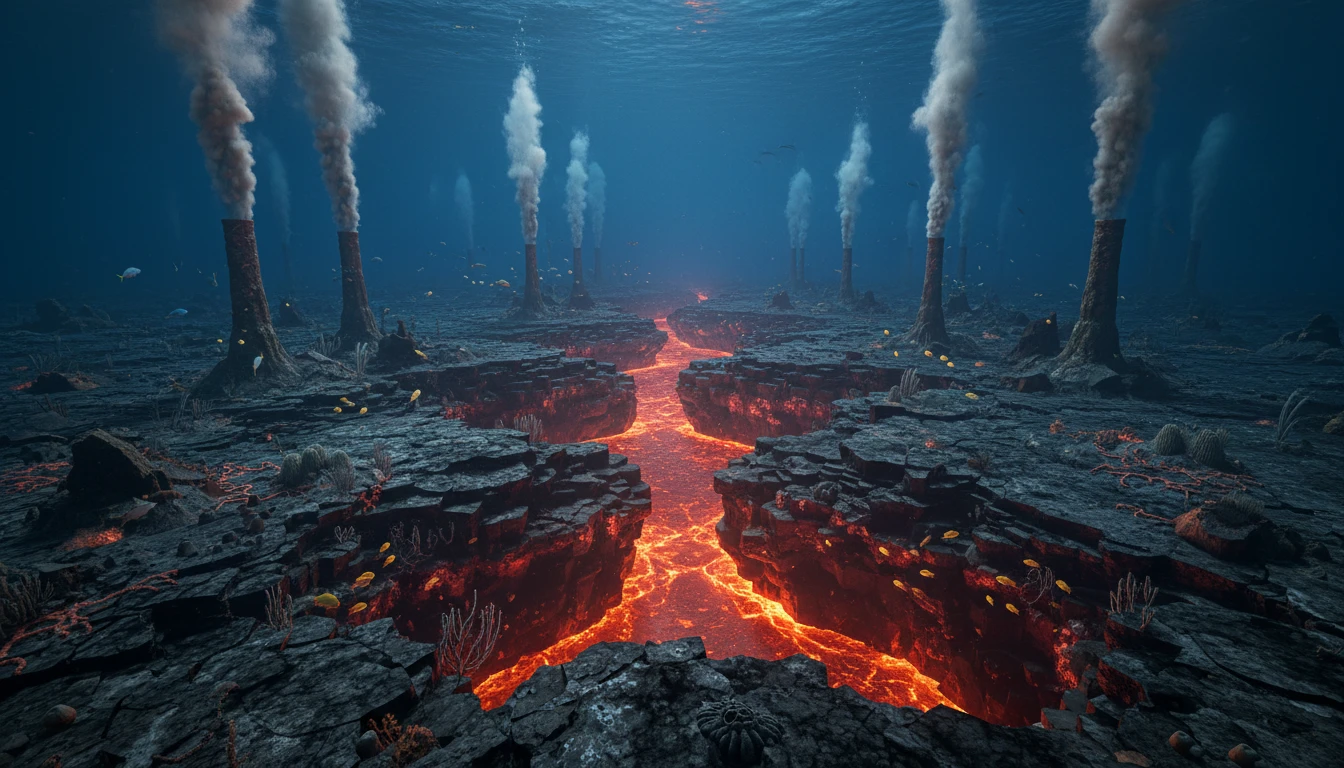
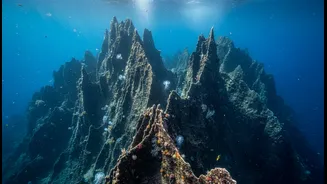
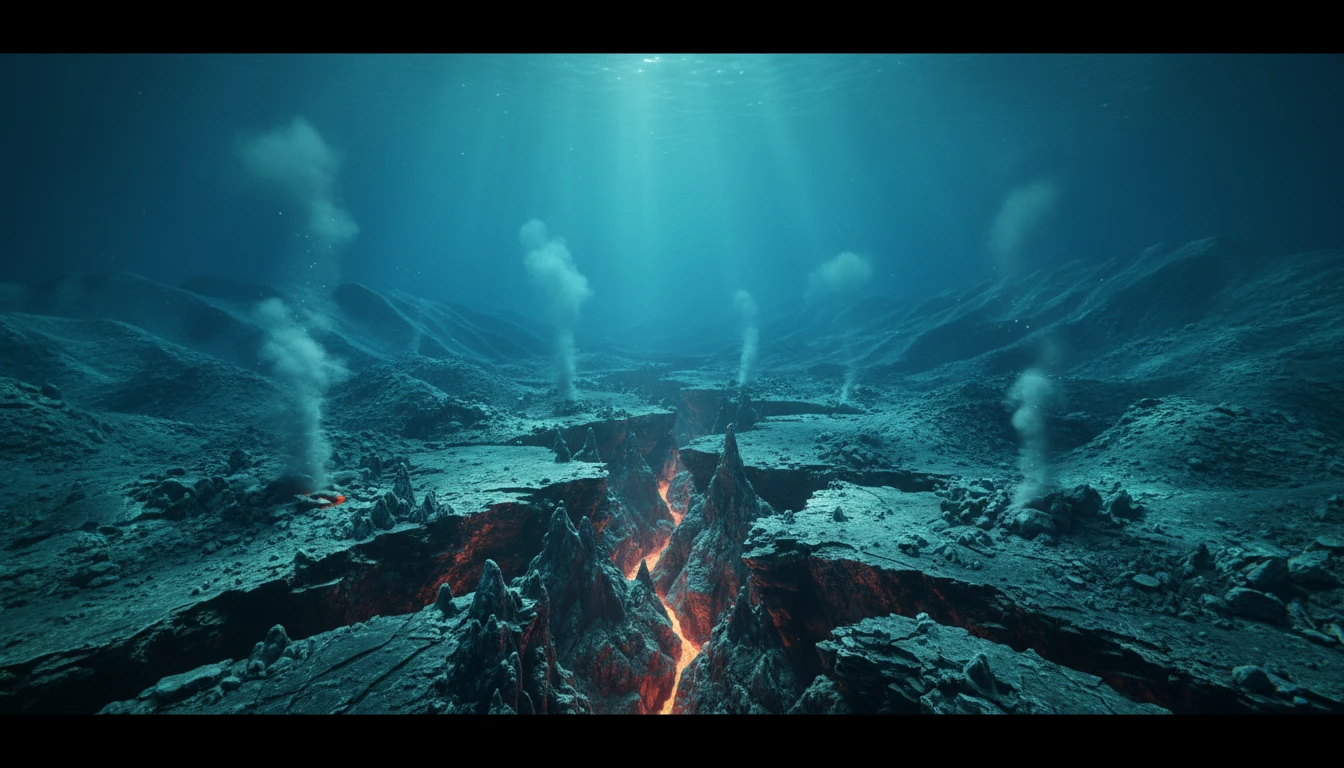
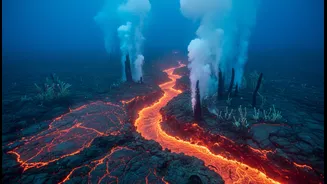
ridges, vast underwater mountain ranges where tectonic plates pull away from each other. As they separate, magma from the mantle below rises to fill the gap. It cools and solidifies, forming a new oceanic crust. This process, happening over millions of years, literally widens ocean basins and shuffles the continents. For decades, this was a concept pieced together from magnetic striping on the ocean floor and the age of rock samples—a geological theory confirmed by historical data, but never seen in action. Until now, the real-time drama of Earth’s creation has been largely hidden beneath kilometres of water.
The Indian Ocean's Tectonic Puzzle
Not all mid-ocean ridges are created equal, and the Indian Ocean hosts some of the most fascinating and complex ridge systems on the planet. It's a tectonic crossroads where the Indian, African, and Antarctic plates meet. A key feature is its collection of slow and ultra-slow spreading ridges, like the Southwest Indian Ridge (SWIR) and the Carlsberg Ridge. Unlike their fast-spreading cousins in the Pacific, which create crust more smoothly, these ridges are characterized by deep, wide rift valleys and more intermittent, rugged volcanic activity. The spreading can be as slow as 14-15 millimetres per year, which fundamentally changes how the crust is formed. This slow, complex dance makes the Indian Ocean a perfect natural laboratory. Scientists can study a wider range of magmatic and tectonic processes, including how a plate can deform and even begin to fracture in the middle, as some researchers believe happened following major earthquakes in 2012.
Ears Under the Ocean
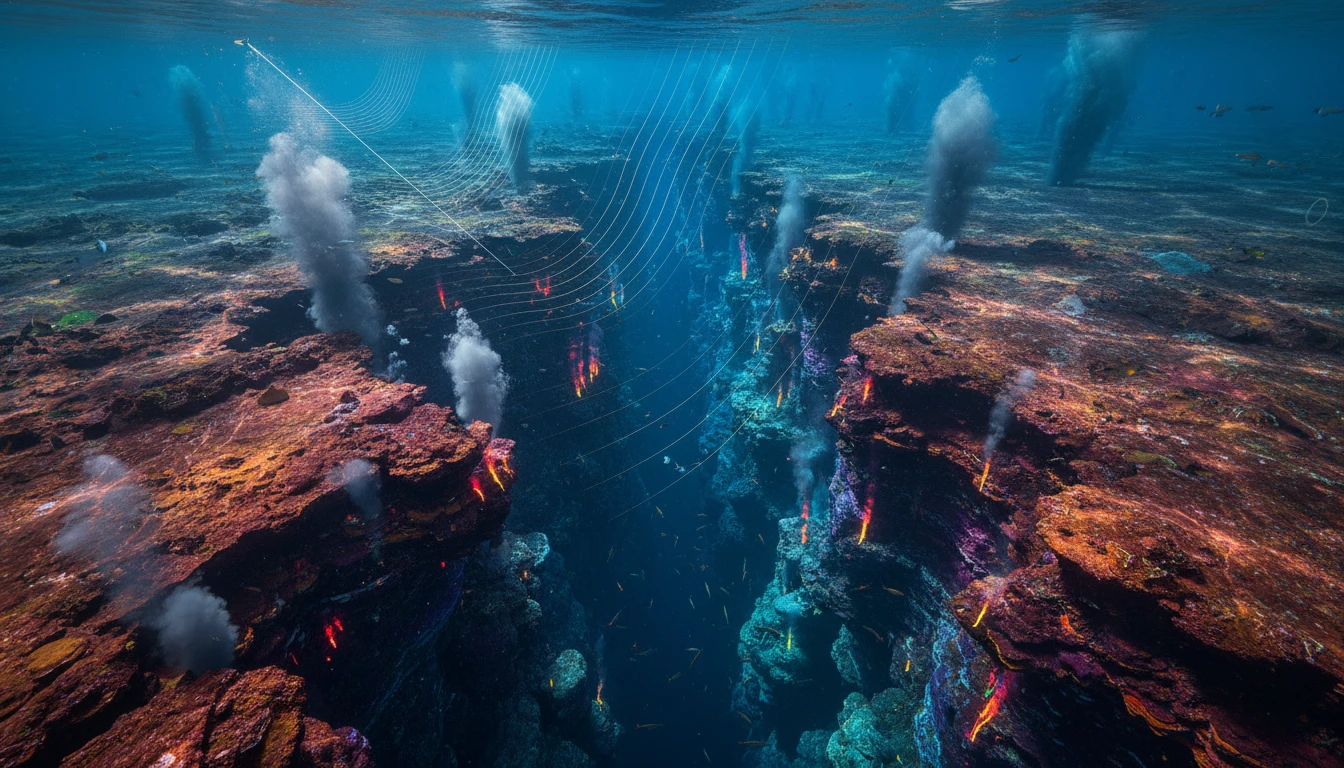
Witnessing these deep-sea events required a technological leap. The key is hydroacoustic monitoring. Scientists deploy networks of sophisticated underwater microphones, or hydrophones, moored within a specific layer of the ocean known as the SOFAR (Sound Fixing and Ranging) channel. In this channel, sound waves from earthquakes and volcanic eruptions can travel thousands of kilometres with very little signal loss. These hydrophone arrays can detect the subtle seismic tremors of magma moving through the crust and the distinctive acoustic signatures created when hot lava makes contact with cold seawater. In April 2024, one such network, the OHA-GEODAMS experiment, was in the perfect place at the perfect time to capture a major seafloor spreading event on the Southeast Indian Ridge. It provided the first-ever real-time, in-situ data of the seafloor tearing apart.
Witnessing Planetary Creation
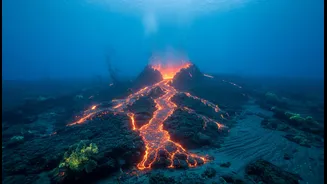
The 2024 event was geology's 'holy grail'. For days, the instruments listened as a swarm of earthquakes signalled a magma-filled crack, or dyke, propagating through the crust. The seafloor stretched and sank, with acoustic transponders measuring horizontal shifts of over a metre in just a few days—an amount equivalent to decades of normal plate movement. The hydrophones recorded thousands of signals as an estimated 160 million cubic metres of lava erupted, building a new section of ocean floor. This direct observation proved that the Earth’s crust often grows in sudden, violent lurches rather than a slow, steady crawl. The data helps solve a long-standing mystery: the 'seismic deficit', or why the movement recorded from earthquakes alone never added up to the full speed of plate tectonics. This event showed that a huge amount of movement happens aseismically, or without triggering recordable quakes.
From Deep Science to National Significance
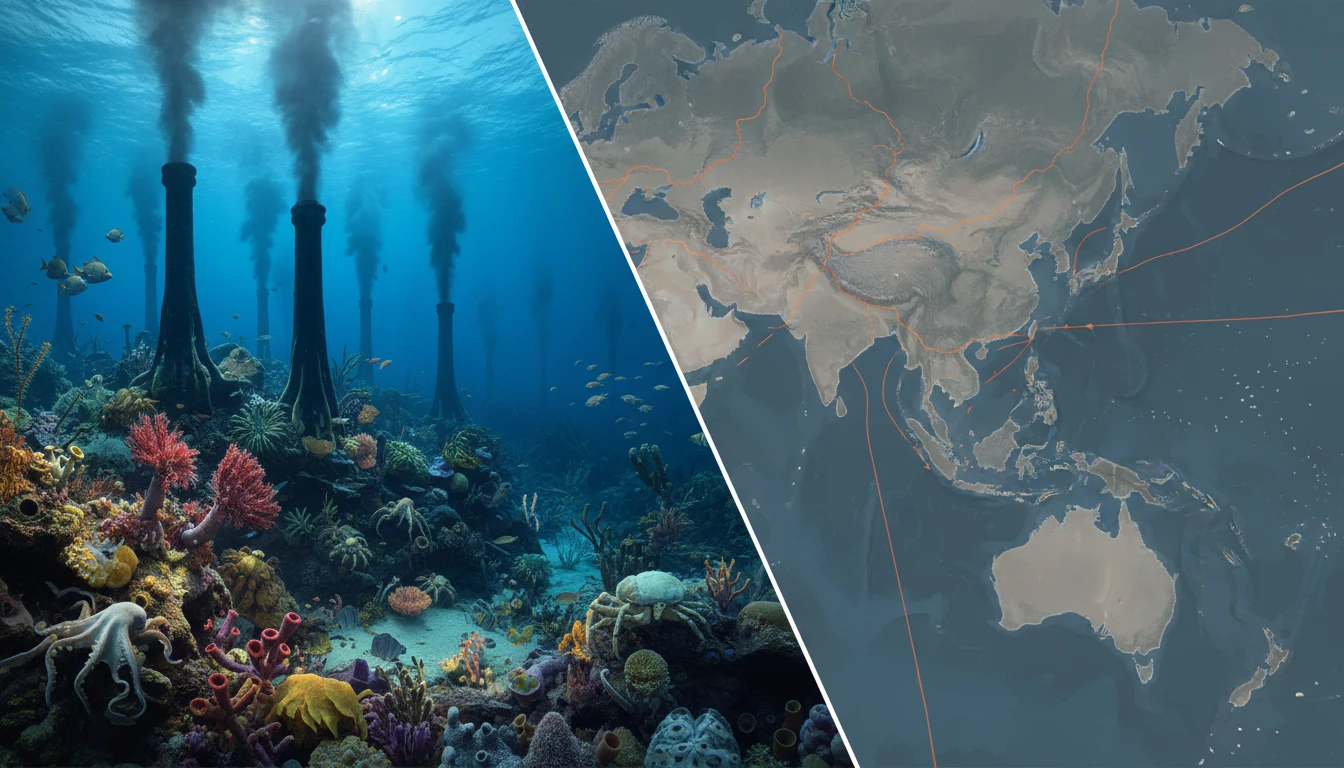
For India, this deep-ocean science is not a distant curiosity; it's a matter of national interest. The Indian plate's journey north, which began 100 million years ago, formed the Himalayas and defines our region's seismic reality. Understanding the active tectonics in the Indian Ocean is crucial for refining risk assessments for earthquakes and tsunamis. Furthermore, India is increasingly investing in its own undersea monitoring capabilities. Through its Deep Ocean Mission and projects like the Underwater Fiber Optic Sensing System (UFOSS), India is deploying its own networks of seabed sensors. While partly driven by strategic defence needs, this infrastructure will also provide invaluable data for oceanographic and geological research, cementing India's role as a scientific leader in a region that is geologically one of the most dynamic on Earth.