




Your Pre-Monsoon Vehicle Checklist
A safe journey starts with a well-prepared vehicle. Before the rains intensify, conduct a thorough inspection. Your tyres are the first line of defence against slippery roads. [15] Ensure they have a tread depth of at least 2-3mm to effectively channel
water and prevent skidding. [14, 24] Also, check and maintain the manufacturer-recommended tyre pressure. [7] Your braking system is equally critical; wet roads significantly increase stopping distances. [14] Get your brake pads, discs, and fluid levels checked to ensure they are in optimal condition. [12, 14] Visibility is paramount in a downpour, so inspect your wiper blades for cracks or hardening and replace them if they leave streaks. [7, 15] Using a proper washer fluid instead of plain water helps remove grime more effectively. [7, 13] Finally, test all your lights—headlights, tail lights, indicators, and fog lamps—to ensure you can see and be seen. [7, 15]
Adapting Your Driving to Wet Conditions
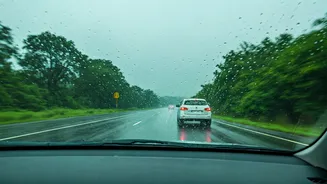
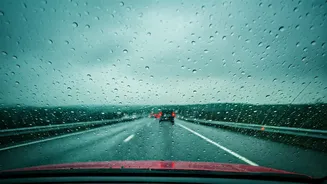
Once on the road, your driving habits must change. The single most important adjustment is to slow down. Reducing your speed by even 5-10 mph gives you more time to react and helps prevent your vehicle from losing contact with the road. [4] Maintain a greater following distance between your car and the one ahead; this is crucial as braking takes longer on wet surfaces. [12, 16] Aim for a gap of at least four to five seconds. [10] Avoid sudden acceleration, sharp turns, and abrupt braking, as these actions can easily lead to a loss of control. [22] Be especially gentle on the brakes to prevent skidding. [8] Using your low-beam headlights, even during the day, significantly improves your visibility to other drivers. [6, 11] Never use high beams in heavy rain or fog, as the light reflects off the water droplets and can worsen your vision. [8, 10]
Navigating Potholes and Waterlogging
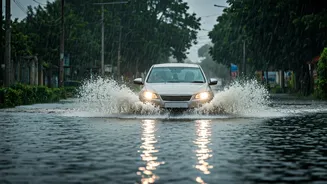
Indian roads become obstacle courses during the monsoon. Waterlogging can conceal deep potholes, damaged road surfaces, and even open manholes, posing a severe threat to your vehicle and safety. [23, 25, 26] If you encounter a waterlogged stretch, it's best to avoid it if possible. [22] If you must proceed, watch other vehicles to gauge the water's depth and stay in a lower gear to maintain momentum without stalling. Never attempt to restart your car if it stalls in deep water, as this can cause a hydrostatic lock and lead to catastrophic engine damage. [8, 27] Also, be wary of road markings like zebra crossings, which become extremely slippery when wet. [8]
The Invisible Danger: Hydroplaning
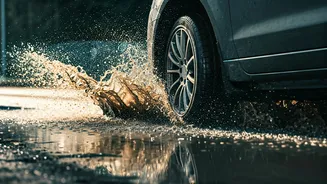
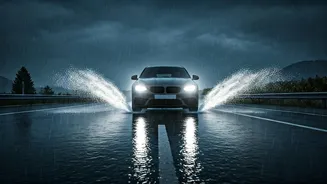
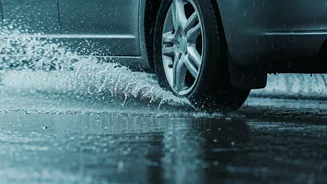
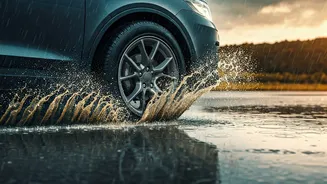
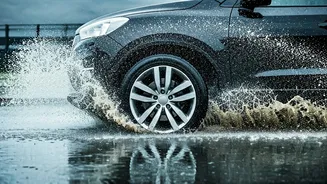
Hydroplaning is one of the most frightening experiences a driver can face. It happens when a layer of water builds up between your tyres and the road surface, causing a loss of traction and control. [5] At high speeds, your tyres can't displace the water fast enough, and the vehicle essentially surfs on the water. [23] To prevent it, slow down, ensure your tyres have adequate tread, and avoid driving through puddles or standing water. [2, 3] Turning off cruise control is essential, as you need full manual control in wet conditions. [5] If you feel your vehicle begin to hydroplane, do not slam on the brakes or make sharp steering movements. Instead, gently ease your foot off the accelerator and keep the steering wheel steady until your tyres regain their grip on the road. [2, 5]
Your Monsoon Emergency Toolkit
Even with perfect preparation, things can go wrong. Being stranded during a downpour is much more manageable if you have an emergency kit. Your kit should include practical items for monsoon-specific problems. A powerful torch with extra batteries, a reflective warning triangle, and a first-aid kit are non-negotiable. [17, 18] It's also wise to carry a tow rope, jumper cables, and a portable tyre inflator. [17, 28] Personal items like an umbrella, a raincoat, a towel, and a power bank for your phone can make a long wait in a traffic jam or breakdown much more comfortable. [12, 20] Having drinking water and some non-perishable snacks is also a good idea. [17, 20]