



As winter approaches, Delhi is once again bracing for its annual battle with air pollution. Starting November 1, a new set of driving restrictions will be enforced. This guide details exactly which vehicles are affected and how you can comply.
Understanding the GRAP Framework
These rules
are part of Delhi's broader Winter Action Plan and the Graded Response Action Plan (GRAP), a set of emergency measures that become stricter as the air quality worsens. Implemented by the Commission for Air Quality Management (CAQM), GRAP has four stages triggered by the Air Quality Index (AQI). Stage I ('Poor') involves basic measures like dust control, while the rules become progressively tougher through Stage II ('Very Poor'), Stage III ('Severe'), and Stage IV ('Severe Plus'). The vehicle restrictions are typically enforced when the air quality falls into the 'Severe' or 'Severe Plus' categories.
Two Types of Bans to Know
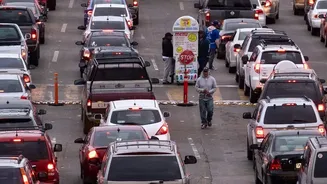
From November 1, two main sets of rules will affect motorists. The first is a blanket ban on certain vehicles registered outside of Delhi from entering the city, which runs until January 31, 2027. Specifically, vehicles that do not meet the Bharat Stage VI (BS-VI) emission standard are prohibited from entering Delhi during this period. The second set of restrictions is part of GRAP Stage III and applies to specific older vehicles within Delhi and several NCR districts, including Gurugram, Faridabad, Ghaziabad, Gautam Buddh Nagar, and Sonipat. This ban is dynamic and is enforced only when the AQI crosses the 'Severe' threshold (401-450). This Stage III rule specifically targets BS-III petrol and BS-IV diesel light motor vehicles (four-wheelers).
How to Check Your Vehicle's BS Standard
Knowing your vehicle's Bharat Stage (BS) emission norm is crucial. The most reliable way is to use the government's official Vahan portal. By entering your vehicle's registration number, you can access its details, including a field for 'Emission Norms'. This will clearly state if your vehicle is BS-III, BS-IV, or BS-VI. You can also find this information on your vehicle's Registration Certificate (RC), though the location on the document can vary. For newer cars, BS-VI vehicles have a 1 cm green strip at the top of their registration sticker on the windscreen. As a general guide, vehicles registered between April 2017 and March 2020 are likely BS-IV, while those registered after April 1, 2020, are BS-VI.
Exemptions From the Ban
Not all vehicles are affected. The restrictions, both for entry into Delhi and under GRAP Stage III, do not apply to vehicles running on cleaner fuels. Electric vehicles and CNGnded vehicles are exempt from the ban. Emergency service vehicles, such as ambulances and fire tenders, and certain government vehicles involved in essential services are also permitted to operate regardless of their emission standard. For the outofstate vehicle ban, any vehicle that is BSndVI compliant is allowed to enter Delhi. The key is the emission norm, not the fuel type alone, for petrol and diesel cars.
Penalties for Non-'Compliance''
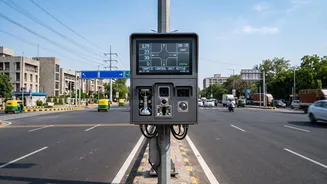
Authorities have warned of strict enforcement. Violating the GRAP Stage III ban on plying BS-'III petrol and BS-'IV diesel vehicles can result in a hefty fine of ₹20,000 under the Motor Vehicles Act. In addition to the vehicle ban, Delhi is also strictly enforcing the 'No PUC, No Fuel' rule. This means vehicles without a valid Pollution Under Control Certificate (PUCC) will not be sold fuel at any petrol pump in the city. Driving without a valid PUC certificate can attract a separate fine of ₹10,000. Enforcement will be aided by AI-'powered Automatic Number Plate Recognition (ANPR) cameras at border checkpoints.
What Happens if Pollution Worsens?''
If the air quality deteriorates further and enters the 'Severe Plus' category (AQI above 450), GRAP Stage IV will be invoked. These are the most stringent measures and would include a ban on trucks entering Delhi, with exemptions only for those running on CNG, LNG, electric, or BS-'VI diesel, or carrying essential commodities. Stage IV would also see a complete halt to all construction and demolition activities. For private vehicle owners, the current restrictions on BS-'III petrol and BS-'IV diesel cars would continue.