



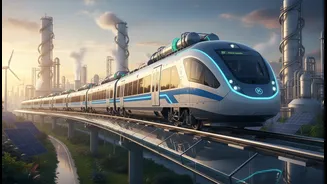


Meet India's First Hydrogen Train
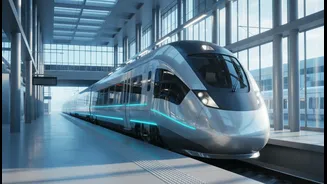
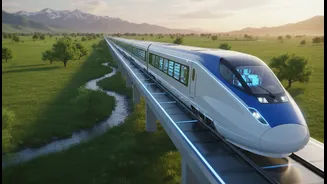
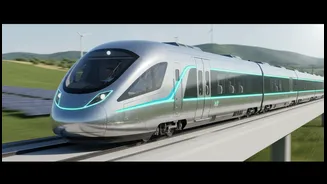
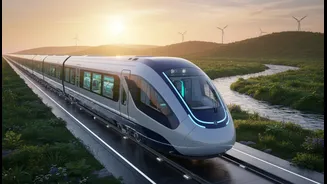
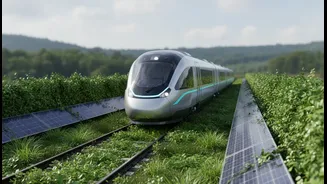
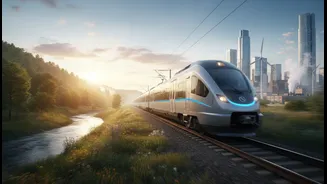
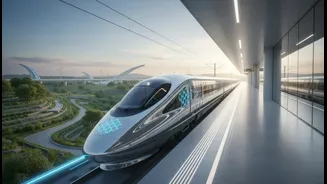
Indian Railways is set to launch the nation's first hydrogen-powered train, with Prime Minister Narendra Modi expected to inaugurate the service on July 17, 2026. This indigenously built, 10-coach train will begin commercial operations on the 89-kilometre
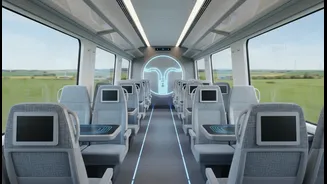
Jind-Sonipat route in Haryana. After successfully completing extensive trials, where it reached speeds of up to 120 km/h, the train is now ready for public service, where it will operate at a more modest 75 km/h. This isn't a small-scale prototype; with a capacity for around 2,600 passengers, it is a full-sized commuter train and has been described as the world's longest on a broad-gauge network. Its introduction marks a significant milestone in India's push for cleaner transport solutions.
How Does It Work?
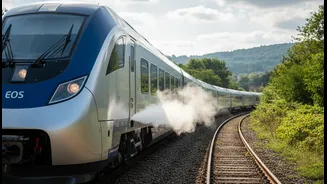
Instead of a diesel engine, the train uses a hydrogen fuel cell system to generate electricity. Within two power cars at either end of the train, compressed hydrogen stored in cylinders reacts with oxygen from the air inside a fuel cell. This electrochemical reaction produces electricity to power the train's motors, with the only by-products being heat and water vapour. This makes it a zero-emission vehicle at the point of use. With a combined power output of 2,400 kW, the train is a powerful example of clean technology in action. The entire system, including numerous safety features like leak detectors, has been validated against international standards.
A Tangible Symbol for Net Zero
Indian Railways has an ambitious target: to become a 'Net Zero' carbon emitter by 2030. While the primary strategy to achieve this is the massive electrification of its network, hydrogen trains offer a crucial solution for routes where electrification is difficult or not cost-effective, such as on heritage lines or challenging terrains. The Jind-Sonipat route was specifically chosen as it is a non-electrified line, making it a perfect pilot case. This single train, therefore, does more than just carry passengers; it serves as a powerful, visible symbol of India's commitment to decarbonisation. It makes the abstract 2030 goal understandable and demonstrates a practical path away from fossil fuels for parts of the world's fourth-largest rail network.
Challenges on the Track Ahead
The journey for hydrogen trains in India is just beginning, and it is not without challenges. The primary hurdle is not the train itself, but the ecosystem required to support it. This includes the high initial cost of the trains and the need to build a vast infrastructure for producing, storing, and refuelling with hydrogen. To support the Jind-Sonipat route, a dedicated hydrogen production and refuelling station had to be built at Jind. Another significant challenge is the source of the hydrogen itself. For the train to be truly green, it must run on 'green hydrogen', which is produced using renewable energy like solar or wind. This is currently much more expensive than 'grey hydrogen', which is made from fossil fuels.
The Bigger Picture for Indian Rails
The hydrogen train is an important piece of a much larger puzzle. Indian Railways' main decarbonisation effort remains focused on 100% electrification of its broad-gauge network. However, this hydrogen pilot project places India among a handful of nations, including Germany and Japan, that are exploring this technology for rail transport. While the lifetime operational costs of hydrogen trains are expected to be lower than diesel, the high upfront investment means expansion will likely be gradual. The success of the Jind-Sonipat service will be watched closely, providing invaluable data and operational experience. It will help determine how and where hydrogen technology can best be deployed to complement electrification and help India's iconic railways steam ahead into a cleaner future.