



A Time Capsule from the Edge of the Solar System
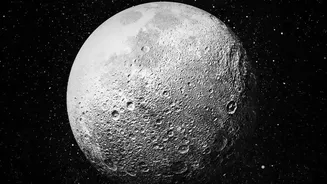
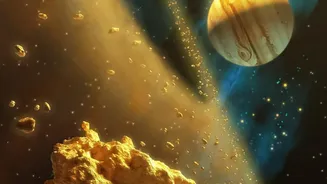
The Kuiper Belt is a vast, frigid disc of countless icy and rocky bodies orbiting the Sun far beyond Neptune. Often called the solar system's attic, it holds remnants from its earliest days, preserved in a deep freeze for billions of years. Studying these
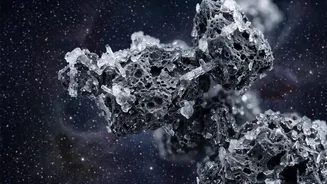
objects provides a window into the raw materials that formed the planets. However, sending a spacecraft to collect and return a sample from this region is, for now, technologically out of reach. But we don't always have to go to the Kuiper Belt; sometimes, it comes to us. Tiny dust particles, knocked off these distant objects by collisions, can spend millions of years spiraling toward the Sun, eventually raining down on Earth.
Reading the Scars of a Long Journey
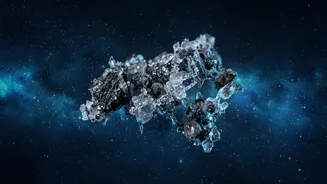
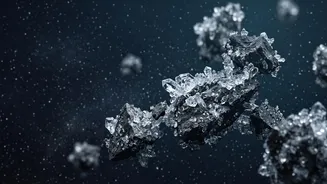
A team of NASA scientists led by Lindsay Keller analyzed 12 microscopic dust grains collected by aircraft in the stratosphere. They first had to confirm the dust's origin. As these particles travel through space, they are blasted by energetic particles from the Sun, which leave behind tiny damage trails, or 'scars'. By counting these scars, scientists can determine how long a grain has been exposed to space. The grains in the study had about 100 times more scars than dust from the nearby asteroid belt, providing strong evidence of a long journey from the far outer solar system. This analysis confirmed they were authentic messengers from the Kuiper Belt, carrying secrets that survived a journey of billions of kilometres.
The Chemical Clues of Liquid Water
What made these particular grains so extraordinary was their composition. They were discovered to be rich in carbon and contained hydrated minerals, such as clays, that only form when rock has chemically reacted with liquid water. This indicates that at some point in the distant past, the parent bodies from which these dust grains originated must have been warm enough inside for water to exist in liquid form. While the Kuiper Belt is frozen solid today, heat from radioactive decay within larger objects could have been sufficient to melt interior ice, creating slushy, water-rich environments where these minerals were born.
A Different Kind of Water
The most significant discovery came from analyzing the oxygen within these hydrated minerals. The oxygen carried a unique isotopic signature, meaning it was unusually rich in 'heavy' oxygen isotopes (oxygen-17 and oxygen-18). This signature is distinct from the water found in most meteorites, which originated closer to the Sun. The finding provides compelling evidence for a long-theorized but unproven idea: that a separate, pristine reservoir of water existed in the outer solar system. This primordial water was largely isolated from the chaotic mixing and chemical changes that occurred in the inner solar system as the planets formed, likely shielded by the immense gravity of Jupiter and the other gas giants.
Rewriting Our Solar System's Story
This discovery reshapes our understanding of the solar system's formation. It suggests that not all water in our system shares a common origin and that distinct chemical environments co-existed. The presence of liquid water on ancient Kuiper Belt Objects, however brief, shows that the conditions necessary for forming complex minerals—and perhaps even the building blocks of life—were not confined to the warmer regions near the Sun. These tiny dust particles have provided the first physical samples confirming that the far reaches of our solar system had a more dynamic and watery past than previously known, offering a new chemical pattern for planet formation models to explain.