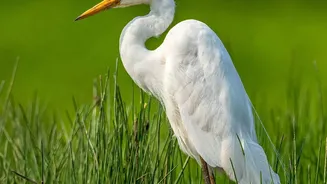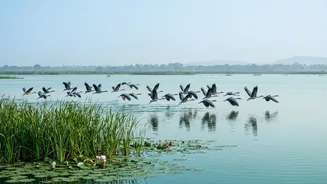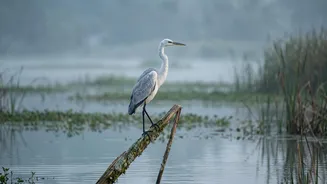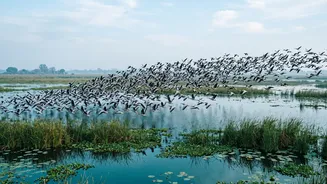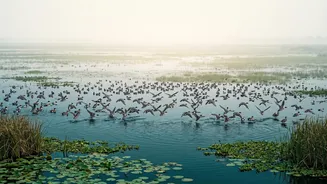





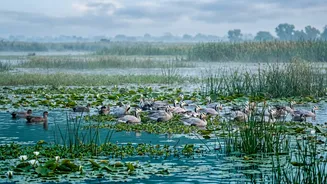
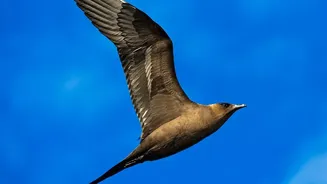
Each winter, India's skies and waters come alive with millions of avian visitors. These migratory birds are a natural spectacle, but their epic journeys rely entirely on a network of healthy inland water bodies for survival.
More Than Just a Resting Spot
Inland water bodies—our lakes,
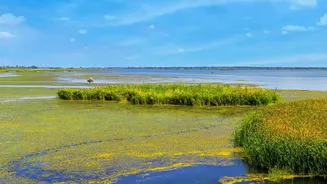
rivers, marshes, and reservoirs—are far more than simple stopovers for weary birds. They are complete life-support systems. For species that travel thousands of kilometres from Siberia and Central Asia, these wetlands provide essential grounds for feeding, roosting, breeding, and sheltering through the winter months. The shallow waters, aquatic vegetation, and surrounding habitats offer a comprehensive package for survival that enables these birds to refuel and prepare for their arduous journey back to their breeding grounds. Without these productive ecosystems, their migratory cycle would collapse.
Critical Hubs on an Aerial Superhighway
India holds a uniquely vital position on the Central Asian Flyway (CAF), one of the world's nine major migratory bird routes. This aerial highway connects breeding grounds in the Arctic and Central Asia with wintering areas in the Indian subcontinent and beyond. Astonishingly, India's wetlands provide critical wintering or stopover habitats for over 90% of the bird species using this flyway. Sites like Chilika Lake in Odisha, Keoladeo National Park in Rajasthan, and Pong Dam in Himachal Pradesh are not just local treasures; they are internationally significant hubs that support a huge portion of the flyway's traffic, making their preservation a global responsibility.
A Rich Buffet for Weary Travellers
After a gruelling flight, often over the Himalayas, migratory birds arrive famished. Healthy wetlands offer a rich and diverse buffet. The diet varies by species, but it includes fish, amphibians, insects, invertebrates, and aquatic plants. The health of the water body directly determines the quality and quantity of this food supply. For instance, the sacred lotus and wild sugarcane beds found in wetlands like Sauj Jheel in Uttar Pradesh provide not only food but also crucial cover for nesting and hiding from predators. When water quality declines due to pollution, the entire food web is disrupted, leaving little for the birds to eat.
The Silent Threats Below the Surface
Despite their importance, India's wetlands are under severe threat. Many have been lost or degraded in recent decades due to a combination of pressures. Pollution from industrial effluents, agricultural runoff, and untreated urban sewage contaminates the water, killing off food sources. Encroachment for urban development and agriculture shrinks their boundaries. Altered hydrology from dams and excessive water extraction can cause these vital habitats to dry up, while the spread of invasive plant species can choke open waters, rendering them useless for many waterbirds. These threats are often gradual but have a devastating cumulative impact.
A Shared and Growing Responsibility
The good news is that recognition of this crisis is growing. India has significantly expanded its network of 'Wetlands of International Importance' under the Ramsar Convention, growing from just 26 sites in 2014 to 103 by late 2026. This designation brings global attention and places a duty on the government to protect the site's ecological character. Recent additions like Sukhna Wetland in Chandigarh and Sauj Jheel in Uttar Pradesh highlight the diverse range of ecosystems being brought under protection. Furthermore, India has taken a leadership role in the CAF, establishing a coordinating unit to drive conservation across the 30 country flyway, a testament to the nation's commitment.