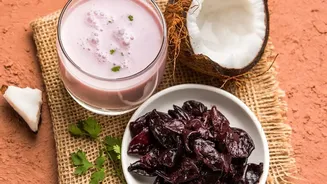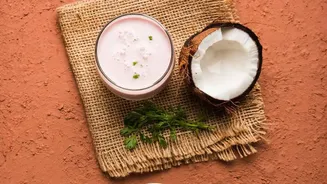







Along the sun-drenched Konkan coast of Maharashtra, a beautiful pale pink drink offers respite from the heat. This is Solkadhi, a beloved beverage as refreshing as it is intriguing, with a colour derived from two of the region's star ingredients.
What is Solkadhi?
Solkadhi
is a traditional drink from the coastal regions of Maharashtra and Goa, an area known as the Konkan. It’s a staple in Malvani, Goan, and Konkani cuisine, cherished for its unique flavour profile that is simultaneously tangy, savoury, and subtly creamy. Unlike the yoghurt-based 'kadhi' from other parts of India, Solkadhi is completely dairy-free. It is traditionally served chilled, either as an appetiser to start a meal or, more commonly, as a digestive at the very end, especially after a spicy seafood feast. Its primary purpose is to cool the body, soothe the palate, and aid digestion, making it a fixture in local households.
The Science of its Signature Pink
The captivating pastel pink colour of Solkadhi is a simple and beautiful feat of food chemistry. The magic begins with kokum (Garcinia indica), a deep purple fruit native to the Western Ghats. The dried rinds of the fruit, known as 'amsul', are soaked in water. This process releases potent natural pigments called anthocyanins, staining the water a deep magenta or purplish-red. When this tangy, acidic kokum extract is mixed with creamy, white coconut milk, the change in pH causes the anthocyanin pigments to shift in colour, transforming the mixture into its signature, stable shade of pink. The result is a visually stunning drink made entirely from natural ingredients.
A Powerhouse of Health Benefits
Beyond its refreshing taste, Solkadhi is celebrated for its remarkable health properties, rooted in Ayurvedic traditions. Kokum is a well-known digestive aid, praised for its ability to combat acidity and indigestion. It also possesses anti-inflammatory and antioxidant properties. Coconut milk complements this by providing healthy fats and electrolytes, which help with hydration, especially in the humid coastal climate. Together, these ingredients create a potent, probiotic-like elixir that soothes the stomach after a heavy or spicy meal, helps cool down the body, and promotes gut health. Some studies even suggest kokum has properties that can aid in weight management and improve skin health.
The Heartbeat of Konkan Culture
Solkadhi is more than just a drink; it's a cultural symbol of the Konkan region. Its ingredients are a direct reflection of the local geography, where coconut groves and kokum trees are abundant. The beverage evolved as a practical and ingenious response to the climate and the local diet, which is rich in flavourful, often spicy, seafood. For generations, it has been a staple in daily meals and a symbol of hospitality. The preparation itself, often involving the manual extraction of fresh coconut milk, connects families to culinary traditions. This simple, no-cook recipe stands as a testament to a deep understanding of local ingredients and their benefits, passed down through generations.
How It's Made
The beauty of Solkadhi lies in its simplicity. The process is entirely raw, requiring no cooking. Dried kokum petals are soaked in warm water for about half an hour until they soften and release their deep colour. Meanwhile, fresh coconut milk is extracted by grinding grated coconut with water and straining it through a cloth. This fresh milk is the key to its authentic flavour. The vibrant kokum extract is then stirred into the creamy coconut milk. The mixture is seasoned with a touch of salt and often infused with a pungent paste of garlic, green chillies, and sometimes ginger or cumin for an extra layer of flavour. After being chilled, it's ready to be served, often garnished with fresh coriander leaves.