








The Greening Phenomenon
For years, NASA satellites have shown that the Earth is literally becoming a greener planet, with a significant increase in leaf area on plants and trees. India, along with China, is a major driver of this trend. This greening is primarily caused by two
factors: rising atmospheric carbon dioxide, which acts as a fertiliser for plants (a phenomenon called the CO2 fertilisation effect), and human land use, including large-scale agriculture and afforestation programs. On the surface, this seems like a straightforward win. More plants mean more carbon dioxide is absorbed from the atmosphere, potentially helping to mitigate climate change. Recent studies project that this trend will continue, with India’s vegetation expected to grow and absorb even more CO2 in the coming decades.
A Tale of Two Greens
However, a closer look reveals a critical distinction in why India is greening. Unlike in China, where afforestation and forest restoration projects are major contributors, India's greening is overwhelmingly driven by agriculture. One study found that croplands accounted for over 95% of the increase in India's green cover. This involves the expansion of intensive, irrigated agriculture, allowing for multiple cropping cycles that keep fields green year-round. While this boosts food production, it creates a very different ecological outcome compared to the greening that comes from restoring diverse, natural forests. The simple metric of 'greenness' seen from space doesn't distinguish between a healthy, biodiverse forest and a water-intensive monoculture crop.
The Hidden Cost of Water
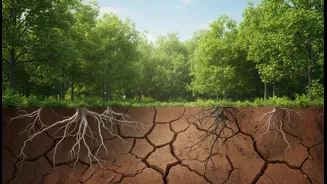
This reliance on agricultural greening comes at a steep, and often hidden, cost: water. To sustain year-round crops, especially in regions with dry seasons, farmers depend heavily on groundwater. This has led to a massive increase in the use of tube wells, particularly in the agricultural heartlands of Punjab and Haryana. As a result, India now extracts more groundwater than any other nation, leading to a rapid and alarming depletion of aquifers. Water tables in many parts of the country are dropping significantly, forcing farmers to drill deeper and, in some cases, tapping into water sources contaminated with natural minerals like arsenic and uranium. This creates a paradox where the land looks lush and green, but its underlying water security is being severely compromised.
The Monoculture Mirage
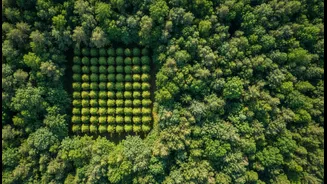
Even India's afforestation efforts, designed to compensate for deforestation, often contribute to the problem. Many large-scale plantation drives favour fast-growing monocultures—planting vast areas with a single tree species like eucalyptus. While this technically increases tree cover, these plantations are not a substitute for natural forests. They support significantly less biodiversity, can deplete the water table, and are more vulnerable to diseases. Studies have shown that some of these plantations have not led to a net increase in genuine forest cover but have simply replaced diverse ecosystems with less resilient, single-species stands. This creates a 'green mirage' where the landscape appears forested but lacks the ecological complexity and health of a natural system.
Towards a Wiser Interpretation
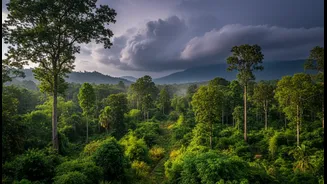
A more useful interpretation of India's greening trend requires looking beyond simple satellite measurements of leaf area. It demands a holistic assessment that considers water security, biodiversity, and long-term ecosystem health. Experts argue that greening statistics should not be used as a simple scorecard for environmental success. Instead, policies should focus on sustainable practices. This includes promoting agroforestry (integrating trees with crops), diversifying away from water-guzzling monocultures like paddy in water-stressed regions, and ensuring that afforestation programs prioritise native, diverse species with community involvement. The ultimate goal isn't just a greener India, but a more resilient and ecologically balanced one. Acknowledging that not all green is good is the first step toward crafting climate policies that deliver genuine, lasting benefits for both people and nature.