





The Blur of Modern Travel
We travel to escape, to see, and to feel something new. Yet, the modern travel experience can often feel like a frantic checklist. Get the photo for social media, rush to the next five-star-rated spot, and ensure every moment is documented and broadcast.
The result is a strange paradox: we have more images and less memory. A digital album full of beautiful, empty moments can’t replicate the feeling of being truly present. This pressure to consume a destination, rather than connect with it, leaves many of us returning home with a sense of exhaustion instead of enrichment. The trip becomes a blur of activity, and the memories, like the photos, can start to blend together.
The Art of Deliberate Seeing
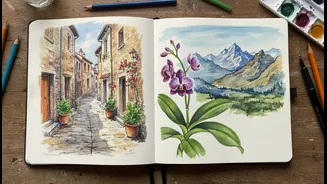
This is where a simple sketchbook comes in. It is not a tool for creating masterpieces; it is a tool for paying attention. The act of drawing, no matter your skill level, forces you to slow down. You cannot sketch a scene in the split second it takes to snap a photo. You must sit, observe, and truly see what is in front of you. You begin to notice the intricate pattern of tiles on a rooftop, the way light filters through the leaves of a tree, or the specific posture of a person waiting for a bus. This practice is sometimes called mindful travel, a way of engaging all your senses and being fully in the moment. Sketching becomes an act of deliberate seeing, transforming a passive glance into an active observation.
A Memory Keeper Like No Other
A photograph captures an instant, but a sketch captures an experience. When you look back at a drawing years later, you remember more than just the visual. You recall the warmth of the sun, the sounds of the street, and the smell of coffee from a nearby cafe. The twenty minutes or hour you spent on that page becomes embedded in the lines themselves. It's a multi-sensory record. The sketch isn't just a picture of a plaza; it's a memory of the time you spent living in that plaza. Adding a few written notes alongside your drawing—a snippet of conversation, the name of a song you heard—can add even more depth, creating a rich, personal chronicle of your journey.
You Don't Need to Be an Artist
The most common objection is, “But I can’t draw!” This is the biggest myth to bust. The goal of a travel sketchbook is not to produce gallery-worthy art; it’s to see and remember. Your sketches are for you. They don't need to be perfect or even realistic. Start simple. Pick one object—a doorway, a coffee cup, a single flower—and draw it. Don't worry about perspective or shading. Focus on the lines and shapes. Embrace the imperfections. Many seasoned travel sketchers will tell you that it's about the process, not the product. All you need to begin is a portable sketchbook and a simple pen or pencil. Your ability will improve with practice, but the primary benefits of observation and mindfulness are available from your very first sketch.
Connecting with a Place
Taking out a phone to snap a photo often creates a barrier between you and your surroundings. Taking out a sketchbook, however, can be an invitation. Sitting quietly and drawing in a public space often piques the curiosity of locals and fellow travellers. It can lead to surprising conversations and genuine connections that you might otherwise miss. This practice is at the heart of the global Urban Sketchers movement, which encourages people to draw their cities and tell the stories of their surroundings. Sketching can transform you from a tourist just passing through into an engaged observer, someone who is taking the time to appreciate the fabric of a place.