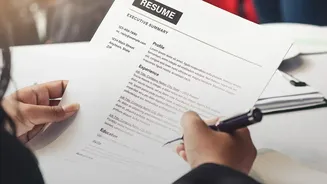







In today’s crowded job market, making a strong first impression is everything. Your resume summary is often the first thing a recruiter reads, and now, applicants are turning to a new secret weapon: artificial intelligence tone tools.
What Are AI Tone and Writing Tools?
At its core, an AI
writing assistant is a tool designed to help you write more effectively. Some, like Grammarly, have built-in tone detectors that analyze your text and tell you how it sounds—confident, formal, friendly, or analytical. Others, like dedicated AI resume builders, use generative AI to help draft content from scratch. These tools can suggest stronger verbs, rephrase awkward sentences, check for grammatical errors, and ensure your resume summary has a professional and consistent voice. They act as a brainstorming partner and a proofreader rolled into one, designed to make your writing clear, impactful, and tailored to a professional audience.
Why Top Applicants Are Using Them
The primary driver is efficiency and impact. Crafting the perfect resume summary—one that is concise, powerful, and customized for a specific job—takes time. AI tools dramatically speed up this process. They help job seekers overcome writer's block and generate a solid first draft in minutes. More importantly, these tools are excellent for optimization. Many companies use Applicant Tracking Systems (ATS) to screen resumes before a human ever sees them. AI helps identify and incorporate relevant keywords from the job description, increasing the chances that an application will pass this initial digital filter. Studies have even shown that AI assistance can make job seekers more likely to be hired.
A Practical Guide to AI-Assisted Summaries
Using these tools effectively is a skill. The best approach is to treat the AI as an assistant, not a ghostwriter. Start by writing a draft of your summary yourself. Include your key achievements, skills, and career goals. Then, feed this text into an AI tool. Ask it to refine the tone to sound more 'professional' or 'confident'. Prompt it to make your bullet points more concise or to suggest stronger action verbs. For example, instead of saying "was responsible for managing a team," the AI might suggest "Led a team of five to increase quarterly sales by 15%." This adds quantifiable metrics and impact, which is exactly what recruiters want to see. Always review and edit the output to ensure it reflects your true experience.
The Recruiter's Perspective: A Word of Caution
While AI is a powerful tool, it’s crucial to use it wisely. Many hiring managers have become adept at spotting purely AI-generated text, which often sounds generic and lacks a personal voice. Some recruiters view over-reliance on AI as a red flag, and a small percentage would even reject a candidate for it. The biggest risk is creating a resume that is full of buzzwords but lacks authenticity or, worse, contains fabricated accomplishments. AI can sometimes 'hallucinate' or exaggerate details, which can destroy your credibility if discovered during an interview. The consensus among HR professionals is that AI is acceptable for polishing and optimizing, but the substance must be real and the final product must sound like a genuine person.
The Human Touch Is Still Your Greatest Asset
Ultimately, AI can't replicate your unique career journey, your passion, or your personality. A resume summary that feels too perfect or robotic can fail to make a human connection. Recruiters are looking to hire a person, not an algorithm. They want to see a narrative that reflects your individual career path. Use AI to clean up your grammar, sharpen your bullet points, and ensure your tone is professional. But the story, the achievements, and the voice must remain yours. Think of AI as the tool that helps you build the frame, but you are the one who must create the masterpiece inside it.