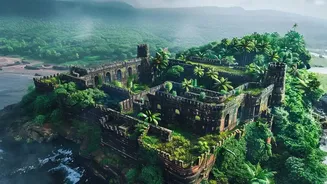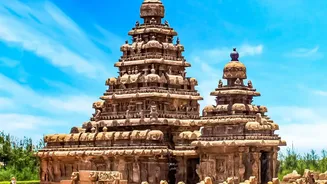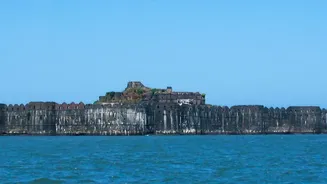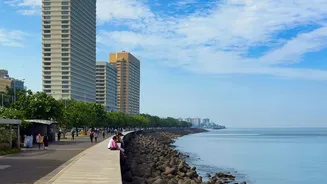




Perched on rocky outcrops along Maharashtra’s Konkan coast, majestic sea forts stand as silent sentinels of a bygone era. These stone marvels tell tales of naval power and strategic genius, but now face a new battle against time and nature.
Giants of the Arabian Sea
Maharashtra's
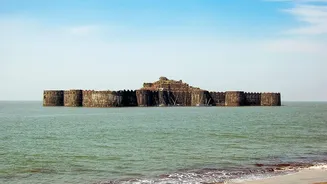
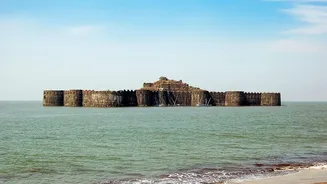
720-kilometre coastline is dotted with some of the most formidable marine fortifications in Indian history. These were not merely defensive structures but bustling centres of naval power, trade, and governance. Forts like Sindhudurg, commissioned by Chhatrapati Shivaji Maharaj, and the unconquered Murud-Janjira, stronghold of the Siddis, were masterclasses in military architecture. Built to withstand cannon fire and repel invaders like the Portuguese, British, and Dutch, their locations were chosen with brilliant strategic foresight. Sindhudurg, for example, was built on Kurte island to counter foreign powers and the Siddis, serving as a vital naval base for the Maratha Empire. Meanwhile, Murud-Janjira, with its 40-foot high walls rising from the sea, was never conquered by force, a testament to the ingenuity of its Siddi rulers who held it for centuries.
A Tale of Two Forts
To understand their significance, consider two prime examples. Murud-Janjira, originally a wooden structure built by Koli fishermen in the 15th century, was transformed into an impregnable stone fortress by Malik Ambar of the Ahmadnagar Sultanate. Its 19 rounded bastions, giant cannons, and ingeniously hidden main gate made it a symbol of Siddi resilience. It even contained its own freshwater wells, a mosque, and palaces, making it a self-sufficient island citadel. In contrast, Sindhudurg Fort was a direct assertion of Maratha naval ambition. Built between 1664 and 1667, its foundation stones were reinforced with molten lead, and its massive walls were designed to absorb the fury of the Arabian Sea. Spanning 48 acres, it housed a temple dedicated to Shivaji Maharaj himself, a unique feature that underscores its cultural importance beyond its military function. It was from here that the Marathas projected their naval power along the western coast.
The Slow Siege of Time and Tide
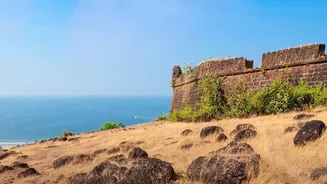
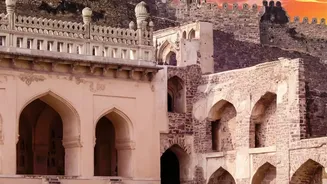
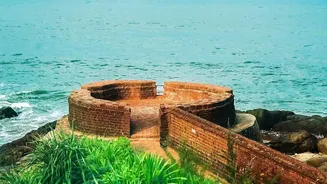
Today, these historic structures face threats more relentless than any army. The relentless monsoon, saline winds, and rising sea levels are causing unprecedented erosion. A 2023 IPCC report highlighted the increasing risk to Maharashtra's coastal areas, with sea levels in the Arabian Sea projected to rise significantly. This not only endangers coastal communities but also accelerates the decay of heritage sites. The ancient structures, designed for a specific climate, are now vulnerable to increased storm severity and water damage. Furthermore, challenges like insufficient funding for maintenance, a shortage of trained staff to guard the monuments, and the impact of unregulated tourism add to the strain. Many forts suffer from collapsed bastions and crumbling walls, with illegal trespassing causing further damage.
More Than Just Stone and Mortar
Preserving these forts is about more than saving old buildings; it is about safeguarding India’s cultural memory and identity. These sites are living history books, offering invaluable lessons in architecture, military strategy, and the sustainable use of local materials. They represent the accumulated wisdom of generations. Recognizing this, both state and central bodies have initiated conservation plans. In 2025, a group of 12 forts, including Sindhudurg, were added to the UNESCO World Heritage list as the 'Maratha Military Landscapes'. The Maharashtra government has also launched comprehensive conservation plans, allocating funds for the restoration of fortifications and temples, aiming to boost tourism and public awareness. These efforts involve collaboration between multiple government departments and heritage experts to ensure the structural integrity of the forts while improving visitor infrastructure. The goal is to balance preservation with community benefit, potentially through adaptive reuse projects like heritage hotels or cultural hubs.