





What is the 'Blaze Star'?
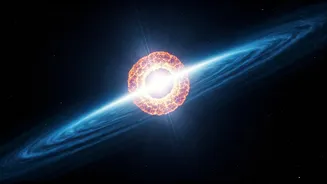
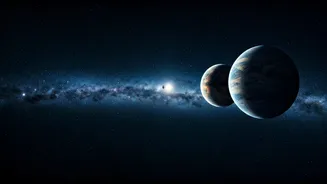
The star in question isn’t new, but it’s about to get a dramatic, temporary makeover. Known to astronomers as T Coronae Borealis (T CrB), this celestial object is what’s called a recurrent nova. Think of it not as a single star but as a volatile cosmic
couple. T CrB is a binary system, composed of a white dwarf — the dense, collapsed core of a long-dead star — and an aging red giant. Normally, this system is far too dim to see with the naked eye. But roughly every 80 years, it puts on a spectacular show. The last time it did was in 1946, making this year’s predicted event a truly rare opportunity for a whole new generation of stargazers.
The Science Behind the Explosion
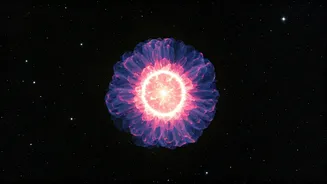
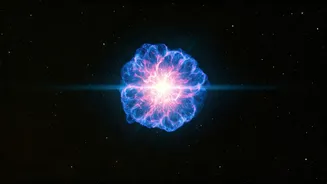
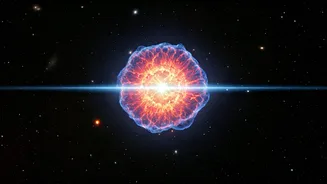
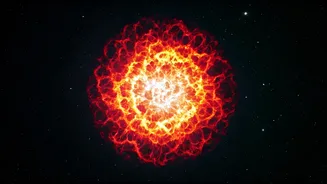
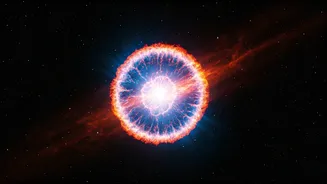
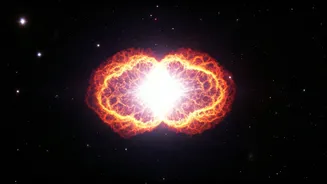
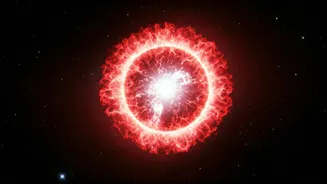
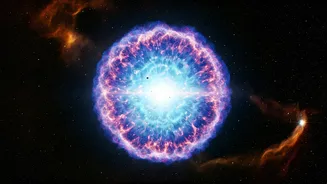
So, what triggers this incredible outburst? It’s a classic story of a cosmic thief. The white dwarf, with its intense gravitational pull, is constantly stealing material — mostly hydrogen gas — from its larger red giant companion. This gas accumulates on the white dwarf’s surface like a blanket. Over decades, the pressure and temperature of this stolen layer build up to a critical point. Eventually, it ignites a runaway thermonuclear explosion. This isn't an explosion that destroys the star; it’s more like a colossal hydrogen bomb going off on its surface. The blast violently ejects the accumulated material into space, producing a massive surge of light that travels across the cosmos and reaches our eyes.
An 'Instant' Cosmic Beacon
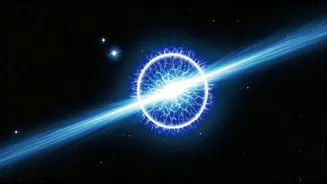
The eruption will be breathtakingly rapid. T Coronae Borealis will transform from a faint, magnitude +10 star (visible only with a good telescope) to a brilliant magnitude +2 star in just a matter of hours. This is the same brightness as Polaris, the North Star. Suddenly, a new point of light will appear in the heavens, creating a temporary 'beacon' in a familiar patch of sky. This newfound brightness will be visible to the naked eye for several days and with binoculars for a little over a week before it begins its slow fade back into obscurity, where it will remain for another 80 years. This fleeting appearance is why astronomers and sky-watchers across India are on high alert.
How You Can See It From India
The best part about this event is its accessibility. You won’t need expensive equipment. To find T CrB, you'll need to locate the constellation Corona Borealis, or the 'Northern Crown'. It’s a small, C-shaped arc of stars situated between the more famous constellations of Boötes (with its bright star Arcturus) and Hercules. Once the eruption happens, the 'new' star will appear within this arc. The Northern Crown is best viewed from India during the summer months, high in the evening sky. For your best chance, find a location away from city lights, let your eyes adjust to the darkness for about 20 minutes, and look towards the north-eastern to overhead sky. The window for the eruption is predicted to be between now and September 2024, so it’s worth familiarising yourself with this constellation now.
A Connection Across Generations
This event is more than just a flash of light; it’s a connection to our past and future. The last generation to see this nova outburst looked up at a post-war sky in 1946. Before that, it was observed in 1866. Each eruption provides scientists with invaluable data about how these binary systems evolve. For the rest of us, it’s a powerful reminder of the dynamic, ever-changing nature of the universe. When you look up and see T Coronae Borealis shining brightly, you are witnessing the same celestial clockwork that your grandparents or great-grandparents might have seen, and that your grandchildren might one day witness themselves.