





What is a Caretaker Government?
In Israel, a government enters a 'caretaker' or 'transitional' phase in several scenarios: after the Knesset (parliament) dissolves itself and calls for new elections, following a successful no-confidence vote, or in the period after an election until
a new governing coalition is successfully formed and sworn in. This mechanism is designed to prevent a power vacuum and ensure the state's continuous operation. The outgoing government, led by the Prime Minister, continues to function. While the term 'caretaker' is widely used, Israel's Basic Laws—the country's quasi-constitutional texts—refer to it as the 'outgoing government'. This period can be brief or, as seen frequently in Israel's recent political landscape, stretch for many months through protracted coalition negotiations or repeat elections.
The Core of Executive Authority Remains
The central point affirmed in Israeli law is that a caretaker government is not a powerless one. The law itself imposes almost no explicit restrictions on its authority, ensuring it can continue to manage the state's affairs. This means the prime minister and the cabinet retain their full executive powers in most domains. This includes managing government ministries, directing foreign relations, and, critically, overseeing the country's security and intelligence apparatus. The Prime Minister can still convene the cabinet, make decisions, and implement policy. A caretaker prime minister can even dismiss ministers without needing the Knesset's approval, a power a regular government does not have.
The Power to Wage War
Perhaps the most significant and debated power of a caretaker government is in the realm of national security. According to Israel's Basic Law, a decision to go to war requires a vote by the government's cabinet or the smaller, more exclusive security cabinet. The law makes no distinction between a regular and a caretaker government in this regard. This means a prime minister heading a transitional government can legally take the country into a major military conflict, provided the cabinet approves. While this power exists, its use is subject to intense scrutiny. However, legal precedent and the primacy of national security concerns mean that a caretaker government has considerable leeway to act, especially in response to a perceived urgent threat.
Judicial Restraint and Political Convention
While the law is permissive, judicial precedent and directives from the Attorney General have established a principle of 'restraint'. Israel's High Court of Justice has ruled that a caretaker government must exercise its authority with greater caution than a government with a fresh popular mandate. Decisions are subject to a stricter standard of 'reasonableness'. This principle of restraint is most strongly applied to two specific areas: making permanent appointments to high-ranking civil service positions (like police chiefs or state attorneys) and enacting major, long-term policies or economic changes that would tie the hands of a future government. The court expects a caretaker government to avoid making irreversible decisions unless there is a pressing, vital need for action.
The Netanyahu Context
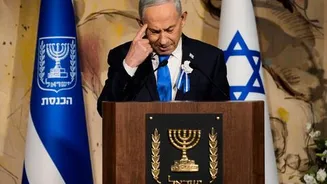
Benjamin Netanyahu's long tenures, often punctuated by extended periods leading caretaker governments, have repeatedly put these principles to the test. Political opponents often accuse him of using the powers of the office for political ends during these transitional periods, particularly regarding security matters. Conversely, his supporters argue that he is simply fulfilling his duty to govern and protect the country during times of political instability. The extended political stalemates have meant that crucial decisions on budgets, policies, and security have often fallen to a government lacking a clear Knesset majority. This has cemented the caretaker premiership as a uniquely powerful position in Israeli public life, far from the 'lame duck' status the term might imply elsewhere.