





A Tale of Two Kits
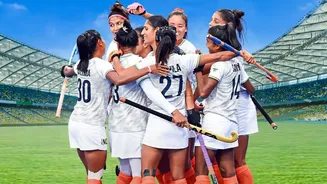
In their opening matches at the Asian Games, both the men's and women's Indian hockey teams were seen wearing new, predominantly saffron-coloured jerseys. This came as a surprise to many, especially after Hockey India's president, Dilip Tirkey, had previously
assured that the teams would revert to their traditional blue uniforms for the event. This apparent contradiction has only added fuel to a controversy that first ignited when the saffron kits were introduced at the Hockey World Cup last month. The situation is further complicated by internal discord within Hockey India, with Tirkey having previously stated that the initial change was made without the board's approval, suggesting a rift with secretary Bhola Nath Singh, who is seen as a proponent of the new colour.
The Official Rationale: Visibility
Officially, the reason for the switch from the iconic blue is purely technical. According to Hockey India, players and coaching staff raised concerns that the blue jersey was difficult to distinguish against the blue artificial turf now standard in international hockey. This visual merging, the federation argued, impacted on-field clarity and player visibility. After considering alternatives like yellow, saffron was chosen. Hockey India also noted that changing kit colours is not unprecedented, citing yellow jerseys at the 2014 World Cup and sky-blue kits in 2018. The saffron kit is now designated as the primary jersey for the Asian Games, with a white and blue combination serving as the alternate.
More Than a Colour: The Saffron Symbolism
The core of the controversy lies not in the change itself, but in the choice of colour. In India, saffron, or 'bhagwa', carries deep cultural and political significance. While it is one of the three colours of the national flag, representing courage and sacrifice, it is also strongly associated with Hinduism and, more recently, with Hindu nationalist politics. Critics, including opposition political parties, have accused the government of attempting to 'saffronise' national institutions, including sports teams. They argue that imposing a colour with strong religious and political connotations on a national team undermines its secular identity and the spirit of unity that sport is meant to represent.
A Familiar Playbook: The Cricket Precedent
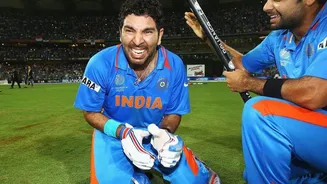
This isn't the first time an Indian sports jersey has caused a political stir. In the 2019 Cricket World Cup, the Indian cricket team wore a predominantly orange 'away' kit for their match against England. That move also drew sharp criticism from opposition leaders who saw it as a political statement by the ruling BJP. Just as with the hockey kit, the official reason was a practical one: to have a contrasting colour to the opponent's jersey as per tournament rules. However, the debate that followed was nearly identical, focusing on whether the choice of orange/saffron was an innocent one or a deliberate push of a political ideology onto the national team.
Players, Pundits, and Politicians Weigh In
The reaction has been divided. Several former players, including Viren Rasquinha, have voiced their disappointment, calling the move 'embarrassing' and stressing that the team's legacy is tied to the blue jersey. Political leaders from opposition parties have called it an unfortunate attempt to politicise sport. On the other side, many have defended the change. Some players have stated the colour of the jersey is secondary to the pride of playing for India. Hockey India and its supporters maintain that saffron is a proud part of the Indian tricolour and deny any political motives, accusing critics of manufacturing a controversy where none exists.