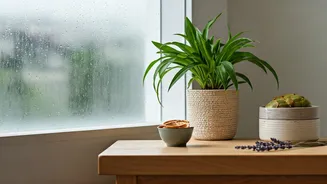









Prioritise Ventilation
The most fundamental step to preventing a stuffy home is to ensure good air circulation. Even during the rains, try to open windows and doors for at least 15-30 minutes a day, especially when it's not actively pouring. Creating a cross-breeze by opening
windows on opposite sides of the house is highly effective at pushing out stale, damp air and bringing in fresh air. When the sun makes a rare appearance, make the most of it by opening all curtains and windows to let natural light and air disinfect your space.
Harness Natural Moisture Absorbers
Several common household items are excellent at absorbing excess moisture and neutralising odours. Place bowls of rock salt, baking soda, or activated charcoal in damp corners, inside wardrobes, and under sinks. These materials naturally draw moisture from the air, preventing the growth of mould and mildew. For wardrobes and drawers, you can place activated charcoal or camphor balls in small muslin bags to keep clothes from developing a musty smell. You can even line shelves with newspaper, which is great at soaking up dampness and can be replaced regularly.
Use Aromatic Kitchen Ingredients
Your kitchen is a treasure trove of natural air fresheners. Simmering a pot of water with citrus peels (like orange or lemon), a cinnamon stick, and a few cloves can fill your home with a warm, inviting aroma that cuts through cooking smells. A bowl of freshly ground coffee left in a room can also absorb and eliminate bad odours. For a decorative and fragrant touch, create pomander balls by studding oranges with cloves; these act as both a natural freshener and an insect repellent.
Embrace Camphor and Neem
Camphor (kapoor) is a traditional Indian remedy for musty monsoon smells for a good reason. Its strong, clean scent and anti-fungal properties make it incredibly effective. Place a few camphor balls in corners of cupboards, bathrooms, or even in your mop water to disinfect floors and leave a fresh fragrance. Dried neem leaves are another powerful natural option. Their anti-fungal properties help prevent mould, and placing them in small cloth pouches inside wardrobes keeps clothes and linens fresh.
Introduce Humidity-Absorbing Plants
Certain indoor plants are natural dehumidifiers, absorbing moisture from the air through their leaves. The Peace Lily, Spider Plant, Snake Plant, and Boston Fern are excellent choices for Indian homes. They not only help reduce humidity but also purify the air, making your indoor environment healthier. These plants are relatively low-maintenance and add a touch of lush greenery, which can be especially cheering during grey monsoon days.
Create Your Own Essential Oil Sprays
Instead of using chemical-laden air fresheners, create your own natural sprays. Mix water with a few drops of essential oils like lemongrass, lavender, eucalyptus, or tea tree oil in a spray bottle. These oils have antibacterial properties and leave a pleasant, lasting scent. Lightly mist curtains, upholstery, and linens to refresh them. A spray made with lemon and tea tree oil is particularly effective at deodorising spaces.
Care for Wardrobes and Footwear
Clothing and shoes are quick to pick up damp smells. Ensure clothes are completely dry before storing them in the wardrobe. Avoid putting damp shoes in closed racks; let them air out completely first. Placing silica gel packets or small bags of baking soda inside shoes can help absorb moisture and odour. For wardrobes, keep the doors slightly ajar for a while each day to allow air to circulate and prevent that locked-in, musty smell.