

Beyond the popular postcards of Gangtok and Tsomgo Lake lies a quieter, wilder Sikkim. A land of misty forests, blooming meadows, and secluded valleys awaits those willing to venture off the beaten path. Here are some of the state's best-kept secrets.
Barsey Rhododendron Sanctuary: A Forest of Flowers
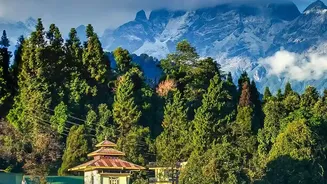
Tucked away in the Singalila Range of West Sikkim, this sanctuary is a paradise for nature lovers, especially from March to May. During these spring months, the entire forest, which covers over 100 square kilometres, erupts in a riot of red, pink, and white as countless rhododendron species bloom. The main trail is a gentle 4-kilometre walk from the entry gate at Hilley, making it accessible even for beginners and families. This well-marked path winds through a fairytale-like canopy of flowers, oak, and pine, with spectacular views of the Kanchenjunga range on clear days. While famous for its flowers, Barsey is also a crucial habitat for the elusive Red Panda and Himalayan Black Bear, making it a rewarding destination for wildlife enthusiasts. Most visitors stay overnight in the nearby villages of Okhrey or Hilley to start the trek early.
Dzongu Valley: The Lepcha Reserve
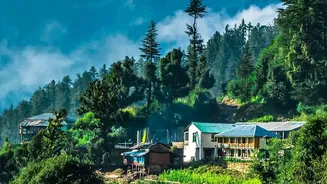
North Sikkim's Dzongu Valley is a special, protected area reserved for the native Lepcha community, the original inhabitants of Sikkim. This seclusion has preserved its pristine beauty and authentic culture. Surrounded by towering peaks, dense forests, and the gushing Teesta River, Dzongu is a haven of tranquility. There are no hotels here; accommodation is exclusively in traditional homestays run by local families, offering a deep cultural immersion. Visitors can explore cardamom plantations, walk across bamboo bridges, visit remote monasteries, and soak in natural hot springs. It is the perfect destination for slow travel, allowing you to learn about Lepcha traditions and their profound connection to nature. A special permit, usually arranged by your homestay, is required to enter this serene valley, ensuring it remains an untouched sanctuary.
Maenam Wildlife Sanctuary: The Treasure House of Medicines
Situated on a ridge above the town of Ravangla in South Sikkim, Maenam Wildlife Sanctuary is a trekker's delight. Its name translates to a 'treasure-house of medicines', a nod to the rich diversity of medicinal plants and herbs found in its forests. The primary trail is a 12-kilometre trek (one way) from Ravangla to the summit of Maenam Peak, which stands at an altitude of about 10,600 feet. The 4-hour ascent takes you through dense forests of oak, chestnut, and magnolia. From the peak, hikers are rewarded with breathtaking panoramic views of the Kanchenjunga massif and the Teesta and Rangeet river valleys below. The sanctuary is also home to fauna like the Red Panda, Barking Deer, and numerous species of birds. For those seeking solitude and a rewarding physical challenge, this trek offers an incredible escape into the Himalayan wilderness.
Fambong Lho Wildlife Sanctuary: A Birder's Paradise Near Gangtok
Just 20 kilometres from Gangtok, Fambong Lho feels like a world away from the city's hustle. This dense forest reserve is a haven for birdwatchers and is recognised as an Important Bird Area, sheltering rare species like the rufous-headed hornbill. The sanctuary’s most popular trail leads to Tinjure, its highest point at around 9,000 feet. The trek is a moderate 2-3 hour walk through forests of oak and rhododendron, opening up to a viewpoint with stunning vistas of Gangtok town and the mighty Kanchenjunga. Besides birds, the sanctuary is also a habitat for the Himalayan Black Bear and Red Panda. For an immersive experience, visitors can stay overnight in the forest department's log hut at Golitar, but must arrange for their own food. A permit is required for entry, which can be obtained in Gangtok or at the gate.
Zuluk: The Zigzag Roads of the Old Silk Route
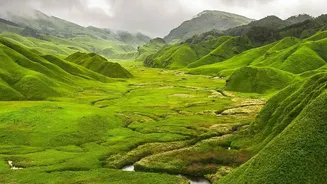
Perched high in East Sikkim, Zuluk is a small village that was once a transit point on the historic Silk Route connecting Tibet and India. The journey to Zuluk is an adventure in itself, famous for its 32 hairpin bends that offer jaw-dropping views. At an altitude of nearly 10,000 feet, this offbeat destination offers a unique blend of history and raw natural beauty. The main attraction is the sunrise from Thambi Viewpoint, which provides a panoramic spectacle of the Kanchenjunga range. Accommodation in Zuluk is limited to basic but warm and welcoming homestays, offering a glimpse into the local way of life. As it is in a restricted border area, Indian nationals require a special permit, usually arranged by a registered tour operator, to visit Zuluk and the surrounding areas like Nathang Valley and Kupup Lake.