


The Basics of the Perfect Roll
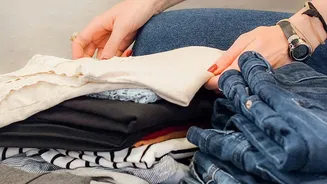
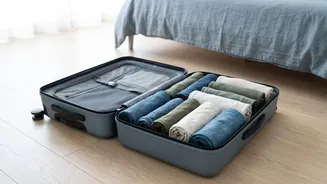
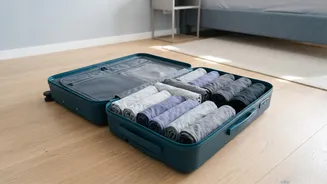
The fundamental principle of rolling is to create tight, uniform cylinders that can be packed snugly together, eliminating the empty air pockets that folded clothes often create. To start, lay your garment, like a T-shirt, on a flat surface. Smooth out
any wrinkles. Fold the sleeves inward to create a neat rectangle. Then, starting from the bottom hem, roll the shirt as tightly as you can towards the collar. The result should be a compact clothing burrito that takes up significantly less space than its folded counterpart. This method is incredibly effective for maximizing space, especially in carry-on luggage or backpacks.
Know What to Roll and What to Fold
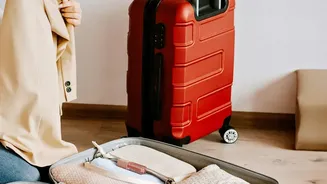
While rolling is a space-saving champion, it's not suitable for every item in your wardrobe. The method works best for casual wear and items made from soft, flexible fabrics like cotton jersey, knits, denim, and polyester blends. T-shirts, leggings, jeans, joggers, and lightweight sweaters are ideal candidates for rolling. However, for more structured or easily creased garments, folding remains the superior choice. Formal wear, blazers, dress shirts, and clothes made from delicate fabrics like silk or stiff linen should be carefully folded to avoid creating unwanted wrinkles. A hybrid approach, where you roll casual items and fold formal ones, often yields the best results.
Upgrade to the 'Ranger Roll'
For maximum compression and organization, consider learning the 'Ranger Roll,' a technique used by the military. This method creates a self-contained bundle that won't unroll in your bag. To perform a Ranger Roll on a T-shirt, start by laying it flat and folding the bottom few inches inside-out to create a 'lip'. Next, fold the sides of the shirt inward to form a rectangle, then roll it tightly from the collar down. Once you reach the end, take the inside-out lip you created and pull it over the entire roll, securing it like a pouch. This trick is especially useful for creating grab-and-go outfit bundles.
Combine Rolling with Packing Cubes
To take your organization to the next level, pair the rolling method with packing cubes. These zippered bags help compartmentalize your luggage, making it easy to find what you need without disrupting your entire suitcase. By filling packing cubes with your tightly rolled clothes, you create modular blocks that you can arrange like a puzzle in your bag. You can dedicate different cubes to specific categories, such as one for shirts, one for pants, and another for underwear and socks. This system not only saves space but also streamlines both packing and unpacking, turning a chaotic suitcase into a tidy, accessible wardrobe.
Fill the Gaps Intelligently
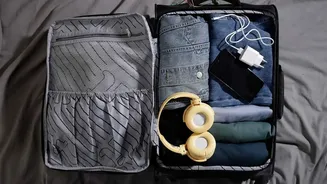
One of the key advantages of rolling clothes is the ability to utilize every inch of your luggage. The small, cylindrical shape of rolled items creates gaps and crevices that are perfect for tucking away smaller things. Fill the spaces between your rolled clothes with items like socks, underwear, or charging cables. You can even stuff socks inside your shoes to save more room and help your footwear keep its shape. This ensures that no space is wasted and everything is packed as densely as possible, preventing items from shifting around during transit.
Think Beyond the Roll
While rolling is a powerful tool, it’s part of a broader smart-packing strategy. For the bulkiest items that don't roll well, like heavy sweaters or jackets, folding them flat and placing them at the bottom of your suitcase or on top of your rolled items can be more effective. For longer garments like dresses or trousers, some travelers prefer the bundling method, where you wrap multiple items around a central core to avoid hard creases. The ultimate goal is to use a combination of techniques tailored to the specific clothes you're bringing, ensuring you make the most of your limited space.