




Assuming Rain Means No Watering
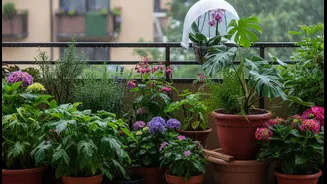
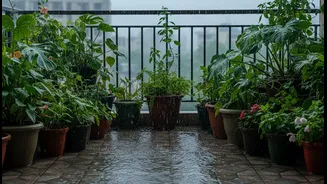
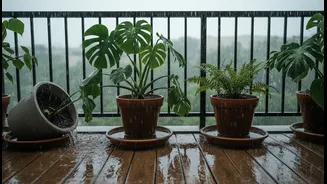
One of the biggest misconceptions is that daily rain means you can stop watering your plants. However, on covered or partially sheltered balconies, many pots may not receive enough direct rainfall to properly hydrate the soil. Conversely, watering out
of habit without checking the soil can lead to oversaturation. The golden rule is to always check the soil before watering. Insert your finger about two inches deep; if it feels damp, your plant has enough moisture. Overwatering is a primary cause of plant death during the monsoon, as it suffocates the roots by filling air pockets in the soil.
Ignoring Poor Drainage
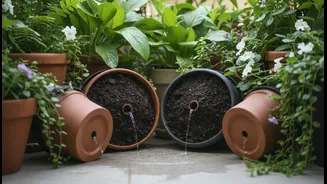
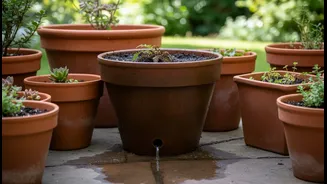
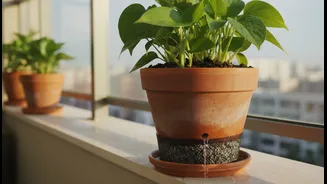
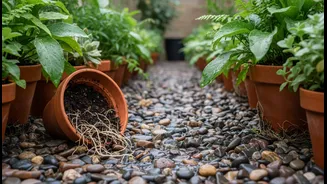
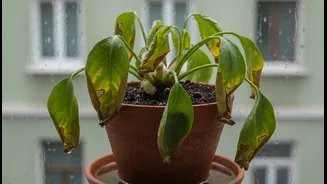
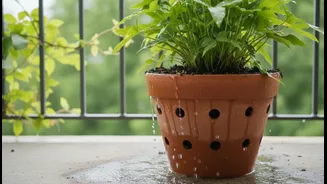
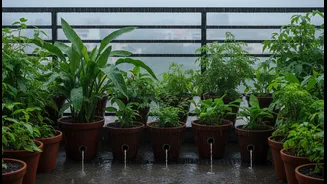
Proper drainage is non-negotiable during the monsoon. When heavy rains arrive, pots without adequate drainage holes quickly become waterlogged, leading to root rot. This is a condition where roots begin to decay due to a lack of oxygen, often identified by yellowing leaves, mushy stems, and a foul smell from the pot. Make sure every pot has clear, unblocked drainage holes. It is also wise to elevate your pots on stands or bricks. This small step prevents them from sitting in trays of stagnant water, which not only causes rot but also creates a breeding ground for mosquitoes.
Overlooking Pest and Fungal Attacks
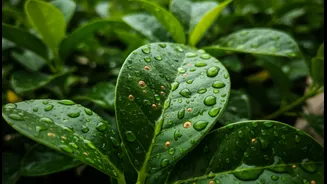
The high humidity and damp conditions of the monsoon create a perfect breeding ground for fungal diseases like powdery mildew and pests such as slugs, snails, and aphids. Many gardeners fail to inspect their plants regularly, only noticing a problem when it's widespread. Get into the habit of checking your plants every few days, especially the undersides of leaves. To prevent issues, ensure good air circulation by not overcrowding your plants. Regular pruning of dead or yellowing leaves also helps reduce the risk of infection by removing potential hosts for fungi and pests.
Not Protecting Plants from Wind and Rain
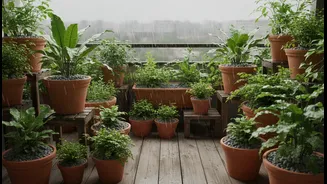
While some rain is good, torrential downpours and strong winds can physically damage plants, breaking stems and shredding leaves. Balconies, especially on higher floors, can experience surprisingly strong gusts. Not all plants can withstand this direct assault. If heavy rain and wind are forecasted, consider moving more delicate or sensitive plants to a sheltered spot, such as against a wall or under an overhang. For taller plants that cannot be moved, providing support with stakes can prevent them from snapping in the wind.
Forgetting to Prune
Plants often experience a growth spurt during the monsoon, leading to dense foliage. While this looks lush, it can be problematic. Overcrowded leaves and branches trap moisture and reduce air circulation, creating an ideal environment for fungal diseases to take hold. Failing to prune away this excess growth is a common oversight. Regular trimming doesn't just keep your plants looking tidy; it’s a crucial health measure during the rainy season. Pruning diseased or yellowing leaves immediately prevents infections from spreading.
Using the Wrong Soil Mix
The soil you use is the foundation of your plant's health, and this is especially true during the monsoon. Heavy, dense soil mixes or garden soil tend to retain too much water, becoming compacted and soggy after rainfall. This prevents air from reaching the roots and can lead to suffocation. For potted plants on a balcony, it's essential to use a light, well-draining potting mix. You can improve drainage further by adding materials like perlite, sand, or coco coir to your soil mix.