




India’s Unblinking Eye on the Sun
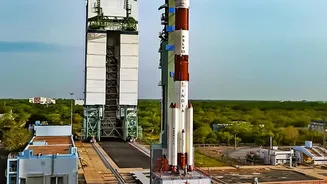
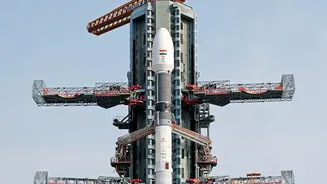
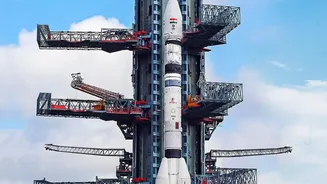
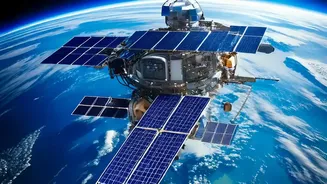
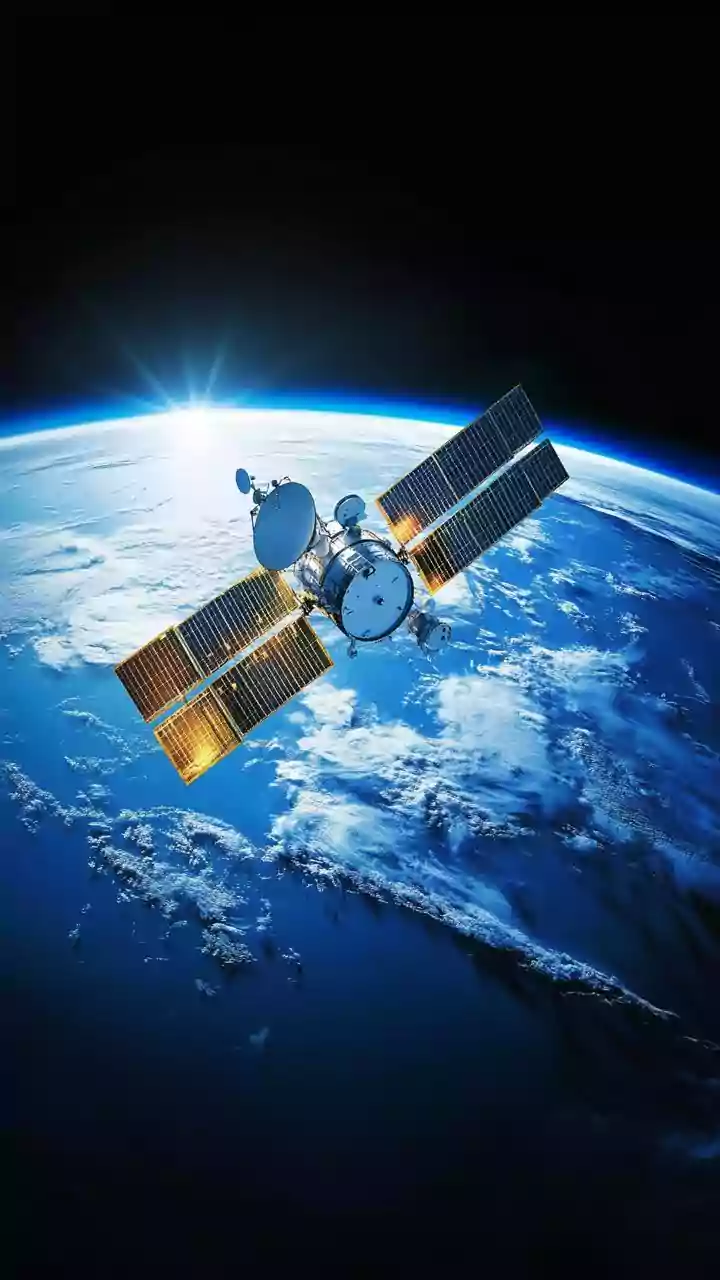
Positioned 1.5 million kilometres from Earth at a unique gravitational sweet spot known as Lagrange Point 1 (L1), ISRO's Aditya-L1 spacecraft has an uninterrupted, 24/7 view of our star. This ambitious mission, India's first dedicated solar observatory,
was designed to unravel the Sun’s many mysteries, from the blistering heat of its outer atmosphere, the corona, to the powerful eruptions that can impact our planet. The spacecraft carries seven sophisticated payloads, all developed indigenously, to observe the Sun across different wavelengths and measure the space environment. Four of these instruments are remote sensors that watch the Sun directly, while three are in-situ instruments that 'taste' and 'feel' the space environment at the L1 point, analysing particles and magnetic fields as they stream past.
Decoding the Sun’s Gusty Breath
The Sun constantly exhales a stream of charged particles—mostly protons and electrons—called the solar wind. This isn't a gentle breeze; it's a plasma current that can travel at two main speeds. A 'slow' wind moves at around 300-500 kilometres per second, while a 'fast' wind, often originating from cooler, darker areas on the Sun called coronal holes, can reach speeds of up to 800 kilometres per second. These streams of varying speeds interact, creating complex structures that rotate with the Sun. As Earth orbits through these fast and slow streams, the variations can buffet our planet's magnetic shield, the magnetosphere, triggering what we call space weather. Understanding these velocity changes is critical, as they are a primary driver of geomagnetic storms that can disrupt our technology-dependent lives.
The Technology Behind the Real-Time Map
The headline's claim of mapping velocity variations in real time refers to the continuous data stream from Aditya-L1's in-situ instruments. Two key payloads, the Aditya Solar wind Particle Experiment (ASPEX) and the Plasma Analyser Package for Aditya (PAPA), are central to this achievement. PAPA uses sensors named SWEEP and SWICAR to measure the energy, composition, and direction of solar wind electrons and ions. Similarly, ASPEX's SWIS (Solar Wind Ion Spectrometer) instrument measures protons and alpha particles, providing detailed insights into the solar wind's behaviour. By constantly sampling the particles flowing past the L1 point, these instruments provide a high-resolution, near-real-time feed of solar wind conditions. This data acts as an early warning system, giving scientists on Earth crucial information about solar disturbances heading our way about an hour before they arrive.
Why This Continuous Monitoring Matters
Mapping solar wind is not just an academic exercise. Intense blasts of solar wind and associated events like Coronal Mass Ejections (CMEs) can have serious consequences on Earth. They can damage satellite electronics, interfere with GPS navigation and radio communications, and even induce powerful currents in terrestrial power grids, potentially causing widespread blackouts. By providing a continuous stream of data on solar wind speed, density, and magnetic field orientation, Aditya-L1 significantly enhances our ability to forecast these space weather events. This allows satellite operators, power grid managers, and airlines to take protective measures, mitigating economic losses and ensuring the safety and stability of critical infrastructure. Recent data from Aditya-L1 has already helped scientists understand unusual geomagnetic disturbances, proving the mission's immediate value.