





The Vanishing Night-Time Relief
Across India's urban centres, a shared experience is becoming increasingly common: the night brings little to no respite from the day's oppressive heat. Fans circulate hot air, and bedrooms remain stuffy long after sunset. This isn't just a feeling; it's
a documented phenomenon. The gap between daytime maximum and nighttime minimum temperatures, known as the Diurnal Temperature Range (DTR), is shrinking. Studies show that while both day and night temperatures are rising due to climate change, nights are warming at a faster rate, particularly in cities. This transforms heatwaves from a daytime problem into a relentless, 24-hour period of heat stress, robbing our bodies of the crucial recovery period that cooler nights once provided.
Our Cities Have Become Concrete Ovens
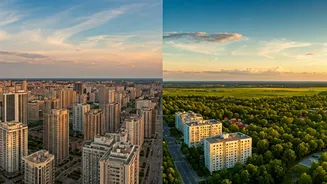
The primary culprit behind this lack of nighttime cooling is the 'Urban Heat Island' (UHI) effect. Our cities, built from concrete, asphalt, steel, and glass, are expert heat traps. These materials absorb immense amounts of solar radiation during the day and, unlike natural landscapes, release it very slowly throughout the night. This process keeps urban areas significantly warmer than their surrounding rural counterparts, sometimes by several degrees. The rapid and often unplanned expansion of Indian cities has replaced natural cooling systems—like soil, vegetation, and water bodies—with heat-retaining infrastructure, effectively turning our urban cores into giant concrete ovens that continue to bake long after the sun has set.
The Blanket of Humidity and Pollution
It's not just the concrete. Increased humidity and air pollution act as a blanket, trapping heat close to the surface. A warmer atmosphere holds more moisture, leading to higher humidity. This is especially potent in coastal and riverine regions, where it hampers the body's primary cooling mechanism: sweating. When humidity is high, sweat doesn't evaporate efficiently, making the heat feel far more oppressive and dangerous. Simultaneously, pollutants and aerosols in the atmosphere can alter radiation patterns, contributing to the rise in minimum temperatures. Increased cloud cover, a consequence of a warmer, moisture-laden atmosphere, can reflect sunlight during the day but traps heat radiating from the ground at night, further reducing cooling.
The Human Cost of Hot Nights
The inability to cool down at night is more than just uncomfortable; it's a serious public health crisis. The human body needs to cool down to recover from daytime heat exposure. When night temperatures remain high, the body experiences continuous strain, increasing the risk of heat exhaustion, heatstroke, and dehydration. Research has shown a strong link between high nighttime temperatures and increased mortality, especially among the elderly, children, and those with pre-existing health conditions like heart disease. For millions in India living in poorly ventilated homes or informal settlements, indoor heat can become an inescapable trap, with temperatures inside often exceeding those outside. This leads to chronic sleep deprivation, which impacts productivity, mental health, and overall well-being.
Beyond a Personal Problem
The consequences of vanishing nighttime cooling ripple through the entire economy. A reliance on air conditioners and coolers leads to a surge in electricity demand, straining power grids and contributing to a vicious cycle by releasing more waste heat into the urban environment. For agriculture, a shrinking DTR can negatively impact crop growth and yields. Studies show that heat exposure leads to significant losses in labour hours, impacting the country's GDP. It's clear that hot nights are not just a weather anomaly but a systemic challenge amplified by climate change and urban design. Public advisories and heat action plans, which have traditionally focused on daytime maximums, are now starting to recognise the critical danger posed by nighttime heat stress.