
Ghent, Belgium: The Lively Alternative
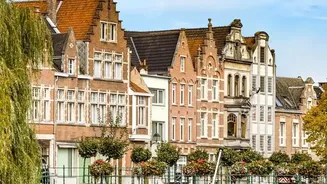
Often overlooked for its famous neighbours, Bruges and Brussels, Ghent offers the same medieval beauty with a more authentic, lived-in feel. Its historic centre is a stunning tapestry of medieval and Renaissance architecture, crisscrossed by canals. The
city is home to the formidable Gravensteen, a 12th-century castle complete with a moat, right in the city centre. The Graslei and Korenlei quays are lined with historic guildhalls, creating one of Europe's most picturesque waterside scenes. Unlike some perfectly preserved towns that can feel like museums, Ghent is a vibrant university city. This means you’ll find a lively atmosphere, with plenty of quirky shops, modern restaurants, and cosy pubs packed with locals, especially in the Patershol district. It has the storybook looks of Bruges but with more energy and fewer tourist traps.
Olomouc, Czech Republic: Prague Without the People
If you love the idea of Prague but not the overwhelming crowds, Olomouc is your answer. Located in the Moravia region, it boasts the second-largest historical monument zone in the Czech Republic. Its magnificent Horní Náměstí (Upper Square) is home to the Holy Trinity Column, a massive baroque monument and UNESCO World Heritage site. The square is surrounded by grand buildings and is anchored by a town hall featuring a unique astronomical clock designed in the socialist realism style. Olomouc is a city to be wandered, with countless baroque fountains, quiet courtyards, and beautiful churches like the towering St. Wenceslas Cathedral. A large student population from Palacký University gives the city a youthful, energetic vibe with a thriving café culture and affordable, authentic restaurants. It’s a city where genuine Czech life unfolds amidst centuries of history.
Bamberg, Germany: The Franconian Rome
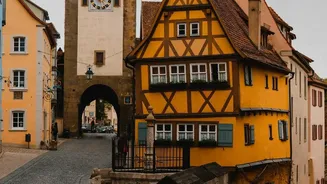
While many visitors to Bavaria focus on Munich or Nuremberg, the town of Bamberg offers one of Germany’s largest and most intact old towns, a designated UNESCO World Heritage site. Miraculously untouched by WWII bombing, its medieval and baroque townscape is breathtaking. The city is famously built on seven hills, earning it the nickname 'Franconian Rome'. Its most iconic landmark is the Altes Rathaus (Old Town Hall), perched impossibly on a tiny island in the middle of the Regnitz river and adorned with magnificent facade murals. You can wander through a former fishermen's village known as 'Little Venice,' with its half-timbered houses lining the riverbank. The city is also home to the 13th-century Bamberg Cathedral, which holds the tomb of Pope Clement II, the only papal grave north of the Alps.
Colmar, France: A Real-Life Fairytale
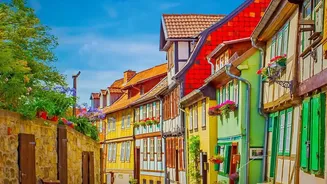
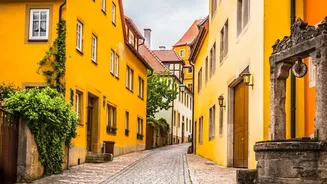
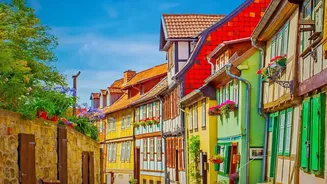
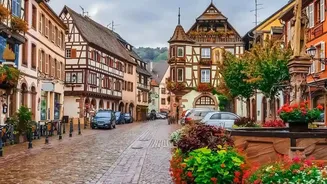
Nestled in the Alsace region near the German border, Colmar looks like it has been lifted directly from the pages of a storybook. Its 'La Petite Venise' (Little Venice) area is a dreamy maze of canals flanked by colourful half-timbered houses with flower-filled windowsills. The city’s architecture showcases a unique blend of French and German influences, creating a distinct Alsatian character. Wander through the cobblestone streets of the Old Town to find charming squares, historic buildings like the Maison Pfister, and the old fishermen's district at Quai de la Poissonnerie. While it can get busy, especially during its famous Christmas markets, visiting on a weekday morning or outside of peak season allows for a much quieter experience. It serves as the capital of Alsatian wine, making it a perfect base for exploring the surrounding vineyards.
Rovinj, Croatia: The Jewel of Istria
While many Croatian itineraries focus on Dubrovnik and Split, the Istrian peninsula in the north offers a different flavour, one with a distinctly Italian feel. Rovinj is its star attraction. The town is a cluster of pastel-coloured houses clinging to a small, hilly peninsula, crowned by the hilltop Church of St. Euphemia. Its car-free old town is a labyrinth of steep, slick cobblestone streets, art galleries, and charming shops selling local goods like truffles and olive oil. Unlike the sprawling beaches further south, Rovinj’s coastline is dotted with rocky coves and swim-up bars, where people relax on the stones before taking a dip in the crystal-clear Adriatic Sea. It’s a photographer's dream and feels more like a relaxed fishing town than a major tourist hub, offering a romantic and slightly slower-paced Croatian experience.