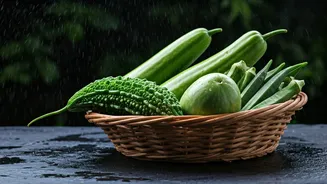









Bottle Gourd (Lauki): The Gentle Giant
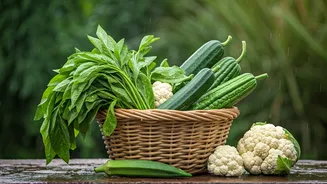
Often underestimated, lauki is a powerhouse of nutrients perfectly suited for the monsoon. It's incredibly easy to digest, which is a blessing when the humid weather can make our digestive systems feel sluggish. Comprised of over 90% water, it helps keep
you hydrated and feeling light. Rich in fibre, it aids in preventing constipation and promoting gut health. Furthermore, its low-calorie nature makes it an excellent choice for weight management. Traditionally used in Ayurveda to calm the system, lauki is perfect for simple curries, soups, or even juiced with a hint of ginger and mint for a detoxifying drink.
Bitter Gourd (Karela): The Immunity Booster
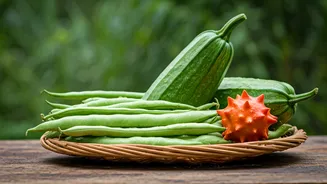
Don't let the name scare you away. Bitter gourd is one of the most powerful medicinal vegetables you can add to your monsoon diet. It's loaded with Vitamin C, which is crucial for fighting off the coughs and colds that are rampant during this season. Karela is also known for its potent antiviral and antibacterial properties, providing an extra layer of defence for your immune system. For those managing blood sugar levels, it's particularly beneficial. To reduce its bitterness, you can marinate slices in salt and rinse before cooking. A simple stir-fry with onions and spices makes it a palatable and highly effective health food.
Pointed Gourd (Parwal): The Unsung Hero
Pointed gourd, or parwal, is a humble vegetable that shines during the rainy season. It is packed with antioxidants, vitamins A and C, which help purify the blood and boost immunity. Its high fibre content aids digestion and keeps the gut clean, preventing common monsoon-related stomach issues. Parwal is also known to help control cold, cough, and headaches. This versatile vegetable can be used in a variety of dishes, from being stuffed with masala (bharwa parwal) to being added into rich curries or simply fried as a side dish. Its ability to absorb flavours makes it a delicious and healthy addition to any meal.
Sweet Potato (Shakarkandi): The Energy Provider
While often associated with winter, sweet potatoes are a fantastic starchy vegetable for the monsoon. They are an excellent source of dietary fibre, which helps in maintaining a healthy digestive tract. More importantly, they are rich in beta-carotene, which the body converts into Vitamin A—a critical nutrient for supporting the immune system and maintaining the integrity of the respiratory tract lining. Their complex carbohydrates provide sustained energy, helping combat the lethargy that can accompany gloomy, rainy days. Enjoy them boiled, roasted with a sprinkle of chaat masala, or mashed into a healthy snack.
Turmeric and Ginger: The Power Roots
No monsoon kitchen is complete without fresh turmeric (kacchi haldi) and ginger (adrak). While not vegetables in the leafy sense, these rhizomes are essential. Ginger is a celebrated digestive aid, perfect for soothing an upset stomach and fighting nausea. It's also a powerful anti-inflammatory and helps combat respiratory infections. Fresh turmeric contains curcumin, a compound with incredible antiseptic, antiviral, and immunity-boosting properties. A small piece of each, grated into your morning tea, added to dals, or blended into a smoothie, can provide a daily dose of protection against seasonal ailments. Think of them as your natural, edible first-aid kit.