





Why Your Groceries Now Come With a Warning
For years, the important nutritional information on packaged foods has been hidden in small print on the back. This is changing as India grapples with a rise in non-communicable diseases (NCDs) like diabetes, obesity, and heart conditions. A major contributor
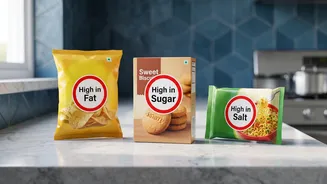
to this health crisis is the growing consumption of ultra-processed foods, often loaded with unhealthy amounts of sugar, salt, and fat. To combat this, FSSAI has proposed mandatory Front-of-Pack Labelling (FOPL). The goal is simple: to give consumers clear, immediate information about the contents of their food, empowering them to make healthier choices in the few seconds they spend deciding on a product. Research shows that simple warning labels are the most effective way for people to quickly identify unhealthy products.
Decoding the Red Hexagon
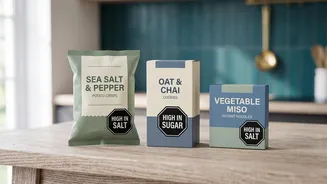
The new system moves away from confusing star ratings and instead uses a clear warning symbol. FSSAI has proposed a red hexagon on a white background, prominently displayed on the top-left of the package. Inside this hexagon, you will find simple text like “HIGH SUGAR,” “HIGH SALT,” or “HIGH FAT.” Following a push from the Supreme Court, the plan is to implement these labels in a single phase. This means a product will get a warning even if it crosses the threshold for just one of these nutrients, not just two or more as was previously discussed. If a product is high in multiple nutrients, they will all be listed within the same hexagon.
What Does 'High In' Actually Mean?
The warnings are not arbitrary. They are based on specific thresholds for added sugar, fat, and salt determined by the Indian Council of Medical Research-National Institute of Nutrition (ICMR-NIN) in its Dietary Guidelines for Indians, 2024. While the exact numbers are part of the final regulations, the guidelines provide a clear direction. For example, a daily salt intake above 5 grams is considered high. The labels will trigger when a product contains an excessive amount of these nutrients per 100g or 100ml. This scientific backing ensures that the warnings are a reliable indicator that a product's contents could be detrimental to your health if consumed regularly. It’s a binary signal: if the label is there, the nutrient level has crossed the recommended limit.
Beyond the Warning: A Shopper's Checklist
The red hexagon is your first, most important clue, but it shouldn’t be your only one. For a complete picture, it's still wise to turn the packet over. First, scan the ingredients list. Ingredients are listed by weight, so the first three tell you what the product is mostly made of. Be wary if sugar (or its many aliases like corn syrup, dextrose, or maltose) appears multiple times. Second, look at the ‘per 100g’ column in the nutrition table, not just the ‘per serving’ size, which can often be unrealistically small. Also, check for protein and fibre content; higher amounts generally suggest a more satiating and less processed product. Finally, note that labels list sodium, not salt. To get the salt content, you need to multiply the sodium amount by 2.5.
How to Use This Information at the Store
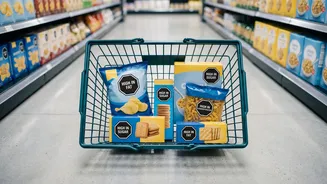
These new labels are a practical tool. When faced with a choice between two similar products, such as breakfast cereals or snacks, check for the red hexagon. Opting for the one without a warning is a simple step towards a healthier diet. This doesn't mean you can never eat a product with a warning label. Instead, the label serves as a prompt to consider it a less frequent treat rather than a daily staple. Use this information to gradually reduce your family's intake of ultra-processed foods. The goal of these labels isn’t to create food fear, but to foster food awareness. By paying attention to these clear signals, you can take back control of your nutrition one shopping trip at a time.