




A Historic Invitation to the Moon
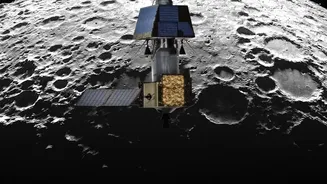
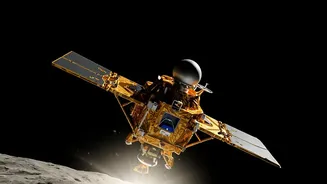
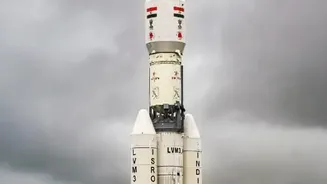
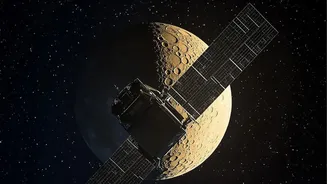
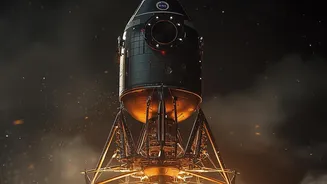
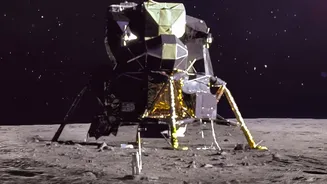
In a significant move for Indo-US space relations, NASA has formally invited ISRO to participate in establishing a permanent habitat on the Moon's south pole. The invitation was extended in August 2026 during a meeting of the U.S.-India Civil Space Joint
Working Group at ISRO's Bengaluru headquarters. This potential partnership within NASA's Artemis program aims to create a sustainable human presence on the lunar surface, similar to research outposts in Antarctica. For India, this represents a landmark opportunity. It could provide access to cutting-edge technologies and long-term lunar operation experience, while NASA could benefit from ISRO's renowned expertise and cost-effective engineering approach. While specific details of India's role are still being discussed, the invitation marks a new chapter in a partnership that has already achieved remarkable success.
NISAR: A Joint Eye on Planet Earth
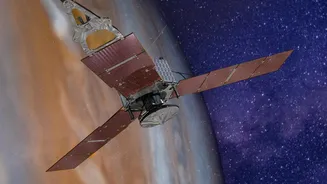
The NASA-ISRO Synthetic Aperture Radar (NISAR) satellite, a powerful Earth observation mission jointly developed by both agencies, is now delivering groundbreaking data. Launched in July 2025, NISAR is the first satellite to use dual-frequency radar to systematically map our planet, observing changes in Earth's land and ice surfaces with unprecedented detail. In 2026, data from the mission has already been used to map land subsidence in Mexico City with centimetre-level accuracy and reveal ground displacement from earthquakes in Venezuela. For India, NISAR’s capabilities are crucial for monitoring Himalayan glaciers, tracking agricultural patterns, and managing natural disasters. The satellite's S-band radar was built by ISRO, while NASA provided the L-band radar. As of July 2026, data from both instruments has been made publicly available, empowering scientists worldwide.
A New Plan for Martian Samples
The ambitious Mars Sample Return (MSR) mission, a joint effort with the European Space Agency, has undergone a major reset. The original plan to bring back rock and soil samples collected by the Perseverance rover faced significant budget and timeline challenges. Following a review, Congress effectively ended the prior program structure in early 2026. However, NASA is not giving up on the scientifically priceless samples. The agency is now actively evaluating two revised approaches for a mission that could still see Martian rocks returned to Earth in the 2030s. A final decision on the new mission design is expected in the second half of 2026. While NASA reworks its strategy, other international missions are moving forward, including Japan's MMX mission, which launched in 2026 to collect samples from Mars's moon Phobos.
New Telescopes, New Questions
NASA's quest to understand the universe continues with its powerful space telescopes. In August 2026, the James Webb Space Telescope (JWST) made headlines with the potential discovery of a new type of celestial object: a 'black hole star'. This bizarre object, seen in the early universe, appears to be an enormous black hole wrapped in a star-like cloud of glowing gas, shining with the light of 100 billion suns. Astronomers are also keenly anticipating the launch of the Nancy Grace Roman Space Telescope, scheduled for August 2026. Often described as having Hubble's sharpness with a field of view 100 times larger, Roman will survey vast stretches of the sky to investigate dark energy and discover thousands of new exoplanets. These missions are fundamentally changing our cosmic perspective, and their data will keep scientists, including many in India, busy for decades to come.